Blog Archive

Showing posts with label risk management. Show all posts

Sunday, June 3, 2018

Europe's Largest Asset Manager Sees 'Tipping Point' on Climate Risk Pricing

The world’s deepest-pocketed investors are starting to take climate change seriously, according to Amundi SA.

by Anna Hirtenstein, Bloomberg, May 30, 2018

“We are really observing a tipping point among the institutional investors on climate change,” said Frederic Samama, co-head of institutional clients at the Paris-based firm. “Until recently, that question was not on their radar screen. It’s changing, and it’s changing super fast.”
Risks from global warming range from damage to physical assets from extreme weather to falling prices on fossil fuel-related assets, as the world moves away from burning coal and oil. Bank of England governor Mark Carney has repeatedly warned that these risks are not priced in adequately and that investors may have exposure to a “climate Minsky moment” if they don’t take action.
Amundi’s remarks hold weight because it has 1.4 trillion euros ($1.6 trillion) under management, making it the largest asset manager in Europe. It runs the world’s largest green bond fund with the International Finance Corp. and is planning to deploy $2 billion into emerging markets. Mainstream investors are beginning to recognize both the threats and opportunities coming from climate-related issues, Samama said.
“If we have this major shift required in terms of how we manage the planet, for sure it will impact the asset prices,” he said. “Can we evaluate the automakers without taking into account the new bans of diesel cars? Can we evaluate the fossil fuel industry without taking into account the risks of regulation related to the drop of the price of renewable energy?”
The Paris climate deal reached by representatives from nearly 200 countries in 2015 sent a signal to the global economy that decarbonization was on the agenda. As just about every industry comes under pressure to become greener, the rules will change for the asset owners as well. France was the first country to make it mandatory for investors to disclose the carbon footprint of their portfolios, mandating it in a law the same year.
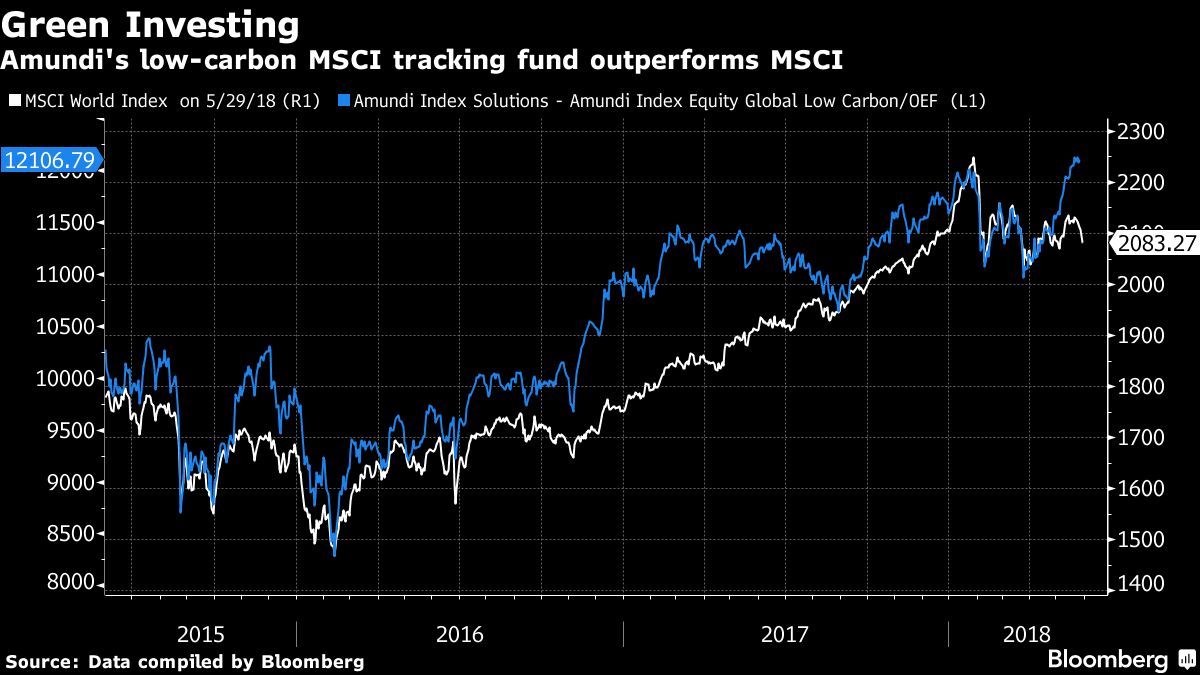
Another reason that institutional investors’ views are evolving is the availability of green financial instruments, according to Amundi. The asset manager developed low-carbon equity indexes, removing the polluting companies from commonly-used ones such as the S&P 500 and MSCI indexes. Investors from the California State Teachers’ Retirement System to Japan’s Government Pension Investment Fund are shifting their portfolios to these indexes, according to Samama.
“It means that if nothing happens, you have the market returns and that if the opposite, if polluting companies are getting penalized, they will bring the index down and if you have excluded them, you will outperform,” he said.
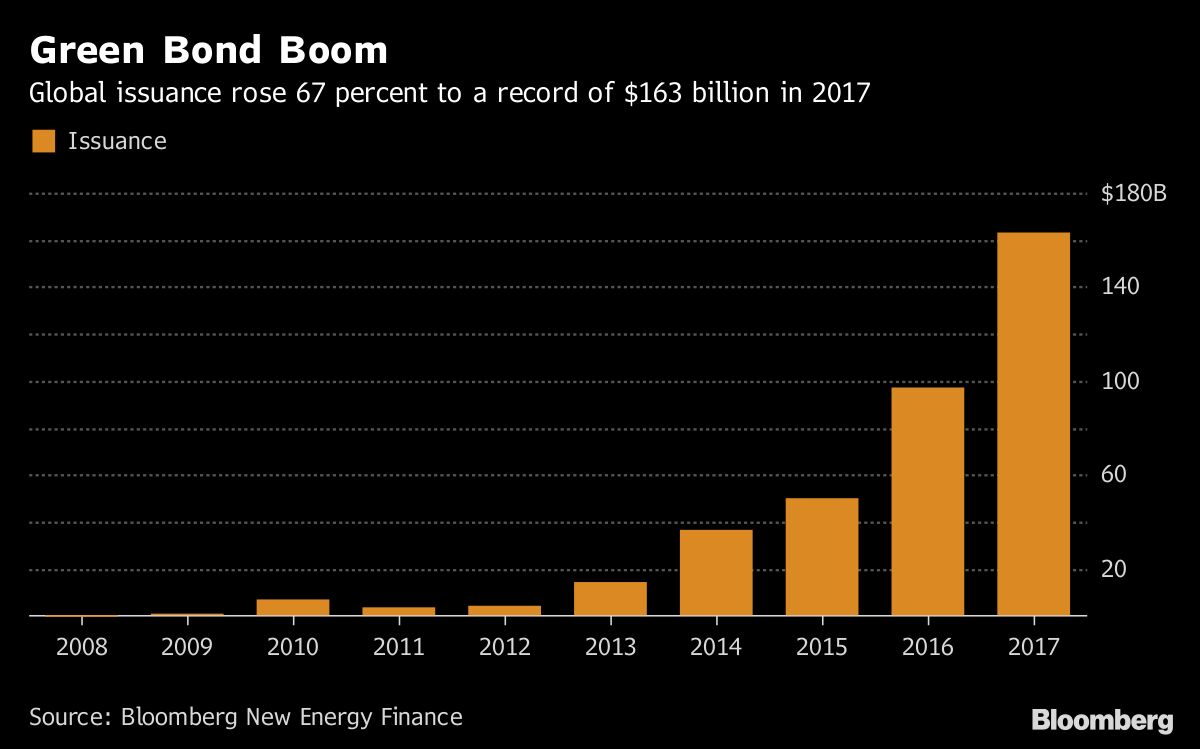
Green bonds are another avenue for redirecting institutional capital into environmental projects. The industry has soared from non-existence just over a decade ago to global issuance of $163 billion last year.
©2018 Bloomberg L.P.

Thursday, January 4, 2018

Climate risk: going mainstream

The governor of the Bank of England and ExxonMobil shareholders are just some of those changing the narrative on climate risk, says Dylan Tanner
Once climate change becomes a defining issue for financial stability, it may already be too late
by Dylan Tanner, The Actuary, September 7, 2017
In June this year, the Financial Stability Board’s (FSB’s)Task Force on Climate-related Financial Disclosures (TCFD) published its recommendations on how the corporate sector should disclose climate risk to investors. The FSB apparently regards climate change as a systemic financial risk, as articulated in a speech by the governor of the Bank of England, Mark Carney, in 2015. Meanwhile, at ExxonMobil’s annual general meeting in May this year, a majority of shareholders demanded that the oil and gas giant discloses its thinking on climate risk more clearly.
Data, analysis and advice on climate risk to portfolios have been around and available to investors for at least 20 years. By the late 1990s, the UN Environment Program (UNEP) Financial Initiative was messaging regularly on the risk of climate-change-induced weather events to the insurance sector and hence the wider markets.
In 2000, the investor-enabled Climate Disclosure Project (CDP) began collecting and aggregating carbon emissions information from thousands of companies around the globe. Financial data sets such as MSCI, Thomson Reuters Eikon and Bloomberg create and sell climate-related metrics on companies as part of their environment, social and governance (ESG) offering.
These observations beg two questions. Is climate risk now going mainstream in portfolio assessment? If so, what has changed? 
The answer to the first question is almost certainly yes, given the mainstream remit of the FSB and the universal nature of ExxonMobil’s shareholder base. The answer to the second is more complex. A key reason that climate risk analysis has not been widely accepted by financial analysts until now is that the messengers have largely come from the climate change and sustainability communities. The UNEP’s remit is to solve environmental issues, not advise on financial risk. Data sets such as CDP and the ESG metrics are regarded as originating in the sustainability agenda, and are used by investors mostly to satisfy sustainable investment commitments rather than inform mainstream risk strategy.
A more significant reason is captured by Carney in his 2015 ‘Tragedy of the Horizons’ speech, where he notes the disconnect between time horizons for current financial risk assessment and manifestation of the effects of climate change.

Predictions come to pass

Two decades have passed since the CDP and UNEP initiatives began, and some of the early indicators of these risks are now appearing. One of these relates to the fossil-fuel production sector, where groups such as the Carbon Tracker Initiative have predicted that a variety of climate-induced pressures could threaten the value of the reserves of oil, gas and coal on balance sheets. In November 2016, Shell shocked the market by estimating that oil demand could peak in as little as 5 years, “driven by efficiency and substitution,” according to then chief financial officer Simon Henry.
A 2016 report from think tank InfluenceMap showed the disparity between the predictions of global electric vehicle (EV) proliferation by the oil companies and those of the automakers and regulators. Toyota predicts 100% EVs and hybrids by 2050 in its sales. France pledges to ban petroleum-powered cars by 2040, and India has a goal of selling only EVs by 2030. Yet, the report notes, ExxonMobil forecasts that EVs will account for “less than 10% of new-car sales globally in 2040.” For a company that probably derives more than 30% of its revenues from petroleum-related transport, this disconnect is a concern. Shareholders are correct to demand further disclosure on the climate risk scenarios it is working with.
Other sectors on investors’ radar when it comes to climate risk and its disclosure include utilities. Reputational, financial and regulatory pressure on the use of coal for power generation is growing, while incentives for the scale-up of renewables is similarly accelerating. Bloomberg New Energy Finance estimates new power generation capacity will be mostly solar and wind by 2040, leaving gas, and especially coal generation and related value chains, as niche businesses. The power sector is one with long-term horizons and multi-decade plant life cycles, so understanding management strategy on future scenarios is essential for investors.

Funds flex their muscle

Pension funds are an important part of the global financial system, with the top 6,000 funds holding around $26trn (£20trn) of capital market assets. They have the ability to create market trends, and account for a significant portion of revenue generated by the financial sector as a whole. 
One of the largest such funds is Norway’s Government Pension Fund Global, with close to $1trn in assets. It adopted criteria in late 2015, allowing it to “exclude companies whose conduct to an unacceptable degree entails greenhouse gas emissions.” In June this year, the smaller but still substantial AP7 pension fund of Sweden announced it was divesting from ExxonMobil and five other companies for violation of the Paris climate agreement. Many other such funds may follow this trend. Such divestment and exclusion actions may be the last resort in an engagement chain, or intended as a signal on acceptable corporate governance. In the case of the Norwegian fund, its managers have a direct remit from the country’s parliament to consider global climate change risk in its management.

Change in data needs

While climate risk is now mainstream, the data needs of the investment community have shifted. For one thing, they are now highly sector-specific. Certain industries, such as energy and power generation and energy-intensive sectors like cement, are the focus, and investors want to understand management thinking on climate issues. To this end, the FSB recommendations stress disclosure by companies on the “resilience of an organisation’s strategy under climate-related scenarios, including a 2 °C or lower scenario” and the regulatory, market, technology and other changes these will bring.
Crucially, the FSB also extends its recommendations to the financial sector, and urges asset owners to test the resilience of the portfolio under the same scenarios. This approach necessitates a focus on forward-looking corporate behavioural metrics and analysis, as well as the carbon emissions accounting approach. For example, investors need to understand the capital asset allocation strategy of an electricity utility, and how this relates to regulatory trends. Likewise, they need to understand whether an oil/gas company’s business model is based on expecting to continue to be able to suppress climate-motivated regulations, and likely scenarios should the political climate shift suddenly.

Mainstream methods apply

Disclosures in line with the TCFD’s recommendations do not feed into any legally binding financial disclosure processes, such as those of the U.S. Securities And Exchange Commission. As a result, achieving universal participation – especially by the most at-risk companies –remains a challenge. 
The TCFD and other disclosure systems aside, mainstream analysis of corporations by investors involves reliance on other sources of information, such as discussions with senior management and third-party investigations.
In the climate risk context, this process will spur the financial research and data sectors to acquire expertise, and perhaps to form unusual alliances with climate specialists in the NGO, academic and technology sectors, to better understand the nuances of portfolio, sector and company risk.

Dylan Tanner is executive director at InfluenceMap
Sunday, December 3, 2017

Moody's: Climate change is forecast to heighten US exposure to economic loss placing short- and long-term credit pressure on US states and local governments

Climate change is forecast to heighten US exposure to economic loss placing short- and long-term credit pressure on US states and local governments

Moody's, Global Credit Research, November 28, 2017

New York -- The growing effects of climate change, including climbing global temperatures, and rising sea levels, are forecast to have an increasing economic impact on US state and local issuers. This will be a growing negative credit factor for issuers without sufficient adaptation and mitigation strategies, Moody's Investors Service says in a new report.

The report differentiates between climate trends, which are a longer-term shift in the climate over several decades, versus climate shock, defined as extreme weather events like natural disasters, floods, and droughts which are exacerbated by climate trends. Our credit analysis considers the effects of climate change when we believe a meaningful credit impact is highly likely to occur and not be mitigated by issuer actions, even if this is a number of years in the future.

Climate shocks or extreme weather events have sharp, immediate and observable impacts on an issuer's infrastructure, economy and revenue base, and environment. As such, we factor these impacts into our analysis of an issuer's economy, fiscal position and capital infrastructure, as well as management's ability to marshal resources and implement strategies to drive recovery.

Extreme weather patterns exacerbated by changing climate trends include higher rates of coastal storm damage, more frequent droughts, and severe heat waves. These events can also cause economic challenges like smaller crop yields, infrastructure damage, higher energy demands, and escalated recovery costs.

"While we anticipate states and municipalities will adopt mitigation strategies for these events, costs to employ them could also become an ongoing credit challenge," Michael Wertz (a Moody's Vice President) says. 

"Our analysis of economic strength and diversity, access to liquidity and levers to raise additional revenue are also key to our assessment of climate risks as is evaluating asset management and governance."

One example of climate shock driving rating change was when Hurricane Katrina struck the City of New Orleans (A3 stable). In addition to widespread infrastructure damage, the city's revenue declined significantly and a large percentage of its population permanently left New Orleans.

"US issuer resilience to extreme climate events is enhanced by a variety of local, state and federal tools to improve immediate response and long-term recovery from climate shocks," Wertz says.

For issuers, the availability of state and federal resources is an important element that broadens the response capabilities of local governments and their ability to mitigate credit impacts. As well, all municipalities can benefit from the deployment of broader state and federal aid, particularly disaster aid from the Federal Emergency Management Agency (FEMA) to help with economic recovery.

Moody's analysts weigh the impact of climate risks with states and municipalities' preparedness and planning for these changes when we are analyzing credit ratings. Analysts for municipal issuers with higher exposure to climate risks will also focus on current and future mitigation steps and how these steps will impact the issuer's overall profile when assigning ratings.

The report "Environmental Risks -- Evaluating the impact of climate change on US state and local issuers," is available to Moody's subscribers at:
http://www.moodys.com/researchdocumentcontentpage.aspx?docid=PBM_1071949.

******************************************************************
NOTE TO JOURNALISTS ONLY: For more information, please call one of our global press information hotlines: 
New York +1-212-553-0376
London +44-20-7772-5456 
Tokyo +813-5408-4110
Hong Kong +852-3758-1350 
Sydney +61-2-9270-8141
Mexico City 001-888-779-5833 
São Paulo 0800-891-2518
Buenos Aires 0800-666-3506 

You can also email us at mediarelations@moodys.com or visit our web site at www.moodys.com.

This publication does not announce a credit rating action. For any credit ratings referenced in this publication, please see the ratings tab on the issuer/entity page on www.moodys.com for the most updated credit rating action information and rating history.

Kenneth Kurtz, Senior Vice President, Public Finance Group
Moody's Investors Service, Inc.
One Front Street, Suite 1900
San Francisco, CA 94111
3-1653

Michael Wertz, Vice President - Senior Analyst, Public Finance Group

JOURNALISTS: 1 (212) 553-0376
Client Service: 1 (212) 553-1653


Releasing Office:
Moody's Investors Service, Inc.
250 Greenwich Street
New York, NY 10007
3-1653

https://www.moodys.com/research/Moodys-Climate-change-is-forecast-to-heighten-US-exposure-to--PR_376056