Blog Archive

Showing posts with label Roger Pielke Jr.. Show all posts

Friday, July 28, 2017

A profile of 2017 Roger Revelle Medal winner climate scientist Kevin Trenberth

Readers, please note the Trenberth quote just under the name of this blog. He's been a leader on climate science and overwhelmingly deserves this award.

A profile of award-winning climate scientist Kevin Trenberth

Kevin Trenberth - recent award winner - is one of the world’s foremost climate scientists
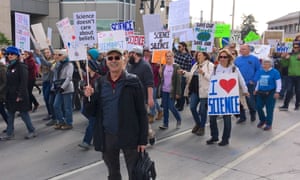
Dr. Kevin Trenberth at the March for Science on 22 April 2017 in Denver, Colorado.

by John Abraham, "Climate Consensus - the 97%," The Guardian, July 27, 2017

The American Geophysical Union - the pre-eminent organization of Earth scientists - presents annual awards to celebrate the achievements of scientists. The awards, which are often named after famous historical scientists, reflect the contributions to science in the area of the award namesake. With the 2017 award winners just announced, it’s appropriate to showcase one of the winners here. 
The 2017 winner of the Roger Revelle medal is Dr. Kevin E. Trenberth. One of the most well-known scientists in the world, he is certainly the person most knowledgeable about climate change that I know.
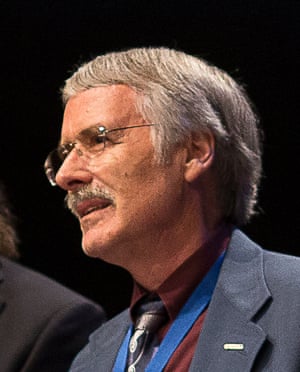
Kevin Trenberth
 Kevin Trenberth Photograph: Robert Tjalondo

The Roger Revelle award is given to an honoree who has made outstanding contributions to the understanding of the atmosphere and its interactions with other parts of the climate system. Named after Roger Revelle, who was critical in bringing the idea of human-caused climate change to the scientific community, it is amongst the highest honors. Revelle wrote regarding increasing carbon dioxide in the atmosphere in 1957:
human beings are now carrying out a large scale geophysical experiment
Kevin Trenberth
 Kevin Trenberth Photograph: Robert Tjalondo
Certainly the other scientists nominated were of incredible quality. Why was Kevin granted the award? I cannot answer this for certain because I was not on the committee, but it’s possible that he won strictly because of his scientific contributions.
Dr. Trenberth is a leading voice in the concept of Earth Energy Imbalance (which is really the rate of global warming). He also pioneered research related to the interactions of the atmosphere with the oceans, particularly the El Niño/La Niña cycle. He has worked on advancements to climate models and to experimental observations of climate. Another major area of contribution is the changes in precipitation with climate change, and especially the frequency and intensity of extremes. He has also changed the approaches to attribution of human-caused climate change.
But perhaps Dr. Trenberth won the award because of the sheer volume and impact of his scholarship. He is closing in on 70,000 citations to his work. This puts him near the top of the list worldwide for impact.
Or maybe he won because of his tireless efforts in service to the scientific community, with leadership roles in the IPCC, the World Climate Research Programme, NOAA, and other groups. Or lastly, it could be because he is tireless as both a researcher and a communicator. Dr. Trenberth can be heard or read almost weekly in major newspapers, magazine articles, radio and television shows. When reporters need complex climate science explained, he is a go-to person, and has been for years.
His personal life is interesting, too. Born in New Zealand, he studied mathematics before embarking on meteorology. His time in New Zealand provided him with a different geographic perspective than his American and European colleagues. New Zealand is more impacted by certain climate oscillations, like fluctuations in the temperature of the Pacific Ocean surface waters. Certainly these experiences affected his climate views.
Growing up, family, school, and sports – he was a top rugby player - were important. He was somehow able to balance these three pillars of life without sacrifice to his academics. Born into a family of very modest means, Kevin had to make his own fortunes. His early academic performance resulted in financial scholarships for school. 
After some time spent in the New Zealand army, he was ready to embark upon his scientific career. After winning a New Zealand government fellowship to do his doctorate at MIT, he met his future wife Gail who was as ever energetic, smart, and involved in life as was Kevin. They had a daughter in New Zealand, and, after moving to the U.S. as a professor at the University of Illinois, began fostering, which led to the adoption of their second child.
Somehow Kevin and his wife kept both career and family center in their lives and Kevin’s reputation as a top-rated scientist increased. He moved to the National Center for Atmospheric Research in 1984. His scientific work and his public communication efforts meant that he became a frequent target of groups that try to deny human-caused climate change or diminish its importance. The problem with Kevin is, he knows so much you can just assume he is smarter than you. 
Well-known contrarians such as Richard Lindzen, Roy Spencer, and John Christy have had their works rebutted by Trenberth for technical errors. Trenberth has also crossed paths with vocal down-players of climate change like Roger Pielke Jr., who reportedly threatened Trenberth by email. Pielke Jr. was working for Nate Silver’s 538 website; his actions lead to Nate Silver stating “We had candid conversations with Michael Mann and Kevin Trenberth (about the emails). We made clear that Roger’s conversations with them did not reflect FiveThirtyEight’s editorial values.” More details of the altercation are available here.
Why would I write about this aspect of Trenberth’s career? Because it shows that he has suffered slings and arrows for his tireless work. He has spent his career being honest about the limits of our knowledge of the Earth’s climate but also being clear about our certainty of human-caused climate change. His reward for this tireless service to society has been attacks on his research and his person. However, he has been impeccable in character and scholarship. The ill-advised who tangle with Trenberth have discovered they are on the short end of the intellectual battle.
It is my view that the AGU, by granting awards such as these to scientists, effectively encourage others to reach the highest standards in their profession.
Interested readers can go here to read about the other AGU award winners for the 2017 year.


Saturday, February 28, 2015

American Meteorological Society Objects to Congressional Investigation of Its Anti-Science Members

by Brad Johnson, Hill Heat, February 28, 2015
Keith Seitter

AMS Executive Director Keith Seitter
The American Meteorological Society's executive director, Keith Seitter, has condemned a Congressional investigation of the potential corruption of scientific testimony on climate change by AMS members.
The investigation was launched by Rep. Raul Grijalva (D-Ariz.) following the revelations that the research of Dr. Willie Soon of the Harvard-Smithsonian Astrophysical Laboratory was secretly financed by the fossil-fuel industry, including Koch Industries, Exxon Mobil, and Southern Company. Soon testified before Congress in 2003 questioning the scientific consensus on fossil-fueled global warming.
Grijalva sent letters to the universities of seven other academics who have been Republican witnesses challenging the climate-science consensus, asking for testimony-related financial disclosure. Seitter responded by condemning the investigation.
"Publicly singling out specific researchers based on perspectives they have expressed and implying a failure to appropriately disclose funding sources — and thereby questioning their scientific integrity — sends a chilling message to all academic researchers," Seitter wrote in the AMS response. "Further, requesting copies of the researcher’s communications related to external funding opportunities or the preparation of testimony impinges on the free pursuit of ideas that is central to the concept of academic freedom."
Not mentioned by Seitter is that six of the seven targets of the Grijalva investigation are AMS members.
Judith Curry was elected a Fellow of AMS in 1995 and a councillor of AMS in 1997. John Christy received a Special Award from AMS in 1996, and was elected a Fellow in 2002. David Legates has been the faculty advisor to the Student Chapter of AMS and is an AMS certified consulting meteorologist. Richard Lindzen has received AMS's Meisinger and Charney Awards and was a member of the AMS Council. Robert Balling is a member and frequent presenter at AMS conferences. Roger Pielke Jr is an AMS member.
Pepperdine and American Enterprise Institute historian Steven Hayward is the only investigative target not in the American Meteorological Society.
These AMS members are notable for their public denunciation of the scientific community and specific scientists, including other members of AMS.
Below are some examples.
"The problem is that Obama is listening to scientists that are either playing politics with their expertise, or responding to a political mandate from the administration (probably a combination of both). Not just administrators in govt labs (e.g. [Gavin] Schmidt, [Tom] Karl), but think of the scientist networks of John Holdren and John Podesta: to me the scariest one one is [Michael] Mann to [Joseph] Romm to Podesta." - Judith Curry, 1/21/15
"When you're an alarmist, being wrong, lying, cheating, misleading the public and killing jobs simply do not count against you — even when the allegedly human-caused global warming stopped in 1996." - David Legates, 10/16/13
"[The hacked University of East Anglia email correspondence] is clear proof of what we have suspected: That these thugs have strong-armed and subverted the peer review process by demanding they be reviewers of papers critical of their work, removing editors who are not predisposed to their views, and even threatening to boycott journals that publish papers with which they disagree.” - David Legates, 1/18/10
"Because this issue has policy implications that may potentially raise the price of energy significantly (and thus essentially the price of everything else), the U.S. Congress should not rely exclusively on the U.N. assessments because the process by which they were written includes biased, false, and/or misleading information about one of the most murky of sciences – climate." - John Christy, 3/31/11
"[The Draft National Assessment on Climate Change] is much closer to pseudoscience than it is to science. . . . History tells us that when scientists willingly endorse sweeping governmental agendas fueled by dodgy science, bad things soon happen." - Robert Balling, 4/15/13
"It is quite amazing to see the contortions the IPCC has to go through in order to keep the international climate agenda going." - Richard Lindzen, 9/28/13
"Current global warming alarm hardly represents a plausible proposition. Twenty years of repetition and escalation of claims does not make it more plausible. Quite the contrary, the failure to improve the case over 20 years makes the case even less plausible as does the evidence from climategate and other instances of overt cheating." - Richard Lindzen, Congressional testimony, 11/17/10
Hill Heat has previously compiled a list of dozens of attacks made by Roger Pielke, Jr., a political scientist, against climate scientists.
Roger Pielke, Sr., Pielke, Jr.'s father and another climate scientist who has testified before Congress rejecting the climate science consensus, was elected a Fellow of AMS in 1982. Pielke, Sr., was a member of the AMS Committee for Statements on Weather Modification, which issued AMS's official statement on climate change in August 2012, after significant delay. Pielke, Sr., was a likely source of such delay, as he strongly advocated for changes to weaken the statement. Pielke, Sr., has accused fellow AMS members including Tom Karl, Ben Santer, Tom Peterson, Tom Wigley, and Peter Thorne of "inappropriate" behavior, "collusion," and "conflicts of interest" to suppress dissenting views [his].
This is not the first time the executive director of the AMS has criticized efforts to hold climate deniers publicly accountable.
Seitter previously criticized the science-activist organization Forecast the Facts for "apply[ing] public pressure" on "broadcast meteorologists who are identified as 'deniers' based on views they have expressed with respect to climate change."
Dozens of television weather reporters who have attacked climate science and scientists are AMS members. At least twenty television weathermen who publicly reject basic climate science are AMS Certified Broadcast Meteorologists, the society's seal of approval granting them scientific legitimacy in their role as weather and climate communicators.
"The AMS maintains that peer-review is the appropriate mechanism to assess the validity and quality of scientific research," Seitter wrote, "regardless of the funding sources supporting that research as long as those funding sources and any potential conflicts of interest are fully disclosed."
The pursuit of that disclosure is, of course, the stated purpose of Grijalva's investigation, as the scientific community failed to ensure such disclosure in the case of Willie Soon.
According to the AMS bylaws:
  • Members should conduct themselves in an ethical manner and reflect dignity and honor on their profession.
  • Members should base their practice on sound scientific principles applied in a scientific manner.
  • Members should not direct their professional activities into practices generally recognized as being detrimental to, or incompatible with, the general public welfare.
  • Members should refrain from making exaggerated or unwarranted claims and statements.
  • Either the claims made by AMS and the rest of the global scientific community are exaggerated, unwarranted, and detrimental to the general public welfare, or the claims of the academics under investigation are. Either the burning of hundreds of billions of tons of fossil fuels is disrupting the climate and threatening the public welfare, or the global scientific community has been corrupted into deceiving the general public into policies that would unnecessarily transform global energy production through massive government intervention. Either the climate conspiracy theorists are ethical AMS members, or all of the other members are.
    For decades now the AMS has looked the other way and pretended this fundamental conflict within its ranks does not need to be resolved.
    The American Meteorological Society seems uninterested in maintaining the ethical standards of its members and defending scientific integrity. Its executive director is compounding the error by criticizing Rep. Grijalva for taking action to do just that.

    Monday, April 21, 2014

    US Produce Prices to Rise on Extreme CA Drought

    from MNI, April 21, 2014 

    --Updating With Comments From Penn State Climate Researcher Michael Mann--12% of Central Valley to Lie Fallow as Water Supply Dwindles--USDA Warns of 'Major Impact' to California's Farm Output This Year
    PHILADELPHIA (MNI) - Joe Del Bosque has farmed tomatoes, melons, asparagus, almonds, and cherries in California's Central Valley since 1985 but this year he is cutting back because he does not have enough water.
    Del Bosque has fallowed about 550 of the 2,000 acres he farms some 60 miles west of Fresno, and that's going to mean no tomato crop this year, and a 50% cut in the number of cantaloupes he grows.
    Like many other farmers in the region that supplies a large proportion of America's fruit and vegetables, Del Bosque has been hit hard by a three-year Western drought that is depleting aquifers and surface water sources, and which in January caused California Governor Jerry Brown to declare a state of emergency.
    For irrigation, farmers like Del Bosque depend on water from the Bureau of Reclamation, a federal agency that supplies water to 140,000 Western farmers who together produce some 60% of the national vegetable supply, according to government data.
    But this year, for the first time in almost 30 years, Del Bosque is getting no water from the bureau.
    "We didn't know we would be at zero," he told MNI. "That's never happened before."
    This season, his remaining crops will be grown with water he saved from last year's federal allocation, for which he paid three times the normal cost. He won't be getting much help from local rivers that are fed by the Sierra Nevada mountains, where the snow pack this winter was only 24% of normal, according to the U.S. Department of Agriculture.
    Del Bosque, 65, predicted the surviving crops will allow him to stay in business but said he will lose a great deal of money - more than $100,000 in revenue from tomatoes alone.
    "It's a big hit," he said. "Twenty-five percent of my business has just vanished."
    Across the Central Valley, some 800,000 acres, or 12% of the total 6 million acres of arable land, has been or is being taken out of production in response to the drought, said Wendy Fink-Weber, a spokeswoman for the Western Growers Association whose members - in California and Arizona - provide half the national fruit and vegetable supply.
    Statewide, 94% of California's agricultural sector was experiencing "severe, extreme or exceptional" drought by early March, according to the USDA.
    Whether farmers like Del Bosque will continue to face crippling droughts in coming decades may depend on whether the current parched conditions result from climate change or are, as some scientists argue, simply the latest example of a historical pattern of reduced rainfall - such that which hit California in the mid-1970s - rather than the result of rising temperatures that come with climate change.
    President Obama's science advisor, John Holdren, argued in a February paper that drought was linked to climate change in ways that suggests droughts will be more frequent in future.
    After being accused by Republican Senator Jeff Sessions of misleading the public on a link between climate change and drought, Holdren said climate change is expected to reduce the amount of rain that is absorbed in soil; to reduce the amount of winter snow so that streams run lower in spring and summer; to melt any snowfall earlier in the year, further reducing the feed to waterways, and to increase evaporation from reservoirs and soil.
    Michael Mann, a climate researcher at Pennsylvania State University, said there's growing evidence that climate change has exacerbated the California drought.
    "The question isn't so much whether the California drought is a result of climate change as whether it was made worse by climate change," Mann told MNI. "And the answer to that latter question appears to be yes."
    Mann also rejected an argument by Roger Pielke, a University of Colorado political scientist, who said at a Congressional hearing on the Obama administration's climate action plan that there is no evidence of a link between climate change and drought.
    "Roger Pielke is simply wrong," Mann told MNI, arguing that Pielke lacks expertise in climate science. Among scientists who have linked the drought to climate change, Mann said, is Peter Gleick, a member of the National Academy of Science, who cites climate-related factors such as greater soil evaporation and decreased snowpack among causes likely to worsen drought in coming decades.
    Meanwhile, the USDA warned the drought is likely to have a "major impact" on this year's farm production in California, the primary national source of many fruits such as strawberries, grapes and lemons, and vegetables such as carrots, broccoli and lettuce.
    "Because California is a major producer in the fruit, vegetable, tree nut and dairy sectors, the drought has potential implications for U.S. supplies and prices of affected products in 2014 and beyond," the USDA's Economic Research Service said on a new website on the effects of the drought, launched on April 16.
    That followed two recent reports from the UN's International Panel on Climate Change, warning of an accelerating increase in global greenhouse gas emissions and a worsening threat from climatic effects such as heat waves, storms and rising seas.
    Although the USDA's official forecast is for food-price inflation to rise at a "normal" rate of 2.5%-3.5%, the drought, combined with high meat prices resulting from an unusually cold winter, may boost the predicted rate, it said.
    "Major impacts from the drought in California have the potential to result in food-price inflation above the historical average," the agency said.
    The ERS also warned that the drought may drive up milk prices because of the decreased availability and increased price of alfalfa, the primary food for dairy cows. And it warned that California's livestock farms, though with a market value of less than half the crop sector, are more severely exposed to drought conditions than crops.
    In the Consumer Price Index for March, meats, poultry, fish and eggs together posted the biggest rise, 1.2%, in the food index, while the fruits and vegetables index slowed to 0.9% from 1.1% in February.
    Timothy Richards, a professor of agribusiness at Arizona State University, estimated that 10%-20% of the supply of some California crops could be lost, and that prices will rise by double digits for certain fruits and vegetables, especially those which are the least price-sensitive.
    In a study published on April 17, Richards predicted the biggest increases will be seen for avocados and lettuces, 28% and 34%, respectively, because many shoppers are prepared to pay whatever is necessary to get them.
    He predicted broccoli will rise by 10-20%; grapes by around 10%, and tomatoes by more than 10%.
    "Shoppers across the country can expect to see a short supply of certain fruits and vegetables in stores, and to pay higher prices for those items," Richards said in a statement.
    Still, shortages of some crops will be offset by supplies from other regions of the U.S. or from overseas, said Kathy Means, Vice President of Industry Relations for the Produce Marketing Association, a trade group for growers, distributors and retailers of fruits, vegetables and flowers.
    Means argued that growers outside the Western U.S. are likely to offset shortages of berries and broccoli, while avocados and other tree crops will be harder to substitute because they take longer to grow.
    "There are going to be shortages from California that may or may not be supplemented from other areas," she said, adding that retailers are "eagerly looking everywhere" to ensure steady supplies of produce for their customers.
    But the industry's traditional pattern of drawing supplies from different areas in response to local disruptions such as weather or disease is likely to be tested this time because of the magnitude of the California drought and the state's dominance in the national supply of so many crops, Means said.
    "What's happening now isn't the same as just a single freeze," she said. "This drought has been going on for some time, farmers are fallowing their land, and some may sell. Once they sell that land for something else, we're not going to get it back."
    Because the harvest season for many California crops hasn't yet arrived, the drought's impact on farm output is only just beginning, Means said. "It's going to ramp up from now going forward."
    Even though retailers and consumers will for now be able to find different sources for the vegetables they normally buy from California, state and federal authorities need to find a long-term solution, Means argued.
    "I don't want to minimize it," she said. "It is a serious issue, it's one that is going to have to be addressed politically and scientifically, figuring out how do we cope with this?"
    Editors' note: Climate Check is an occasional series examining the effect of the changing climate on specific sectors of the U.S. economy.

    Monday, March 31, 2014

    ROFL - Unnatural disaster: Roger Pielke, Jr.’s writing is an embarrassment to Nate Silver’s new venture

    by David Auerbach, Slate, March 31, 2014

    Nate Silver at SXSWi in 2009.
    Nate Silver is still backing the wrong horse.
    Photo courtesy Randy Stewart/Flickr
    I come to praise Nate Silver, not to bury him. In this case, I want to congratulate him for taking the first step toward the eventual firing of Roger Pielke, Jr., author of one of the most heavily criticized pieces to date on Silver’s somewhat beleaguered new site, FiveThirtyEight. Pielke’s March 19, 2014, piece, “Disasters Cost More than Ever—But Not Because of Climate Change,” has been slammed for faulty data, ideological bias, and poor statistical work, leading Silver to publish a conditional defense of the article. Silver admits to some sloppiness in the piece and has said that FiveThirtyEight will publish a rebuttal. These are good steps, but Silver is still backing the wrong horse, and the sooner he dumps Pielke (who’s also a professor of environmental studies at the University of Colorado, Boulder), the better.

    Issues around climate change and disaster statistics are so complicated—far more complicated than election polling—that you might be tempted to think that, as Silver says, “The debate is hard for us to adjudicate without turning to experts for help.” Silver is wrong. On Pielke’s own terms, even under the most charitable interpretation, his article is an embarrassment. It does not take a trained statistician to see what’s wrong with Pielke’s article, just some old-fashioned critical thinking.
    Let’s assume, for the sake of argument, that Pielke’s stats on natural disaster frequency and natural disaster cost are absolutely right. (Granted, no one seems to think this.) Let’s only focus on Silver’s statement: “The central thesis of the piece was that although these costs are increasing, the rise can be accounted for by the growing wealth of the global population, rather than by a rise in the number of disaster events due to climate change.” The article fails to make a coherent case even for that modest thesis.
    Here is Pielke’s “killer” graph, intended to show that disaster costs are not growing relative to GDP:
    140331_$BOX_global-disaster-losses
    This graph only spikes when bad things happen to white people. (Or Japan.)
    Consider what is being measured: the aggregate total of disaster costs vs. the global GDP. As we all know, global wealth isn’t distributed evenly. “Wealthy countries hold all of the sway in worldwide cost estimates,” Pielke writes. The 2004 Indian Ocean earthquake and the 2010 Haiti earthquake, the two deadliest disasters by far during the time period of the graph—both in the hundreds of thousands of deaths—don’t produce any spikes whatsoever, and belong to “average” years. Hurricane Katrina, which resulted in around 2,000 deaths, produced that large 2005 spike. This graph isn’t measuring deaths, of course; just economic damage to property and productivity.
    So let’s say Lex Luthor causes California to fall into the ocean. The graph will spike like mad. Let’s say Dr. Magneto causes half of Africa to fall into the ocean. The graph will show a mild bump. Pielke decided that aggregating all the costs together for world GDP vs. world disaster costs would be more illuminating than breaking it down even on a continent-by-continent basis. I won’t speculate on his motives here. (Everyone else has already done that for me: Climate Science Watch concludes his goal is to “dismiss the wide array of evidence linking climate change to extreme weather,” while climate scientist Dana Nuccitelli says Pielke is known for “downplaying the links between global warming and extreme weather.”) But this graph hardly seems like the most relevant measure of the impact of natural disasters.
    In an attempt to make this graph meaningful (or at least less offensive), Pielke pulls a bait and switch. He writes that increased disaster costs mean that fewer people are dying: “The data show an inverse relationship between lives lost and property damage.” Pielke seems to be implying that as GDP goes up, property damage goes up—even assuming that the number of disasters stays constant—but the lives lost in disasters will go down. There is a correlation, Pielke says, between being rich and being safe in a disaster; the richer the country, the fewer the lives lost when a disaster hits.
    “There is some good news to be found in the ever-mounting toll of disaster losses,” Pielke writes; richer countries are “better able to deal with disasters”—Pielke doesn’t say why, but presumably through better infrastructure, safer buildings, greater population mobility, early warning systems, and the like.
    So what started as an argument that increased disaster costs aren’t as bad as they seem has turned into an argument that increased disaster costs are actively good. We should be happy if disasters are destroying more Fabergé eggs, because people with Fabergé eggs probably live in earthquake-proof houses.
    So Pielke is arguing for two opposing theses: First, that disaster costs haven’t actually gone up that much (it’s not climate change’s fault!); and second, that disaster costs are still going up but that’s a good thing (fewer lives lost!). In other words, it’s a Goldilocks situation: Disaster costs are going up just right.
    This is preposterous. The graph only shows two variables, while Pielke is making an argument about three variables: disaster cost, economic growth, and disaster occurrence. The graph conflates disaster cost with disaster occurrence, making it impossible to individuate trends in either. A spike shows that an expensive disaster happened (bad!) but that disaster costs went up (good!). No spike shows that only cheap disasters happened (also bad!), but disaster costs stayed down (also good!).
    Compared to the Munich Re data or the IPCC report on which Pielke drew, Pielke’s graphs look closer to USA Today infographics than serious statistical work.
    While Pielke is fiddling with GDP numbers and celebrating the wealthy, the second half of the IPCC report, just released yesterday, concludes that climate change risks destabilizing human society and that the projections are grave. Evidently that part didn’t grab Pielke.
    140331_$BOX_temperature-anomaly
    From the IPCC 2013 report
    140331_$BOX_too-complicated
    Too complicated for FiveThirtyEight?
    From Munich Re
    At first glance, Pielke just seems to be dumbing down the material, but the internal contradictions in his article make it look far closer to intellectual dishonesty, collapsing variables and muddying the waters. (For example, why is he using a graph whose two biggest spikes come from earthquakes when he’s ostensibly talking about climate change? Is he proposing a heretofore unknown link between earthquakes and climate? Scoop!) The good thing about intellectual dishonesty is that errors beget errors. Sneaky statistical manipulation often bubbles up into conceptual incoherency, as it did in Pielke’s article and now in Silver’s defense of it. There is no need to debate the evidence because the article collapses on its own terms.
    Silver seems to realize that he fell down here, and so I hesitate to criticize him too heavily. Silver constitutes such an improvement on horserace journalism that you can bet Politico and Daily Caller are rubbing their hands with glee to see Paul Krugman and Nate Silver turning on each other—it’s even better than Twitter turning on Stephen Colbert. Statistics experts Cathy O’Neil and Deborah Mayo have made some serious criticisms of Silver’s own work, but given the state of much punditry today, the perfect remains the enemy of the good—or at least the enemy of the better-than-Politico. When Leon Wieseltier praises George Will (a pundit whose views on climate change make Roger Pielke look like Al Gore) as superior to Silver, it’s enough to make me drop to my knees and beg Silver not to throw in the towel. Please, Nate, cut Pielke loose and stay the course.
    http://www.slate.com/articles/business/moneybox/2014/03/nate_silver_climate_change_denial_it_s_time_to_dump_fivethirtyeight_s_roger.html

    MUST READ: Kerry Emanuel responds to Roger Pielke's 538 article

    by Kerry Emanuel, FiveThirtyEight, March 31, 2014

    As someone who has spent some time looking at changes in the incidence of hurricanes around the planet, I have been asked to provide a response to Roger Pielke, Jr.’s article “Disasters Cost More Than Ever — But Not Because of Climate Change,” published at FiveThirtyEight earlier this month.
    Let me begin by saying that I am sympathetic to Pielke’s emphasis on the role of changing demographics in increasing damages from natural disasters. This is a serious problem that could be addressed by wiser policies. For example, in the United States, policies regulating insurance and providing federal flood insurance and disaster relief have the effect of subsidizing risk-taking, and the recent repeal of large sections of the 2012 Biggert-Waters Federal Flood Insurance Reform Act shows just how difficult it is to reform these risk-inducing policies.
    Having said that, I’m not comfortable with Pielke’s assertion that climate change has played no role in the observed increase in damages from natural hazards; I don’t see how the data he cites support such a confident assertion. To begin with, it’s not necessarily appropriate to normalize damages by gross domestic product (GDP) if the intent is to detect an underlying climate trend. GDP increase does not translate in any obvious way to damage increase; in fact, wealthier countries can better afford to build stronger structures and to protect assets (for example, build seawalls and pass and enforce building regulations).1 A grass hut will be completely destroyed by a hurricane, but a modern steel office building will only be partially damaged; damage does not scale linearly with the value of the asset.
    More seriously, a casual inspection of both graphs (normalized and non-normalized damage over time) presented by Pielke leads me to question the statistical significance of either. This is hardly surprising, since 23 years is not a very long time to detect trends in natural hazard damages, whether such trends are caused by demographics or by climate change. A 2012 study2 by London School of Economics researchers Fabian Barthel and Eric Neumayer looked at damage trends normalized by GDP, a measure they used because others are not universally available. For Germany and the United States, with 29 and 36 years of data, respectively, they detected “statistically significant upward trends in normalized insured losses from all non-geophysical disasters as well as from certain specific disaster types,” but for the globe as a whole, with 19 years of data available, they could find no significant trends.
    Since the U.S. alone accounted for roughly half the insured losses over this period, the significance of the longer U.S. record and lack thereof in the shorter global record suggests that 20 years may be too short to detect significant trends. The increasing normalized trends in the U.S. were evident in convective storms, winter storms, flooding events and high temperature-related losses, and were almost statistically significant for hurricanes at the conventional 95% confidence level.3 In view of data like this, it’s very hard to accept Pielke’s confident assertion that “[n]o matter what President Obama and British Prime Minister David Cameron say, recent costly disasters are not part of a trend driven by climate change.”
    There is an even more significant problem with Pielke’s analysis. In a nutshell, he addresses trend detection when what we need is event risk assessment. The two would be equivalent if the actuarial data was the only data available pertaining to event risk. But that is far from the case; we often have much more information about risk.
    Let me illustrate this with a simple example. Suppose observations showed conclusively that the bear population in a particular forest had recently doubled. What would we think of someone who, knowing this, would nevertheless take no extra precautions in walking in the woods unless and until he saw a significant upward trend in the rate at which his neighbors were being mauled by bears?
    The point here is that the number of bears in the woods is presumably much greater than the incidence of their contact with humans, so the overall bear statistics should be much more robust than any mauling statistics. The actuarial information here is the rate of mauling, while the doubling of the bear population represents a priori information. Were it possible to buy insurance against mauling, no reasonable firm supplying such insurance would ignore a doubling of the bear population, lack of any significant mauling trend notwithstanding. And even our friendly sylvan pedestrian, sticking to mauling statistics, would never wait for 95% confidence before adjusting his bear risk assessment. Being conservative in signal detection (insisting on high confidence that the null hypothesis is void) is the opposite of being conservative in risk assessment.
    When it comes to certain types of natural hazards, there are more bears in the woods. For example, there is a clear upward trend in overall North Atlantic hurricane activity by virtually all metrics, over the past 30 years or so, though the cause of this is still uncertain. But given that only about a third of Atlantic hurricanes strikes the U.S., hurricanes do damage during a very small fraction of their typical lifetimes, and only intense hurricanes (a small fraction of the total) do significant damage, the amount of hurricane data pertinent to U.S. damage is a tiny fraction of the entire database of North Atlantic hurricanes. Thus it is hardly surprising that the upward trend in U.S. hurricane damage is of only marginal statistical significance, and Pielke’s own analysis shows that it takes several decades for such a trend to emerge.
    This does not mean that there is no underlying change in the risk, and the priors we have in this case point to a significant increase in such risk. One would be foolish to make plans that have to deal with U.S. hurricane risk without accounting for the evidence that the underlying risk is increasing, whether or not actuarial trends have yet emerged at the 95% confidence level.
    This is particularly so when one accounts for another form of prior information: theory and models. While some disagreement remains about projections of the weakest storms, which seldom do much damage, both theory and models are now in good agreement that the frequency of high category hurricanes should increase, as should hurricane rainfall and the flooding it produces.
    Looking ahead, I collaborated with Yale economist Robert Mendelsohn and his colleagues in estimating global hurricane damage changes through the year 2100, based on hurricanes “downscaled” from four climate models. We estimate that global hurricane damage will about double owing to demographic trends, and double again because of climate change. These projections are not inconsistent with what we’ve been seeing in hurricane data and in economic damage from hurricanes. Besides this study, there are robust theory and modeling results that show increased risk of hydrological extremes (floods and droughts) and heat-related problems.
    Some of these predicted trends are beginning to emerge in actuarial data. Governments, markets and ordinary people are beginning to account for the increased risk. Those who wait for actuarial trends to emerge at the 95% confidence level before acting do so at their peril.
    *Kerry Emanuel, professor of atmospheric science at the Massachusetts Institute of Technology, has written three books and co-edited two others along with dozens of research papers on climate, oceans and the atmosphere.

    Sunday, March 30, 2014

    Eli Rabett: Stealth Issue Advocate Pielke

    Sorry, readers, I just can't help it -- this one is pretty funny, what with Roger the Dodger being skewered on his own words, as it were:

    by Eli Rabett, Rabett Run, March 29, 2014

    Roger Pielke Jr's turn on the pole has not been pleasant, either for Roger, or Nate Silver and bunnies can go here there and everywhere to read about it.  Some of the reads are funny, some are.... . well they just are. but Eli and Ethon (who is looking remarkably fat and sleek recently) would like to point to an interesting thing that Nate Silver wrote over at 538:
    Roger’s article also contained an implicit policy recommendation in its closing paragraph. Whether or not the recommendation was justified by Roger’s thesis and evidence, we generally prefer to avoid these kind of recommendations, and instead allow readers to draw any policy conclusions for themselves.(em added ER)
    That last paragraph reads:
    When you next hear someone tell you that worthy and useful efforts to mitigate climate change will lead to fewer natural disasters, remember these numbers and instead focus on what we can control. There is some good news to be found in the ever-mounting toll of disaster losses. As countries become richer, they are better able to deal with disasters — meaning more people are protected and fewer lose their lives. Increased property losses, it turns out, are a price worth paying.
    You don't have to be a bunny to see that Nate is right. So where does this put Roger, in Roger's taxonomy of the pure scientist, the science arbiter, the honest broker, the issue advocate and the stealth issue advocate, which he describes as follows:
    "stealth issue advocacy" occurs when scientists claim to be focusing on science but are really seeking to advance a political agenda. When such claims are made, the authority of science is used to hide a political agenda, under an assumption that science commands that which politics does not. However, when stealth issue advocacy takes place, it threatens the legitimacy of scientific advice, as people will see it simply as politics, and lose sight of the value that science does offer policy making.
    And he does not consider "Stealth Issue Advocacy" a good thing.  Nonono.  And he is not shy about saying whom he considers such, c'mon down Mike Mann, and you Gavin Schmidt, and the Real Climate Crew, and Roger is not right complimentary about this.

    Roger and friends have long tried to pose as the "honest brokers," but as Eli has long pointed out, this is empty rhetoric no matter how many books it sells.  What it really is is an attempt to control the Overton Window.  But, of course, what Roger and the rest of the Impact Denialists (Roger, Tol, Lomborg, etc.) have been doing all along is preparing the fall back position for when the fact that the climate is changing because of what people are doing becomes clear to the public and governments.

    Nate may not be the innocent waif he plays of TV.

    http://rabett.blogspot.com/2014/03/stealth-issue-advocate-pielke.html

    Friday, March 28, 2014

    Roger "The Dodger" Pielke stepped outside of his bubble and reality blew up in his face, and rightly so!

    FiveThirtyEight Apologizes On Behalf Of Controversial Climate Science Writer

    NATE SILVER
    Nathaniel 'Nate' Silver, editor-in-chief of ESPN's FiveThirtyEight blog, speaks during a panel discussion at the South By Southwest (SXSW) Interactive Festival in Austin, Texas, U.S., on Saturday, March 8, 2014. The SXSW conferences and festivals converge original music, independent films, and emerging technologies while fostering creative and professional growth. (David Paul Morris/Bloomberg via Getty Images)

    by Michael Calderone, Huffington Post, March 28, 2014

    NEW YORK -- Two prominent climate scientists say Roger Pielke, Jr., a controversial writer at Nate Silver’s FiveThirtyEight site, sent emails threatening possible legal action in response to their criticism of his findings for the data-driven news site. 

    Pielke says it's "ridiculous" to characterize the emails as threats against Michael Mann, director of the Earth System Science Center at Pennsylvania State University, and Dr. Kevin Trenberth, a distinguished senior climate scientist at the National Center for Atmospheric Research. 

    FiveThirtyEight, however, apologized to both men.

    "Roger is a freelance contributor and his private communications do not represent FiveThirtyEight," Silver said in a statement to HuffPost. "We had candid conversations with Michael Mann and Kevin Trenberth. We made clear that Roger's conversations with them did not reflect FiveThirtyEight's editorial values."

    Revelations of the private correspondence are particularly poorly timed for FiveThirtyEight, which has been dogged online throughout most of its 11-day existence by the climate change dispute. The controversy was given increased exposure Thursday night on "The Daily Show."

    It began with Pielke's March 19 article, “Disasters Cost More Than Ever -- But Not Because of Climate Change." Pielke’s claim that the cost from natural disasters has risen because of increased wealth, and not because climate change is making weather events more extreme, was quickly challenged by several scientists and experts, including Professor John P. Abraham on The Huffington Post.

    Pielke, a political scientist at the University of Colorado, has been called a climate change skeptic, a label he doesn't apply to himself. And Pielke's no stranger to controversy within the scientific community. Typically, though, such disagreements over data and methodology are confined to academia and science press. 

    But Pielke's piece was published on day three of the FiveThirtyEight relaunch, and media watchers had been anxiously waiting to see if Silver's revamped site, which had been in development for eight months, would live up to the hype.

    Silver has emerged as one of the media’s foremost critics of “bullshit” punditry, and recently suggested that a deficiency in math skills marks “a weakness of conventional journalism.” It's because of such pronouncements that a debate over the data-driven analysis in a FiveThirtyEight article will inevitably shift attention to Silver.

    In "The Daily Show" interview, Jon Stewart asked Silver about the issue. Silver acknowledged hearing “a lot of concern from our readers” about Pielke's article and said that about 80% of commenters "weighed in negatively." As a result, Silver told Stewart that the site is commissioning a rebuttal. 

    But rebuttals to Pielke’s conclusions on FiveThirtyEight could be found online since shortly after the article's publication.
    On March 19, Mann and Trenberth challenged Pielke’s claims in interviews with ThinkProgress


    Mann told ThinkProgress that Pielke’s article was “deeply misleading, confirming some of my worst fears that Nate Silver’s new venture may become yet another outlet for misinformation when it comes to the issue of human-caused climate change.”

    “This is the same old wrong Roger,” Trenberth told ThinkProgress. “He is demonstrably wrong and misleads.”

    In an email to HuffPost, Mann said Pielke sent him "a threatening email in response to my fair criticism of his piece." Mann added that a representative from FiveThirtyEight contacted him and offered "an apology for what they characterized as unacceptable behavior by Pielke.”

    Mann declined to make Pielke's email public, but told HuffPost that he viewed it as a "thinly veiled" threat of legal action.

    In an email to HuffPost, Trenberth said Pielke contacted him and his bosses following the ThinkProgress report. Trenberth said he also received an apology from FiveThirtyEight.
    Trenberth said he considered Pielke's email "a threat to me.”

    “He was very accusatory and threatened me if I did not respond,” Trenberth told HuffPost.

    Trenberth forwarded the text of the email to HuffPost. Pielke wrote that Trenberth had "made some pretty coarse and perhaps even libelous comments" in the ThinkProgress article. Pielke requested that Trenberth correct his public claims and noted that "an apology would be nice also."

    "Once again, I am formally asking you for a public correction and apology," Pielke wrote to Trenberth and his bosses. "If that is not forthcoming I will be pursuing this further. More generally, in the future how about we agree to disagree over scientific topics like gentlemen?"

    When asked about the claims that he sent threatening emails, Pielke told HuffPost: "In a nutshell this is ridiculous."

    Pielke acknowledged contacting Mann and Trenberth and asked "them to be accurate in their representations of me and to conduct public discourse in a gentlemanly fashion."

    "I do not threaten," Pielke told HuffPost, adding that he found "the idea offensive that they would characterize my correspondence in this way."

    In a another email to HuffPost, Pielke said that his correspondence to the two colleagues was not on behalf of FiveThirtyEight, "but rather to two scientific peers I have known for decades." If FiveThirtyEight apologized on his behalf, Pielke said, "that is kind but unnecessary."

    ThinkProgress editor Judd Legum told HuffPost that he contacted Silver and FiveThirtyEight managing editor Mike Wilson regarding Pielke’s emails, which he considered to be threats “to pursue legal action against” against the two climate scientists.

    Beyond the two scientists' rebuttal, Pielke has also taken issue with a Tuesday Guardian post -- FiveThirtyEight undermines its brand by misrepresenting climate research" – by environmental scientist Dana Nuccitelli.

    In an email to environment web editor Adam Vaughan, Pielke requested “that The Guardian correct multiple errors of fact in its piece on my work.” The Guardian looked into the matter, but did not make any changes to the piece.

    John P. Abraham, a professor at the University of St. Thomas who blogs with Nuccitelli at The Guardian, wrote Wednesday on HuffPost that he contacted Silver last week and was invited to write a response to Pielke for FiveThirtyEight. Abraham said he submitted the piece and it went through the editing process before, "late in the game, they decided not to run my post." 

    Abraham concluded in the HuffPost piece that Pielke's "inexact phrases, extensions of his own work beyond their application, and inclusion of non-weather-related disasters are some of the reasons his conclusions are not taken seriously by myself and other climate scientists."

    On Friday, Silver addressed the climate change controversy in a lengthy "Note To Our Readers" on FiveThirtyEight and acknowledged receiving Abraham's piece. But that rebuttal, he said, "wasn’t quite what we were aiming for."

    "Its criticism spanned several of the categories I outlined above, when we were looking for something more focused on the scientific claims made in Roger’s FiveThirtyEight article," Silver wrote.

    In the Friday post, Silver -- whose previous incarnation of FiveThirtyEight ran for three years on the New York Times’ site and relaunched on March 17 -- wrote that the past two weeks have “been a heck of a learning experience."

    Silver said FiveThirtyEight is looking for a rebuttal from someone who has not weighed in yet on the dispute and "has very strong credentials."

    "We appreciate your patience in the meantime," Silver wrote. "Climate change is not going away as an issue, and we want to get this right. All journalism relies on trust -- between reporters and sources, between editors and writers, between a publication and its readers. Any time that trust is undermined, it’s a huge concern for us. We thank you for your continued feedback. We’re listening and learning."

    http://www.huffingtonpost.com/2014/03/28/fivethirtyeight-climate-change-dispute_n_5049279.html