Blog Archive

Monday, November 9, 2009

Interactions with aerosols boost warming potential of some gases

Interactions with aerosols boost warming potential of some gases


NASA's Earth Observatory, October 29, 2009

For decades, climate scientists have worked to identify and measure key substances -- notably greenhouse gases and aerosol particles -- that affect Earth’s climate. And they’ve been aided by ever more sophisticated computer models that make estimating the relative impact of each type of pollutant more reliable.

Yet the complexity of nature -- and the models used to quantify it -- continues to serve up surprises. The most recent? Certain gases that cause warming are so closely linked with the production of aerosols that the emissions of one type of pollutant can indirectly affect the quantity of the other. And for two key gases that cause warming, these so-called “gas-aerosol interactions” can amplify their impact.

“We’ve known for years that methane and carbon monoxide have a warming effect,” said Drew Shindell, a climate scientist at the NASA Goddard Institute for Space Studies (GISS) in New York and lead author of a study published this week in Science. “But our new findings suggest these gases have a significantly more powerful warming impact than previously thought.”

Mixing a chemical soup

When vehicles, factories, landfills, and livestock emit methane and carbon monoxide into the atmosphere, they are doing more than just increasing their atmospheric concentrations. The release of these gases also have indirect effects on a variety of other atmospheric constituents, including reducing the production of particles called aerosols that can influence both the climate and the air quality. These two gases, as well as others, are part of a complicated cascade of chemical reactions that features competition with aerosols for highly reactive molecules that cleanse the air of pollutants.

Aerosols can have either a warming or cooling effect, depending on their composition, but the two aerosol types that Shindell modeled -- sulfates and nitrates -- scatter incoming light and affect clouds in ways that cool Earth. They are also related to the formation of acid rain and can cause respiratory distress and other health problems for those who breathe them.

Human activity is a major source of sulfate aerosols, but smokestacks don’t emit sulfate particles directly. Rather, coal power production and other industrial processes release sulfur dioxide -- the same gas that billows from volcanoes -- that later reacts with atmospheric molecules called hydroxyl radicals to produce sulfates as a byproduct. Hydroxyl is so reactive scientists consider it an atmospheric "detergent" or "scrubber" because it cleanses the atmosphere of many types of pollution.

In the chemical soup of the lower atmosphere, however, sulfur dioxide isn’t the only substance interacting with hydroxyl. Similar reactions influence the creation of nitrate aerosols. And hydroxyls drive long chains of reactions involving other common gases, including ozone.

Methane and carbon monoxide use up hydroxyl that would otherwise produce sulfate, thereby reducing the concentration of sulfate aerosols. It's a seemingly minor change, but it makes a difference to the climate. “More methane means less hydroxyl, less sulfate, and more warming,” Shindell explained.

His team’s modeling experiment, one of the first to rigorously quantify the impact of gas-aerosol interactions on both climate and air quality, showed that increases in global methane emissions have caused a 26% decrease in hydroxyl and an 11% decrease in the number concentration of sulfate particles. Reducing sulfate unmasks methane’s warming by 20-40% over current estimates, but also helps reduce negative health effects from sulfate aerosols.

In comparison, the model calculated that global carbon monoxide emissions have caused a 13% reduction in hydroxyl and 9% reduction in sulfate aerosols.

Nitrogen oxides -- pollutants produced largely by power plants, trucks, and cars -- led to overall cooling when their effects on aerosol particles are included, said Nadine Unger, another coauthor on the paper and a climate scientist at GISS. That’s noteworthy because nitrogen oxides have primarily been associated with ozone formation and warming in the past.

A new approach

To determine the climate impact of particular greenhouse gases, scientists have traditionally relied on surface stations and satellites to measure the concentration of each gas in the air. Then, they have extrapolated such measurements to arrive at a global estimate.

The drawback to that "abundance-based approach," explained Gavin Schmidt, another GISS climate scientist and coauthor of the study, is that it doesn’t account for the constant interactions that occur between various atmospheric constituents. Nor is it easy to parse out whether pollutants have human or natural origins.

“You get a much more accurate picture of how human emissions are impacting the climate -- and how policy makers might effectively counteract climate change -- if you look at what’s emitted at the surface rather than what ends up in the atmosphere,” said Shindell, who used this “emissions-based” approach as the groundwork for this modeling project.

However, the abundance-based approach serves as the foundation of key international climate treaties, such as the Kyoto Protocol or the carbon dioxide cap-and-trade plans being discussed among policymakers. Such treaties underestimate the contributions of methane and carbon monoxide to global warming, Shindell said.

Unpacking the implications

According to Shindell, the new findings underscore the importance of devising multi-pronged strategies to address climate change rather than focusing exclusively on carbon dioxide. “Our calculations suggest that all the non-carbon dioxide greenhouse gases together have a net impact that rivals the warming caused by carbon dioxide."

In particular, the study reinforces the idea that proposals to reduce methane may be an easier place for policy makers to start climate change agreements. “Since we already know how to capture methane from animals, landfills, and sewage treatment plants at fairly low cost, targeting methane makes sense,” said Michael MacCracken, chief scientist for the Climate Institute in Washington, D.C.

This research also provides regulators insight into how certain pollution mitigation strategies might simultaneously affect climate and air quality. Reductions of carbon monoxide, for example, would have positive effects for both climate and the public’s health, while reducing nitrogen oxide could have a positive impact on health but a negative impact on the climate.

“The bottom line is that the chemistry of the atmosphere can get hideously complicated,” said Schmidt. “Sorting out what affects climate and what affects air quality isn’t simple, but we’re making progress.”

Related links:
› Interaction of Ozone and Sulfate in Air Pollution and Climate Change
› Science to Support a Unified Policy on Climate Change and Air Quality
› Methane’s Impact May be Twice Previous Estimates
› Aerosols and Climate Change
Adam Voiland,  NASA's Earth Science News Team

Contact:  Sarah DeWitt or Adam Voiland, NASA's Goddard Space Flight Center, (301) 286-0535 or (301) 352-4631.  sarah.l.dewitt@nasa.gov / avoiland@sesda2.com

This text derived from:  http://www.nasa.gov/topics/earth/features/aerosol_boost.html
Link: http://earthobservatory.nasa.gov/Newsroom/view.php?id=40975&src=eoa-nnews

How well is Argo able to observe global ocean changes in temperature, chemistry, sea levels?

How well is Argo able to observe global ocean changes?

A key objective of Argo is to observe ocean signals related to climate change. This includes regional and global changes in ocean temperature and heat content, salinity and freshwater content, the steric height of the sea surface in relation to total sea level, and large-scale ocean circulation.

The global Argo dataset is not yet long enough to observe global change signals. Seasonal and interannual variability dominate the present 5-year, globally averaged, time series. Sparse global sampling during 2004-2005 can lead to substantial differences in statistical analyses of ocean temperature and trend (or steric sea level and its trend, e.g., Leuliette & Miller, 2009). Analyses of decadal changes presently focus on comparison of Argo to sparse and sometimes inaccurate historical data. Argo's greatest contributions to observing the global oceans are still in the future, but its global span is clearly transforming the capability to observe climate-related changes.

Global coverage is essential, but for global change applications, Argo data must also have high accuracy and minimal systematic errors. Therefore, a high priority for Argo is to continue work aimed at identifying and correcting pressure measurement errors, especially those with systematic impacts. High quality shipboard CTD transects are critical for assessing data quality in nearby profiling floats.
Global change observations
Ocean temperature and heat content
Ocean salinity and freshwater content
Steric sea level
Ocean circulation


Ocean temperature and heat content Over the past 50 years, the oceans have absorbed more than 80% of the total heat added to the air/sea/land/cyrosphere climate system (Levitus et al., 2005). As the dominant reservoir for heat, the oceans are critical for measuring the radiation imbalance of the planet and the surface layer of the oceans plays the role of thermostat and heat source/sink for the lower atmosphere.

Domingues et al. (2008) and Levitus et al. (2009) have recently estimated the multi-decadal upper ocean heat content using best-known corrections to systematic errors in the fall rate of expendable bathythermographs (Wijffels et al., 2008). For the upper 700 m, the increase in heat content was 16 x 1022 J since 1961. This is consistent with the comparison by Roemmich and Gilson (2009) of Argo data with the global temperature time-series of Levitus et al. (2005), finding a warming of the 0 - 2000 m ocean by 0.06 °C since the (pre-XBT) early 1960s.


Ocean salinity and freshwater content Among the major societal impacts of climate change is an increase in the global cycle of evaporation and rainfall caused by a warmer ocean surface layer. Changes in the patterns and magnitude of rainfall and storms affect nearly every facet of society, from agriculture and urban water supplies to disease and health, to housing, transportation and insurance impacts of severe weather. While the impacts are local and regional, the causes and patterns are global.

Regionally, the ocean becomes fresher or saltier where the balance between evaporation minus rainfall tips in one direction or the other over time. As an integrating measurement made with high accuracy, freshwater content (salinity anomaly over a layer) is the most sensitive yardstick available for observing the global fingerprint of a changing hydrological cycle. A second application of salinity is to diagnose the global volume of ice. Melting of either floating ice or glaciers and ice sheets lowers ocean salinity.

Recent analysis of Argo data in relation to the historical record show an increase in salinity in evaporative mid-latitude regions and a freshening at high latitudes and tropical convergence zones. This pattern may imply an increase in the global hydrological cycle by several percent (Hosoda et al., 2009; Johnson & Lyman, 2008).


Steric sea level Steric sea level provides a great example of Argo's complementary relationship with other observing system elements, particularly the altimeter Jason. Argo provides the capability to understand sea level change by measuring its component due to subsurface temperature and salinity. The steric component is dominant over the mass component in regional sea level variability and on a global basis it accounts for about 1/3 of total sea level increase in the past half century (Domingues et al., 2008). Accurate projections of future sea level require an understanding of the causes of sea level change in the modern record.

On seasonal and longer time-scales, sea surface height is dominated by changes in subsurface density. Thus, by measuring temperature and salinity as a function of depth, Argo reveals not only how much of sea surface height variability is steric in origin, but also how the steric signal is distributed over depth and between temperature and salinity. Combining sea surface height measurements from the Jason altimeter and Argo's ability to see below the ocean surface, climate related basin-scale signals on interannual and decadal timescales, such as a 15-year spin-up of the South Pacific gyre described by Roemmich et al. (2007) are becoming apparent. On global scales, Argo and Jason, together with satellite gravity measurements, partition global sea level rise into its steric and mass-related components (Wunsch et al., 2007; Willis et al., 2008; Cazenave et al., 2009; Leuliette & Miller, 2009).


Ocean circulation

The oceans are not only reservoirs for heat and water in the climate system. They are dynamically active, redistributing heat and water by means of an ocean circulation that responds to changes in wind and thermohaline forcing. Argo presently observes only the interior upper-ocean circulation, so a complete observing system that includes boundary currents and deep measurements is essential for understanding the entire ocean circulation. Some recent papers describing upper-ocean circulation include Roemmich et al.'s 2007 paper on Argo contributing to estimating changes in gyre-scale circulation, Gille's 2008 paper on the Antarctic Circumpolar Current and Hernández-Guerra et al.'s 2008 paper on the Atlantic meridional overturning circulation.

Link: http://www.argo.ucsd.edu/global_change_analysis.html

Long-term mean sea level change

Long-term mean sea level change
 
from the University of Colorado at Boulder

Long-term mean sea level change is a variable of considerable interest in the studies of global climate change. The measurement of long-term changes in global mean sea level can provide an important corroboration of predictions by climate models of global warming. Long term sea level variations are primarily determined with two different methods. Over the last century, global sea level change has typically been estimated from tide gauge measurements by long-term averaging. Alternatively, satellite altimeter measurements can be combined with precisely known spacecraft orbits to provide an improved measurement of global sea level change.
 
Since August 1992 the satellite altimeters have been measuring sea level on a global basis with unprecedented accuracy. The TOPEX/POSEIDON (T/P) satellite mission provided observations of sea level change from 1992 until 2005. Mean sea levelJason-1, launched in late 2001 as the successor to T/P, continues this record by providing an estimate of global mean sea level every 10 days with an uncertainty of 3-4 mm. The latest mean sea level time series and maps of regional sea level change can be found on this site. Concurrent tide gauge calibrations are used to estimate altimeter drift. Sea level measurements for specific locations can be obtained from our Interactive Wizard. Details on how these results are computed can be found in the documentation and the bibliography. Please contact us for further information.
 

Mass balance of the West Antarctic Ice Sheet

Mass balance of the West Antarctic Ice Sheet

Mass balance of the West Antarctic Ice Sheet (map/graphic/illustration)

Click here, or on the graphic, for full resolution.
Mass balance of the West Antarctic Ice Sheet. Increase in mass loss by the West Antarctic ice sheet. The mass loss has been steadily increasing since the 1970s as a result of accelerations in glacier flow; snowfall has not changed significantly in Antarctica over the past 50 years.
Sources Rignot E. et al. 2008b. Rignot, E. 2008.
Cartographer/
Designer
Riccardo Pravettoni, UNEP/GRID-Arendal
Appears in WWF Arctic Feedbacks Report
Published 2009
Feedback/Comment/Inquiry Feedback form
Search for other graphics With related subjects
Covering the same geographic area
Use constraints Using the graphics and referring to them is encouraged, and please use them in presentations, web pages, newspapers, blogs and reports.
For any form of publication, please include this link:
http://maps.grida.no/go/graphic/mass-balance-of-the-west-anta
rctic-ice-sheet

Carl Sagan's last interview, May 27, 1996, with Charlie Rose

We really could use a person like Carl Sagan or Richard Feynman these days.

Here is what Carl Sagan decided to do with one of his last days -- go on Charlie Rose's show to talk about the problems inherent in the lack of science literacy among our elected leaders and among the voters.


Link to YouTube video:  http://www.youtube.com/watch?v=jod7v-m573k

Arctic ice reaches historic seasonal low: “We are almost out of multiyear sea ice in the northern hemisphere.”


Arctic ice reaches historic seasonal low: “We are almost out of multiyear sea ice in the northern hemisphere.”

by Joseph Romm, Climate Progress, November 8, 2009
The multiyear ice covering the Arctic Ocean has effectively vanished….
“I would argue that, from a practical perspective, we almost have a seasonally ice-free Arctic now, because multiyear sea ice is the barrier to the use and development of the Arctic,” said Barber [Canada's Research Chair in Arctic System Science at the University of Manitoba].
Arctic 11-09
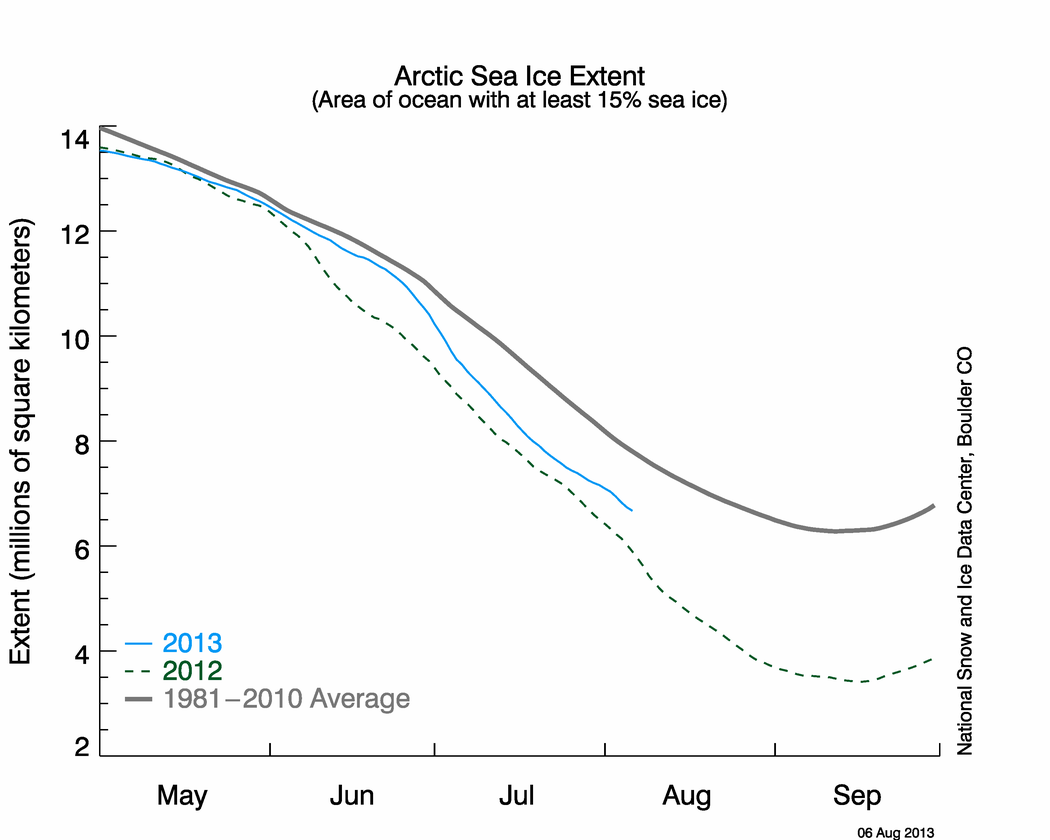
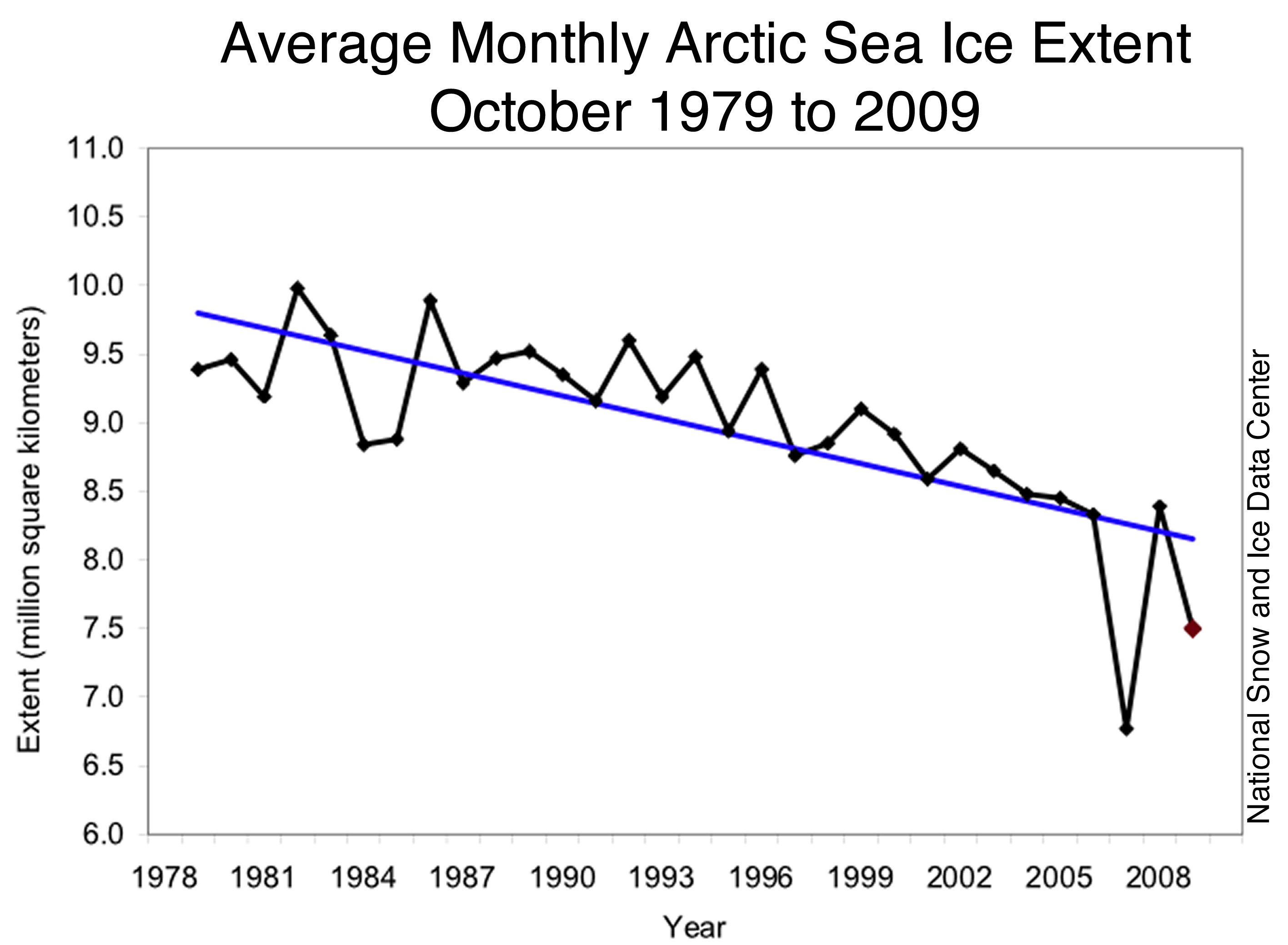
The latest tracking of Arctic sea ice extent from the National Snow and Ice Data Center shows that we’ve hit the record low Arctic sea ice extent for this time of year.  In a post last week, “Warm winds slow autumn ice growth,” NSIDC noted “October 2009 had the second-lowest ice extent for the month over the 1979 to 2009 period.
average monthly data from 1979-2009 for October
As Reuters noted in their remarkable piece on Canadian cryosphere scientist David Barber, “Scientists link higher Arctic temperatures and melting sea ice to the greenhouse gas emissions blamed for global warming.”

Duh.

Here’s more on what Barber found in a recent expedition:

“We are almost out of multiyear sea ice in the northern hemisphere,” he said in a presentation in Parliament. The little that remains is jammed up against Canada’s Arctic archipelago, far from potential shipping routes….

Barber spoke shortly after returning from an expedition that sought — and largely failed to find — a huge multiyear ice pack that should have been in the Beaufort Sea off the Canadian coastal town of Tuktoyaktuk.
 Instead, his ice breaker found hundreds of miles of what he called “rotten ice” — 50-cm (20-inch) thin layers of fresh ice covering small chunks of older ice.
“I’ve never seen anything like this in my 30 years of working in the high Arctic … it was very dramatic,” he said.

“From a practical perspective, if you want to ship across the pole, you’re concerned about multiyear sea ice. You’re not concerned about this rotten stuff we were doing 13 knots through. It’s easy to navigate through.”
Rotten ice — good term.  That’s what human emissions of greenhouse gases have done to the Arctic, covered it in rotten ice.
Photo
Reuters photo caption: “Broken Arctic sea ice as seen from a window in from a U.S. Coast Guard C130 flight over the Arctic Ocean September 30, 2009.”
Scientists have fretted for decades about the pace at which the Arctic ice sheets are shrinking. U.S. data shows the 2009 ice cover was the third-lowest on record, after 2007 and 2008.
An increasing number of experts feel the North Pole will be ice free in summer by 2030 at the latest, for the first time in a million years.

“I would argue that, from a practical perspective, we almost have a seasonally ice-free Arctic now, because multiyear sea ice is the barrier to the use and development of the Arctic,” said Barber.

Fresh first-year ice always forms in the Arctic in the winter, when temperatures plunge far below freezing and the North Pole is not exposed to the sun….

The Arctic is warming up three times more quickly than the rest of the Earth, in part because of the reflectivity, or the albedo feedback effect, of ice.

 As more and more ice melts, larger expanses of darker sea water are exposed. These absorb more sunlight than the ice and cause the water to heat up more quickly, thereby melting more ice.
Barber said the ice was now being melted both by rays from the sun as well as from below by the warmer water.
For more on this well known positive feedback (see “What exactly is polar amplification and why does it matter?)
Scientists are also seeing more cyclones, which pick up force as they absorb heat from the warmer water. The cyclones help generate waves that break up ice sheets and also dump large amounts of snow, which has an insulating effect and prevents the ice sheets from thickening.

After a long search, Barber’s ice breaker finally found a 16-km (10-mile) wide floe of multiyear ice that was around 6-8 meters (20-26 feet) thick. But as the crew watched, the floe was hit by a series of waves, and disintegrated in five minutes.
“The Arctic is an early indicator of what we can expect at the global scale as we move through the next few decades … So we should be paying attention to this very carefully,” Barber said.
We should be paying close attention, since this positive feedback is linked to another, even more dangerous one (see “Tundra 4: Permafrost loss linked to Arctic sea ice loss“).

I asked NSIDC director’s Mark Serreze for a comment on this article, and he wrote me:
Dave Barber’s observations give the sort of on-the-ground confirmation of the situation that lends confidence to predictions that we’re headed towards a seasonally ice-free Arctic Ocean.  Dave’s been up there looking at sea ice conditions for many years. He knows what he’s talking about.
NSIDC Research Scientist Walt Meier also replied:
This is an interesting article. To some extent Dave’s statement depends on how you define multiyear year. Certainly the older ice (e.g., >5 years) is virtually gone and there’s very little 3-4 year-old ice.  However, the past couple years, each summer has retained a fair amount of first-year ice (which ages into second year, and now third year ice). So there is some build-up of what you would term “young” multiyear ice. In theory, that ice could eventually stabilize or even increase (for a time) the multiyear pack. On the other hand, multiyear is constantly moving out of the Arctic as part of the natural drift. So, much of the “young” multiyear ice may be gone before it can mature into older ice.
The most interesting thing in the article is that the old multiyear ice is so broken up now. Even if there is a considerable amount, it is all in broken (or even rotten) floes of ice and not a largely consolidated pack like it used to be. That is a significant change in the character of the ice cover beyond the basic changes in extent and age distribution.
Related posts:
Link: http://climateprogress.org/2009/11/08/arctic-multiyear-sea-ice-nsidc-david-barber/

Comment:

primerica said...

I'm sure ship captains are happy with that. Now they can easily get from the west coast to the east coast through the Arctic ocean instead of the very long way through the Panama canal. It's very sad to see this destruction we've brought upon us though. I just hope that it's still fixable and maybe one day the ice layers will be restored to its previous state.

Take care, Lorne
November 10, 2009 2:52 PM

Friday, November 6, 2009

James Hansen: I just had a baby, at age 68


I Just Had a Baby, at Age 68

            Well, o.k., she was not a terribly impressive baby, less than 6 inches long, delivered by Caesarean section – but I experienced the birth euphoria of a mother (well, not quite the same).  Unlike Anniek, when she delivered Kiki by Caesarean, I did not have the courage to use only local anesthesia – maybe because I knew the baby would be ugly – but I asked about her as soon as the morphine began to wear off.
            Sorry to be uncommunicative the past few months, in large part because I had to deal with prostate cancer – which took longer than I expected.  I had a radical prostatectomy at Sloan-Kettering, where I was fortunate to have the top surgeon, Peter Scardino.  Although head of a large group of surgeons, doctors, nurses, etc., he earns his reputation on the operating floor.  When he emerged from the 4½ hour operation removing my prostate, Anniek says that his face had become narrow and pale, the muscles drawn, but his hands were steady and he explained what he had done.  He meticulously preserves the nerves – I’m not arguing for one prostrate treatment over another, but in my case prostate removal worked – I seem to be cancer-free and I do not have the consequences that men fear with prostate removal.
            The delay in returning to normal activities was because I kept draining lymph fluid for almost six weeks, from a tube in my belly attached to a bag on my side.  Sometimes the lymph circulation rearranges itself in days.  Not in my case.  When it finally did and a doctor tried to pull out the tube (very painfully!), it snapped.  Hence the need for a (minor) operation to remove the ugly baby, which my body had decided to encase in tissue.
            A benefit of the long down time at home was that I finished my book (Storms of My Grandchildren), which will be published 8 December.  I hope it makes clear that the “solutions” favored by Congress (Waxman-Markey in the House and related cap-and-trade bills in the Senate) would lock-in disastrous outcomes for young people.  Among other things.
            [A solution must attack the fundamental problem by placing a rising fee on carbon, collected at the mine or port of entry.  100 percent of the fee should be distributed monthly to the public.  I have argued for 100 percent as a uniform dividend, but 50 percent dividend and 50 payroll tax deduction would make sense.  The dividend is needed because not everyone is on a payroll.  Fee-and-dividend is a progressive tax, most low-income people will gain more than they lose, and it stimulates the economy – it gives the public the means to replace carbon-clunker technology with low- and no-carbon technologies, allowing the market place to choose winning technologies.  Cap-and-trade is a hidden regressive tax, benefiting the select few who have managed to get themselves written into the 2000-page bill.  How could Washington possibly choose lock-in failure over what is obviously the essential approach (they ignore the Larson bill, for example)?  As I discuss in the book, think revolving door between the government and Wall Street.  Think revolving door between Congress and lobbyists.  Goldman-Sachs makes a mint with cap-and-trade (off the public).  Goldman-Sachs does not make one thin dime with fee-and-dividend.]
            I attended one meeting (Club of Rome) near the end of my six-weeks-with-bag.  My main talk is athttp://www.columbia.edu/~jeh1/2009/ClubOfRome_20091026.pdf , with explanatory captions on most of the charts.  I will put up charts for my other more technical talk soon.
            My belly still hurts a bit, but I am going to Boston this week-end to participate in a student-led public action.  Main activity: a “sleep-out” outside the Massachusetts State House, by students who refuse to sleep in dorms/apartments powered by coal-fired electricity.  They are not blaming the state legislature for the climate mess that young people are inheriting, but Massachusetts should be a leader in taking steps to solve the problem.
        If you are in the neighborhood, your presence would be more than welcome.  So far, it has been mostly students, but the support needs to grow.  You can find information on their web sitewww.theleadershipcampaign.org .  There is a likelihood of a summons for trespassing for those participating in the sleep-out.  That’s a misdemeanor – the penalty is not likely to exceed $50, as it is public property – but I would welcome the chance to defend their action in court.
        Plans are being made for a hearing in the Massachusetts Senate at 10 AM on Monday, chaired by Senator Marc Pacheco, Chairman of the Massachusetts Senate Global Warming Committee.  I will try to help make the case that Massachusetts could be leader, as they were at the time of our nation’s founding.  The nature of the present discussions in Washington and Copenhagen show that such leadership, onto a course that would actually work, is desperately needed.  Massachusetts could provide a tipping point.

Jim

Elizabeth Kolbert: Al Gore and “Our Choice”

Elizabeth Kolbert: Al Gore and “Our Choice”

Al Gore’s new book, “Our Choice,” which comes out today, puts forward a series of proposals for taking on global warming. He spoke to Elizabeth Kolbert recently about what he learned in the course of his research, the rise of Chinese environmentalism, and the current debate over cap-and-trade in Congress.

by Elizabeth Kolbert, The New Yorker, November 3, 2009 

KOLBERT: It’s been three and a half years since “An Inconvenient Truth.” Since then, the fourth International Panel on Climate Change assessment labelled the evidence for human-caused warming “unequivocal,” and you and the members of the I.P.C.C. won the Nobel Peace Prize. Meanwhile, CO2 levels and CO2 emissions have kept rising, or at least emissions were until the current recession. What motivated you to write your new book, “Our Choice?”

GORE: Embedded in your question a is commentary on the contrast between the slow pace of the political process and the continued acceleration of the climate crisis, and that is a point well made. However, I’ve come to believe after many years of working in America’s political process—I would add parenthetically add that I’m a recovering politician now, on about step nine—I’ve come to see it and the world’s political system as having at least one thing in common with the climate system: it’s non-linear.

By that, I mean that the potential for significant change can build up without a noticeable outward manifestation until it reaches a critical mass sufficient to overcome the obstacles holding it back. I think that during these last few years there has undeniably been an awakening in many quarters around the world of the gravity and the seriousness of this climate crisis, and the need to act boldly and quickly.

Even though that pressure for change has not yet led to an international treaty, it has led to some significant changes in awareness and in advocacy, and I feel confident in saying that we are very close to a political tipping point beyond which this pressure for change and reform will be manifested in more national laws and in an effective treaty.

KOLBERT: You make the point several times in the book that if we put a price on carbon emissions, a lot of things would sort themselves out. Congress is now debating exactly that. What do you see happening on the Hill, and what are the prospects for legislation?

GORE: I think the prospects are significantly better than the Las Vegas oddsmakers now believe. I said at an environmental-journalists conference in early October that the amount of bipartisan dialogue going on beyond the scenes was far greater than was generally presumed, and not long after that the Op-Ed by John Kerry and Lindsey Graham provided an aperture through which a lot of people saw that. There is a growing desire on the part of some Republicans, as well as Democrats, to get legislation this year.

I think that the passage of the House bill, with whatever flaws you might want to ascribe to it, is nonetheless a very significant milestone, and I believe the Senate will pass legislation before the Copenhagen conference. I think it’s unlikely that the conference committee will finish its work before then, but President Obama will be able to go to Copenhagen having secured passage in both houses of Congress of legislation that does put a price on carbon and, even though the provisions of the legislation are certainly going to be weaker that I or many others would have written, it will represent the kind of first step that America’s political system is capable of taking right now. The prospective tightening of restrictions of carbon emissions will immediately affect business planning cycles and investment decisions.

Once the world makes it clear that we are going to follow a roadmap to a low-carbon economy, the best-managed businesses will seek to race out in front of that emerging trend. Indeed, you’re already seeing a lot of them do exactly that. And along with the legislation and the treaty, there is also the prospective regulation of CO2 by the E.P.A.; the Second Circuit Court of Appeals decision giving a green light to private lawsuits against large CO2 emitters based on tort law; and the prospective requirement to begin, this January 1st, reporting CO2 emissions, a requirement that will cover the emitters of eight-five per cent of the CO2 in the U.S. each year, with the first public release of that annual report coming a year from March.

The last time this kind of reporting mechanism was used, with the toxic reporting initiative, it triggered a mad scramble by the top ten emitters in each city to get off that top ten list.

KOLBERT: What about the Obama Administration? Some people have been critical of its decision to try to get so many big pieces of legislation done at the same time. Do you feel like the Administration is giving global warming the kind of attention it deserves and/or needs?

GORE: That question falls in the crowded category of Things Too Soon to Judge. As the old country lawyer said, “I can argue it either way.” Certainly, it was to the advantage of the climate that the stimulus bill including a very high percentage of green stimulus provisions. It’s also possible to argue that the attention focussed on health care for most of the last six months has allowed bipartisan discussion to go on outside the spotlight to make possible progress quickly before Copenhagen as soon as health care is complete.

Would I have liked to see a lot more focus on climate? Yes, but I also want to give credit where it’s due to the many advances that have occurred in only nine months’ time, and I’ll wait for the more conclusive judgment on legislative strategy.

KOLBERT: Toward the end of the book, you imagine what someone looking back at the year 2009 might think or say. Even in the more optimistic scenario, where progress has been made, the deal that emerges out of Copenhagen is too weak and it’s got to be firmed up in future agreements. We’re just a few weeks out from Copenhagen, and there a lot of people who are worried there’s not going to be any deal. Could you talk about what the prospects for Copenhagen are, and are you going to Copenhagen?

GORE: Oh yes, I’ll be in Copenhagen, and I assume that President Obama will be as well.

KOLBERT: Well, it’s so close to Oslo, after all.

GORE: It’s not far, is it? I think that first of all, the analogy, though perhaps used too often, between the Copenhagen negotiation and the Montreal Protocol of 1987 is still the best analogy available. That treaty was bitterly criticized as being too weak at the time, but it did shift expectations and, only three years later, some of the business opponents of the Montreal Protocol were in London arguing to greatly toughen that agreement. Two years after that—in Copenhagen, ironically—it was toughened much further, and now it is a historic success in the making.

CO2, in comparison to halocarbons, is ubiquitous in the global economy and therefore much more difficult to rein in, but I think the basic model that the world learned in Montreal still does apply.

KOLBERT: One of things you hear being said by the U.S. negotiators—all of whom I know you must know—is that they don’t want to bring home a treaty that they can’t get ratified by the Senate. What do you think of that concern?

GORE: Well, they’re right about that. There is the case to be made for pushing the limits up to the point where leadership and public education can secure ratification of a treaty that goes somewhat farther than what the legislation embodies, but that’s a political judgment call. I do think that the threshold for ratification being seven votes higher than the threshold for breaking a filibuster is a sobering prospect that has to be taken into account. But I think the momentum has already shifted in favor of an agreement, and I would expect to see that shift continue.

I think the high-profile defections from the Chamber of Commerce and the National Association of Manufacturing, and the emergence of new advocates for constraining carbon, like Senator Lindsey Graham, like some of the Fortune 500 companies that were intimidated or opposed from speaking out in the past, is already beginning to make a difference. I think some of the faith-based organizations that are expressing passionate support for a meaningful treaty will continue to make a difference in areas of the country that have been seen as opposed to a treaty in the past, but are now beginning to change their opinions quite significantly.
KOLBERT: While you were doing the research for this book and holding summits, was there anything that surprised you? I know in the book you talk about being an early supporter of corn ethanol and how that promise has not really panned out.

GORE: Just to start with that example, I think that one of the positive achievements of the corn-ethanol program in the U.S. was to establish a distribution infrastructure that is convertible to second-generation ethanol technologies like insomatic hydrolysis and new feedstocks that don’t compete with food crops or the land on which food crops are grown.

But to answer your question in general terms: yes, there were many “aha!” moments for me. It’s always the case, as I’m sure you’ve discovered many times in your own research, that when you look very carefully and deeply into matters that you understood previously well enough to talk about for a few paragraphs but really need to understand, you inevitably find a lot of new insights that are only visible when you really sink into it.
Just to take one example: The opportunity to sequester carbon in soil and simultaneously improve the fertility of soil and fight against the food-insecurity crisis in areas of the developing world—most acutely, in vast areas of sub-Saharan Africa, where the carbon content of their soils is now lower than that carbon content of the Midwestern prairie soil just prior to the dustbowl in the United States. I think that is a very positive congruence of several different human interests that can support one another, as we solve problems simultaneously.

KOLBERT: One of the things that you keep hearing in the debate on climate change is that China isn’t doing anything, which is going to put the U.S. at a competitive disadvantage. That came through in the Kerry-Graham Op-Ed you spoke about. [They proposed a tax on goods that come in from other countries that don’t have the same kind of carbon restrictions.] You spent time in China—is that a fair argument to be making?

GORE: My view is certainly more textured than that. I do spend a lot of time in China, and I’ll be meeting with Premier Wen at a conference in Beijing and presenting my slide show with the graphics in Chinese. During my dialogues with Chinese leaders and activists and others, I have been quite impressed with how far they’ve come in a short period of time.

You know, their new five-year plan has added CO2 reductions to the formula by which bureaucrats and other leaders in the society are judged for promotion and advancement. That’s something I wish we had in the U.S.—they have planted two and a half times more trees than the rest of the world put together in the last several years. There is now a consensus in Chinese society, government, and business on the need to move quickly to CO2 reductions.

They will soon be number one in wind, number one in solar; they are building an eight-hundred-kilovolt super-grid that promises to be the most advanced in the world in less than a decade. And yet they are still opening a new, inefficient, dirty, coal-fired generating plant every eight or nine days.

I do think the direction in which they are moving is clear. Some of these cross-national public-opinion polls, however reliable you think they are, consistently measure the Chinese people at or near the top of the list in terms of the concern and sense of urgency felt about the solving the climate crisis. And that goes with that consensus I’ve mentioned earlier—their media, of course, is not free, but there is a robust debate on the Internet, and Premier Wen has been responding to bloggers!

There is a rising political consciousness in China, and one of the subjects on which the freest debate is allowed is the climate crisis. I choose to see that as half-full and getting closer and closer to full every day.

KOLBERT: One more question. You begin the book with a quote from Kurt Vonnegut, in which he suggested that maybe we should carve on the Grand Canyon for space visitors who come to the earth a century or two from now: “We probably could have saved ourselves, but we were too damned lazy to try very hard … and too damn cheap.” I’d never heard that—it’s arresting. Could you talk a little bit about that, and your decision to put that at the front of the book?

GORE: I had the privilege of knowing and talking with Kurt Vonnegut, and when I was a young man I found his books to be the most compelling and enjoyable that I read at that age. His blend of surrealism and cynicism and dark humor is unique in literature, and when he applied it to the ongoing assault by human civilization on the integrity of the earth’s ecological system, it produced a striking passage that I thought was also unique.

But, in the paragraphs that follow my use of that quote, I make an argument that cynicism and denial have no place when reality still offers hope, and the vast majority of the most knowledgeable climate scientists do believe that we probably still do have time to avoid the worst of the consequences of the climate crisis and set the stage for a long but ultimately successful recovery of the earth’s ecological integrity, to the point where it is again hospitable to human civilization. I believe that very strongly. But one of the obstacles that we confront is the emergence of that kind of despair—so, in a sense, Vonnegut’s quote is intended to startle but also to allow me to make the case that those who want to solve the crisis should keep their guard up against that kind of despair, because it drains energy and is inappropriate and unnecessary at this stage.

Link http://www.newyorker.com/online/blogs/newsdesk/2009/11/elizabeth-kolbert-al-gore-interview.html

Tuesday, November 3, 2009

J. P. Steffensen et al., Science 2008, High-resolution Greenland ice core data show abrupt climate change happens in few years

Science, published online June 19, 2008

High-resolution Greenland ice core data show abrupt climate change happens in few years

J. P. Steffensen et al.


Abstract

The last two abrupt warmings at the onset of our present warm interglacial period, interrupted by the Younger Dryas cooling event, are investigated in high temporal resolution from the Greenland NGRIP ice core. The deuterium excess, a proxy of Greenland precipitation moisture source, switches mode within 1 to 3 years over these transitions and initiates a more gradual change (50 years) of the Greenland air temperature as recorded by water stable isotopes. The onsets of both abrupt Greenland warmings are slightly preceded by decreasing Greenland dust deposition, reflecting wetting of Asian deserts. A northern shift of the ITCZ could be the trigger of these abrupt shifts of northern hemisphere atmospheric circulation resulting in 2 to 4K changes in Greenland moisture source temperature from one year to the next.

Link to abstract:  http://www.sciencemag.org/cgi/content/abstract/1157707v1

Climate change could be the next great military threat

Climate change could be the next great military threat


by Lee Gunn, Bulletin of the Atomic Scientists, October 20, 2009

The United States currently faces one of its greatest and most misunderstood threats: climate change. And as changing climate patterns affect the water supplies critical to human life and agriculture, as sea levels rise and threaten coastal communities, and as changes in the environment increasingly weaken marginal states, the implications for U.S. defense will only grow.

Specifically, instability and conflict abroad will affect three important dimensions of U.S. national security: how the United States chooses to use its power, how and where the U.S. military operates around the world, and with whom Washington will and will not ally itself.

How power is applied. As societies struggle to adapt to changing climate conditions, the U.S. military will be called on more frequently to provide assistance, support governments, fight extremism in weak states, and anticipate natural and human-made disasters. In short, Washington will have to consider carefully why U.S. defense forces fight.

Take Central and South Asia, for example. The region's main water source--the Himalayan glaciers--continues to recede due to climate change. The trend will no doubt lead to a dramatic reduction in freshwater availability, particularly in Pakistan, India, Bangladesh, and parts of China. In fact, a 2007 U.S. Marine Corps report ranks Afghanistan, Pakistan, and India in the top 10 states at risk of instability and violent conflict over water.

A fight for resources among these states--which are already mired in violence and mutual suspicion--would be disastrous for U.S. security interests in the region, particularly since declining conditions among poor segments of the population would be a boon for terrorist and extremist groups' recruitment. Climate-intensified conflict between mobile populations seeking fresh water amid wanton state instability may prompt future policy makers to deploy U.S. forces not only to combat extremism in the region, but also to provide aid to the hungry and displaced.

How and where the military operates. Climate change also will force a reevaluation of how the United States operates its forces around the world. Facilities, logistics, and strategic planning will need to be reassessed. The British Indian Ocean Territory of Diego Garcia, for example, is home to a critical staging facility for U.S. and British naval and air forces operating in the Middle East and Central Asia. But this atoll sits just a few feet above sea level. If sea levels rise as projected, PDF the facility could be lost, forcing the U.S. and British militaries to adapt and adjust their logistics and operations throughout the region.

Who will U.S. allies be? Changing climate conditions also will test traditional alliances and may even inspire unexpected new ones as states grapple with altered topographies, climate refugees, and changes in commercial and economic circumstances.

For instance, the U.S. Navy has been concerned about the loss of sea ice in the Arctic for nearly a decade. Specifically, it worries that as the fabled Northwest Passage opens, military and commercial activities there will increase. One need not look further than the 2007 Russian expedition that planted its flag on the seabed at the North Pole. Not surprisingly, Canada, Norway, Denmark, and the United States--all bordering the Arctic--reacted critically to Russia's perceived act of encroachment.

In addition, the effects of climate change could strain U.S. relations with Mexico. As Latin American water and arable land resources decline, poverty and internal unrest are likely to spread in the region, leading to increased human migration northward--both legal and illegal. Mexico's perceived inability to staunch the flow north would likely raise tensions with Washington, hampering U.S. collaboration in the fight against Mexico-based drug cartels.

Given all of this, the decision, therefore, isn't whether U.S. planners and strategists should adapt and prepare, but how they should adapt and prepare. Looking ahead, China is predicting the loss of 5-10% of its wheat harvest by 2030 due to climate change. In southern Sudan and the Darfur region, existing conflicts will be severely exacerbated by increasingly scarce water, food, and arable land. Responding to these and myriad other climate-influenced changes presents great challenges for the United States and the international community--far beyond the specific capabilities of the U.S. military.

Thus, here's how Washington should begin preparing for the consequences associated with climate change:
  • Invest in capabilities within the U.S. government (including the Defense Department) to manage the humanitarian crises--such as a new flow of “climate refugees”--that may accompany climate change and subsequently overwhelm local governments and threaten critical U.S. interests
  • Prepare military officers and troops to address the security and humanitarian needs of resource-stressed populations and climate refugees
  • Expand global public health programs (e.g., malarial eradication)
  • Negotiate an agreement with Canada and Mexico to govern the use of fresh water in North America;
  • Lead the world in developing conflict-resolution mechanisms to mediate between climate change's winners and losers
If it doesn't take these steps, the United States will be ill-equipped to face climate-induced threats when they're most acute, forcing future generations to deal with a world full of conflict, disease, hunger, displacement, and extremism.

Link:  http://thebulletin.org/web-edition/op-eds/climate-change-could-be-the-next-great-military-threat

D. Notz, PNAS 2009, The future of ice sheets and sea ice: Between reversible retreat and unstoppable loss

Proceedings of the National Academy of Sciences,

The future of ice sheets and sea ice: Between reversible retreat and unstoppable loss


Edited by Hans Joachim Schellnhuber, Environmental Change Institute, Oxford, United Kingdom, and approved September 22, 2009 (received for review March 3, 2009)


We discuss the existence of cryospheric “tipping points” in the Earth's climate system. Such critical thresholds have been suggested to exist for the disappearance of Arctic sea ice and the retreat of ice sheets: Once these ice masses have shrunk below an anticipated critical extent, the ice–albedo feedback might lead to the irreversible and unstoppable loss of the remaining ice. We here give an overview of our current understanding of such threshold behavior. By using conceptual arguments, we review the recent findings that such a tipping point probably does not exist for the loss of Arctic summer sea ice. Hence, in a cooler climate, sea ice could recover rapidly from the loss it has experienced in recent years. In addition, we discuss why this recent rapid retreat of Arctic summer sea ice might largely be a consequence of a slow shift in ice-thickness distribution, which will lead to strongly increased year-to-year variability of the Arctic summer sea-ice extent. This variability will render seasonal forecasts of the Arctic summer sea-ice extent increasingly difficult. We also discuss why, in contrast to Arctic summer sea ice, a tipping point is more likely to exist for the loss of the Greenland ice sheet and the West Antarctic ice sheet.

dirk.notz@zmaw.de


L. G. Thompson et al., PNAS 2009, Glacier loss on Kilimanjaro continues unabated

Proceedings of the National Academy of Sciences,

Glacier loss on Kilimanjaro continues unabated

L. G. Thompson*, H. H. Brecher, E. Mosley-Thompson, D. R. Hardy and B. G. Mark


Edited by James E. Hansen, Goddard Institute for Space Studies, New York, NY, and approved September 22, 2009 (received for review June 1, 2009) 

Abstract

The dramatic loss of Kilimanjaro's ice cover has attracted global attention. The three remaining ice fields on the plateau and the slopes are both shrinking laterally and rapidly thinning. Summit ice cover (areal extent) decreased ≈1% per year from 1912 to 1953 and ≈2.5% per year from 1989 to 2007. Of the ice cover present in 1912, 85% has disappeared and 26% of that present in 2000 is now gone. From 2000 to 2007 thinning (surface lowering) at the summits of the Northern and Southern Ice Fields was ≈1.9 and ≈5.1 m, respectively, which based on ice thicknesses at the summit drill sites in 2000 represents a thinning of ≈3.6% and ≈24%, respectively. Furtwängler Glacier thinned ≈50% at the drill site between 2000 and 2009. Ice volume changes (2000–2007) calculated for two ice fields reveal that nearly equivalent ice volumes are now being lost to thinning and lateral shrinking. The relative importance of different climatological drivers remains an area of active inquiry, yet several points bear consideration. Kilimanjaro's ice loss is contemporaneous with widespread glacier retreat in mid to low latitudes. The Northern Ice Field has persisted at least 11,700 years and survived a widespread drought ≈4,200 years ago that lasted ≈300 years. We present additional evidence that the combination of processes driving the current shrinking and thinning of Kilimanjaro's ice fields is unique within an 11,700-year perspective. If current climatological conditions are sustained, the ice fields atop Kilimanjaro and on its flanks will likely disappear within several decades.

*Correspondence:  thompson.3@osu.edu

Link to free, full, open-access article:  http://www.pnas.org/content/early/2009/10/30/0906029106.full.pdf+html

Link to abstract:  http://www.pnas.org/content/early/2009/10/30/0906029106.abstract

Sunday, November 1, 2009

Andrew Glikson: The Lungs of the Earth

The Lungs of the Earth

by Andrew Glikson, November 1st, 2009

Figure 1. A plot of global mean temperature (increase above pre-industrial
time in degrees C) vs atmospheric greenhouse gas (GHG) concentration
(in CO2-eqivalent, a value which includes the effect of methane). The
assumed climate is 3+/-1.5 degrees C per doubling of CO2-e. The field I, II,
III, etc. correspond to the IPCC’s various emission scenarios. IPCC Climate
Change 2007: Synthesis Report, figure 5.1 ipcc.ch/graphics/syr/fig5-1.jpg

The recent warning by Professor Hans Joachim Schellnhuber, Director of the Potsdam Institute of Climate Impact: “We are simply talking about the very life support system of this planet” [1] is consistent with the lessons arising from the history of the Earth’s atmosphere/ocean system. A rise of CO2-e (CO2-equivalent, including the effect of methane) above 500 ppm and of mean global temperature toward and above 4 C, projected by the IPCC [2], Copenhagen [3] and Oxford [4] scientific reports, as well as reports by the world’s leading climate science bodies (NASA/GISS, Hadley-MET, Potsdam Climate Impact Institute, NSIDC, CSIRO, BOM), would transcend the conditions which allowed the development of agriculture in the early Neolithic, tracking toward climates which dominated the mid-Pliocene (3 Ma) (1 Ma = 1 million years) and further toward greenhouse Earth conditions analogous to those of the Cretaceous (145–65 Ma) and early Cenozoic (pre-34 Ma). Lost all too often in the climate debate is an appreciation of the delicate balance between the physical and chemical state of the atmosphere-ocean-land system and the evolving biosphere, which controls the emergence, survival and demise of species, including humans.

In contrast to Venus, with its thick blanket of CO2 and sulphur dioxide greenhouse atmosphere, exerting extreme pressure (90 bars) at the surface, or Mars with its thin (0.01 bar) CO2 atmosphere, the presence in the Earth’s atmosphere of trace concentrations of greenhouse gases (CO2, methane, nitric oxides, ozone) modulates surface temperatures in the range of -89 and +57.7 degrees Celsius, allowing the presence of liquid water and thereby of life.

Forming a thin breathable veneer only slightly more than one thousand the diameter of Earth, and evolving both gradually as well as through major perturbations with time, the Earth’s atmosphere acts as the lungs of the biosphere, allowing an exchange of carbon gases and oxygen with plants and animals, which in turn affect the atmosphere, for example through release of methane and photosynthetic oxygen.

An excess of carbon dioxide in the lungs triggers a need to breath. When the concentration of CO2 in the atmosphere rises above a critical threshold, the climate moves to a different state. Any significant increase in the level of carbon gases triggers powerful feedbacks. These include ice melt/warm water interaction, decline of ice reflection (albedo) effect and increase in infrared absorption by exposed water. Further release of CO2 from the oceans and from drying and burning vegetation shifts global climate zones toward the poles, warms the oceans and induces ocean acidification.

The essential physics of the infrared absorption/emission resonance of greenhouse molecules has long been established by observations in nature and laboratory studies, as portrayed in the relations between atmospheric CO2 and mean global temperature projections in Figure 1.

The living biosphere, allowing survival of large mammals and of humans on the continents, has developed when CO2 levels fell below about 500 ppm some 34 million years ago (late Eocene). At that stage, and again about 15 million years ago (mid-Miocene), development of the Antarctic ice sheet led to a fundamental change in the global climate regime.

About 2.8 million years ago (mid-Pliocene) the Greenland ice sheet and the Arctic Sea ice began to form, with further decline in global temperatures expressed through glacial-interglacial cycles regulated by orbital forcing (Milankovic cycles), with atmospheric CO2 levels oscillating between 180 and 280 ppm CO2 [5]. These conditions allowed the emergence of humans in Africa and later all over the world [6].

Humans already existed 3 million years-ago, however these were small clans which, in response to changing climates migrated to more hospitable parts of Africa and subsequently Asia [6]. About 124 thousand years ago, during the Emian interglacial, temperatures rose by about 1 degree C and sea levels by 6-8 meters.
The development of agriculture and thereby human civilization had to wait until climate stabilized about 8000 years ago, when large scale irrigation along the great river valleys (the Nile, Euphrates, Hindus and Yellow River) became possible.

Since the industrial revolution humans dug, pumped and burnt more than 320 billion tons of carbon which accumulated as the result of biological activity during 400 million years. 320 billion tons of carbon is more than 50% the carbon concentration of the original atmosphere (540 billion tons). As a consequence the level of CO2 in the atmosphere has risen by about 40%, from 280 to 388 ppm.

The world is now witnessing a dangerous shift in the state of the atmosphere-ocean system, an extremely rapid change from the interglacial condition of the Holocene, which began about 11,700 years-ago, to conditions analogous to those of the mid-Pliocene when mean global temperatures were 2-3 degrees C higher, and sea levels about 25 +/- 12 meters higher, than the early 20th century.

In terms of the combined effects of CO2, methane and nitric oxide, the rise of greenhouse gases has reached about 460 ppm CO2-equivalent (CO2-e) (Figure 1), only slightly below the 500 ppm level which correlates with the maximum stability of the Antarctic ice sheet.

The current rate at which CO2 is rising, 2 ppm per year, is unprecedented in the recent history of the Earth, with the exception of the onset of greenhouse atmospheric conditions following major volcanic episodes and asteroid and comet impacts, which led to the large mass extinctions in the history of the Earth (end-Ordovician, end-Devonian, end-Permian and Permian-Triassic boundary, end-Triassic, end-Jurassic, end-Cretaceous) (Figure 2).

Further rise of CO2-e above 500 ppm and mean global temperatures above 4 degrees C can only lead toward greenhouse Earth conditions such as existed during the Cretaceous and early Cenozoic (Figure 2).
At 4 degrees C advanced to total melting of the Greenland and Antarctic ice sheets leads to sea levels tens of meters higher than at present.

Since the 18th century mean global temperature has risen by about 0.8 degrees C. Another 0.5 degrees C is masked by industrial-emitted aerosols (SO2), and further rise ensues from current melting of the ice sheets and sea ice, with loss of reflection (albedo) of ice and gain in infrared absorption by open water, leading to feedback effects.

The polar regions, actinv as the “thermostats” of the Earth, are the source of the cold air current vortices and the cold ocean currents, such as the Humboldt and California current, which keep the Earth’s overall temperature balance, much as the blood stream regulates the body’s temperature and the supply of oxygen.

Unfortunately climate change is not an abstract notion, with consequences manifest around the globe in terms of (1) Polar ice melt; (2) Sea level rise; (3) Migration of climate zones toward the poles; (4) Desertification of temperate climate zones; (5) Intensification of hurricanes and floods, related to increase in the level of atmospheric energy; (6) acidification of the oceans; (7) Destruction of coral reefs [2-4].

Which is why the European Union and in recent international conferences defined a rise by 2.0 degrees C as the maximum permissible level. A dominant scientific view has emerged that atmospheric CO2 levels, currently at 388 ppm, need to be urgently reduced to below 350 ppm [5]. This is because, a rise of CO2 concentration above 350 ppm triggers feedback effects, which include:
    1. Carbon cycle feedback due to warming, which dries and burns vegetation, with loss of CO2. With further warming, the onset of methane release from polar bogs and sediments is of major concern. 2. Ice/melt water interaction feedbacks: melt water melts more ice, ice loss results in albedo loss, exposed water absorb infrared heat. Because CO2 is cumulative, with atmospheric residence time on the scale of centuries to millennia, it may not be possible to stabilize or control the climate through small incremental reduction in emission and avoid irreversible tipping points [7]. Humans can not argue with the physics and chemistry of the atmosphere. Time is running out. What is needed are global emergency measures, including: 1. Urgent deep cuts in carbon emissions by as much as 80%. 2. Parallel Fast track transformation to non-polluting energy utilities – solar, solar-thermal, wind, tide, geothermal, hot rocks. 3. Global reforestation and re-vegetation campaigns, including application of biochar.
Business as usual, with its focus on the annual balance sheet, can hardly continue under conditions of environmental collapse. Governments, focused on the next elections, need to focus on the survival of the next generation.

Good planets are hard to come by.
http://ecoworldly.com/2009/10/02/is-the-us-climate-illiterate/ ; http://www.nature.com:80/climate/2009/0911/full/climate.2009.106.html ;

IPCC 2007 AR4 - http://www.ipcc.ch/publications_and_data/publications_and_data_reports.htm
Copenhagen Synthesis Report http://www.anu.edu.au/climatechange/content/news/copenhagen-synthesis-report-released-today/
Oxford 28-30 October, 2009 meeting http://www.eci.ox.ac.uk/4degrees/programme.php
Hansen et al. 2008. Target CO2: Where Should humanity aim? http://www.columbia.edu/~jeh1/2008/TargetCO2_20080407.pdf ; Glikson, A.Y., 2008. Milestones in the evolution of the atmosphere with reference to climate change. Aust. J. Earth Sci. 55 no. 2. http://www.zeroemissionnetwork.org/files/MILESTONES_19-6-07.pdf
deMenocal, P.B. African climate change and faunal evolution during the Pliocene-Pleistocene. Earth and Plant. Sci. Lett, Frontiers, 6976, 1-22, 2004 http://www.ldeo.columbia.edu/~peter/Resources/Publications/deMenocal.2004.pdf
Lenton et al., 2008. Tipping points in the Earth climate system. http://www.sciencedaily.com/releases/2008/02/080204172224.htm
Royer et al., 2004. CO2 as a primary driver of Phanerozoic climate. GSA Today; v. 14; no. 3, doi: 10.1130/1052-5173
Berner et al., 2007. Oxygen and evolution. Science 316, 557 – 558. http://www.vancouver.wsu.edu/fac/bishop/Teaching/A%20Biol403-2008/Readings/Oxygen%20Berner%20Ward%202007.pdf


Figure 2. Variations in atmospheric CO2 concentrations and oxygen concentrations correlated with ice ages (blue histograms, extending according to geographic latitude). Note the sharp decline in atmospheric CO2 during ice ages. After Royer et al. 2004 [8] and Berner et al. 2007 [9].

-###-
by Andrew Glikson
Earth and paleoclimate scientist
Institute of Climate Change
Australian National University
Canberra, A.C.T. 0200

Link:  http://www.thepeoplesvoice.org/TPV3/Voices.php/2009/11/01/the-lungs-of-the-earth

Australian farmer sequesters 1,100 kilos of carbon per hectare by injecting the fumes from his diesel tractor into the soil as he plants his crops, saving $1200 per hectare in fertilizer costs

Dear Readers,

This is the first piece of really good news on the topic at hand that I have read in about two years.

Tenney

A farmer's field of dreams buries climate change war

by Carmel Egan, The Age, Australia, November 1, 2009

A battle is raging beneath the bobbing heads of Ian Linklater's wheat crop in the red, loamy soils of Gol Gol.

In this break-your-heart farming land near the Murray River, north of Mildura, the enemies are drought, nutrient depletion, salt and rising farming costs.

The battle's unlikely heroes are Mr Linklater and his 400-horsepower, oxygen-sucking, diesel-guzzling, carbon-spewing tractor.

International debate rages over the cost and plausibility of reducing greenhouse gas emissions from coal-fired power stations by pumping carbon underground.

But Mr Linklater is literally ploughing ahead, injecting his tractor's fossil fuel exhaust fumes directly into the ground, where they enhance the biochemical interaction between plants and soil microbes. And it seems his home-grown version of carbon sequestration, introduced in 2007, is getting results, with this year's crop, aided by better rainfall, his best since 2001.

"It might not seem that emissions from one tractor could do a lot, but per hectare it emits 1100 kilos of carbon," Mr Linklater says.

Adapting methods developed by Canadian farmer Gary Lewis, of BioAgtive Technologies, Mr Linklater spent $20,000 customising equipment that cools the tractor's fumes to 30 degrees then expels them into the soil as gas fertiliser when he sows his crop.

His trials, which are being replicated in Canada, Britain and South Africa, are gaining global attention and are now the focus of scientific research. ''When I heard about it, I listened and the science of it seemed to make sense, but with fertiliser costs at about $1200 to $1500 a tonne, the economics of it got me into gear,'' Mr Linklater says.

At today's prices it would have cost him $500,000 in phosphorous and nitrogen fertilisers to prepare 3900 hectares for planting. But in the two years since he and his sons began trialling the new technique, no fertiliser has been applied. The saving is enough to wipe a healthy chunk off the debt that he, like many drought-stricken farmers, has racked up through years of meagre rain and below-break-even wheat prices.

Political debate continues over inclusion of agriculture in Australia's emissions trading scheme, but Mr Linklater says farmers have nothing to fear from such a scheme. ''It's coming anyway, regardless of what happens in Australia. Governments around the world are moving ahead with carbon taxes and we will all have to pay.''

The Federal Opposition has proposed amendments permanently removing agriculture's methane emissions from an emissions trading scheme while allowing farmers to make money through carbon credits earned from replanting trees and storing carbon in the soil.

The Government has delayed a decision on agriculture, which accounts for 18% of the nation's greenhouse gases, until 2013.

Link:  http://www.theage.com.au/national/a-farmers-field-of-dreams-buries-climate-change-war-20091031-hqty.html

Grist: New Yorker "journalist" willingly ensnared by corporate interests -- new book on "denialism" doesn't even mention global warming

Dear Readers,

This article says quite a lot about genetically modified crops. The seed companies gain control over third-world farmers with these things -- here in Brazil, it has been shown that small farmers can do much better by planting at least 50 different types of fruit and nut trees and bushes and other crops. This may sound like a lot, but really it isn't. Their individual pieces of land are small, and this makes them fully sustainable and with excess to sell. It eliminates the need to chop down everything, burn it all, plant a crop for a year or two, then slash and burn more land. In fact, this practice on land that has already been burned will bring the land back to sustainable productivity.

Tenney

A reader sent me this e-mail, and I think it is only fair to post it -- I didn't read the book, only the review on which I relied perhaps too heavily:

"I saw your comments on that book, which I have just read. You can think and say what you want about his approach, but he certainly does mention global warming and make it clear that he considers climate denialists crazy people. From the introduction, talking about molecular biology: "no discovery is more likely to provide solutions to the greatest threat the earth has ever faced: the rapid pace of global warming."

Again, you can wonder if his solutions would work, but he certainly doesn't ignore the issue.

xxxx"
November 1, 2009 4:58 p.m.

Not just a river in Egypt: 

Michael Specter’s new book ‘Denialism’ misses its targets


by Tom Philpott, Grist, October 31, 2009

In the late 18th century, Edward Gibbon fretted about getting into trouble for his blunt take on the early Christians. Short summary: their intolerance and stupidity unwittingly helped bring down Rome. In the above-quoted passage of his Decline and Fall, Gibbon tried to prepare the gentle reader for his coming exposé of early-church idiocy.

Like the great institutions of European Christianity, modern science has amassed tremendous power—and not always lived up to its founding creeds. Science needs a Gibbon—someone who appreciates its intellectual grandeur and potential, but who also can train a cold eye on the “inevitable mixture of error and corruption” that has accompanied its tenure since the Enlightenment.

That Gibbon is not Michael Specter, a New Yorker staff writer and author of the new book Denialism: How Irrational Thinking Hinders Scientific Progress, Harms the Planet, and Threatens Our Lives. His book purports to defend science from its philistine critics—people who, in Specter’s view, reflexively deny the validity of the scientific process.

In his intro, Specter sets up the defining focus of the book. He contrasts the “rigorous and open-minded skepticism of science” with “the inflexible certainty of ideological commitment” (i.e., “denialism”). Already, we’re on thin intellectual ice; Specter evidently believes in a pure science, one that exists completely apart from ideology. In Gibbon’s phrasing, he’s defending a science as “she descended from Heaven [read: the Enlightenment], arrayed in her native purity.”

organicMenace to society? An organic farmer, with bounty. According to "Denialism," organic farming threatens millions in Africa. According to the UN, not so much. But science doesn’t exist in an ideal state. Like the arts, it lives on its patrons—and their interests shape its contours. Here in the United States, public funding for universities and research has plummeted since the Reagan era. Into that void have stepped monied interests—corporations more inclined to finance the generation of proprietary knowledge than the sort of pure science Specter so values.

Does this factor automatically invalidate the scientific enterprise? Of course not. But anyone who takes on the topic of modern science has to account for it—or risk playing the fool. Specter blithely ignores the political economy of science as it is practiced. That oversight severely limits the value of his book.

But there’s another, even more glaring oversight at work here. In a book devoted to “denialism,” and “how irrational thinking hinders scientific progress, harms the planet, and threatens our lives,” there is almost no discussion of the most powerful and successful of all the denier cliques: those who insist human-induced climate change is a hoax.

So what do we find in these pages? We get a chapter defending the pharmaceutical industry against critics who question its wares—an industry with nearly $300 billion in sales in the U.S. alone, and fast-growing markets overseas. Specter’s defense aside, Big Pharma typically vies with “oil and mining” and “commercial banks” for the title of most profitable industry in the United States.

There’s a chapter decrying those who question the necessity of vaccinations—even as global child vaccine rates continue to rise. (Indeed, according to a recent report, the main factor holding vaccines back isn’t denialism, but rather their heightened cost.)

We get a chapter lambasting what Specter calls the “organic fetish”—even though organic food sales remain less than 5 percent of the U.S. market (as Specter acknowledges). But really, this chapter (more on which below) amounts to a ringing defense of genetically modified organisms—which can now be found in 75 percent+ of the offerings on supermarket shelves.

Another chapter blasts the herbal remedy and supplement market—substantial at $23 billion in sales per year (according to this report), but still a fraction of the pharma market’s size.

In other words, Specter mainly trains his sights on unsuccessful or marginally empowered “deniers,” such as those challenging the pharma behemoth or vaccines for children.

But what about the successful deniers—the ones who have managed to block any meaningful response to climate change from the federal government, and are even now fouling up the effort to pass an effective climate bill? These folks, part of a loosely concerted movement funded largely by the oil and coal industries, get barely a mention in Denialism; they certainly don’t rate a chapter.

The book’s index has no entry for “climate change.” The entry for “Global warming” cites just one page—a reference to genetically modified foods as a “solution” to global warming.

denialismDoes this mean that Specter thinks Monsanto’s critics—of whom I am one—pose more of threat to humanity than the likes of Sen. James Inhofe, who airs his views not in a blog but on the floor of the U.S. Senate? Monsanto has certainly shaken off its deniers; it now dominates the U.S. corn, soy, and cotton seed markets. The movement to mitigate climate change hasn’t been so lucky.

Specter’s failure to consider this most successful foray into denialism just astounds me.  Did an author really just publish a book about “denialism”—and forget to address climate-change deniers? It’s like writing a book about the British invasion of the 1960s, and neglecting to mention the Beatles and the Rolling Stones.

OK, so what’s in Specter’s chapter on organics and GMOs? Astonishingly, not very much science. Two major assumptions underlie it: organic agriculture delivers frightfully low yields, and GMO agriculture delivers reassuringly high yields. He doesn’t deliver data to back up either of those claims. Here are two studies, both of which came out in time for consideration in Denialism, that Specter really should have grappled with: (1) a 2009 study by the Union of Concerned Scientists showing that after decades of research, transgenic seeds have yet to deliver yield increases; and (2) a 2005 study in Bioscience (summary here) showing that yields of organically grown corn and soy match those of their conventional counterparts—with dramatically lower energy inputs.

Straddling his two wobbly, undefended givens about GMO and organic yields, Specter leaps to the conclusion that proponents of organic agriculture are dooming millions to starvation. Or as he puts it:
An organic universe sounds delightful, but it would consign millions in Africa and in much of Asia to malnutrition and death.
To hear Specter tell it, the only thing standing between the African continent and a future marked by widespread famine is a complete surrender to GMO technology. But in declaring that vision, he’s brazenly denying the conclusions of the largest and most comprehensive study on the future of agriculture in the global south, the International Assessment of Agricultural Science and Technology for Development (IAASTD).
Under the auspices of the United Nations, World Bank, WHO, and other institutions, the IAASTD gathered 400 scientists and development experts from dozens of nations to assess the very problems that concern Specter. A three-year project, it has been called the IPCC of agriculture. Its conclusion: agroecological practices—including the very organic-farming techniques Specter finds so frightful—are at least as important as biotechnology in terms of “feeding the world” in the decades to come.

The study [PDF] is at best lukewarm on GMOs. It openly doubts whether GMOs actually increase yields; and deplores the patent regime that now governs them. The IAASTD states:
In developing countries especially, instruments such as patents may drive up costs, restrict experimentation by the individual farmers or public researchers while also potentially undermining local practices that enhance food security and economic sustainability. In this regard, there is particular concern about present IPR instruments eventually inhibiting seed-saving, exchange, sale and access to proprietary materials necessary for the independent research community to conduct analyses and long term experimentation on impacts. Farmers face new liabilities: GM farmers may become liable for adventitious presence if it causes loss of market certification and income to neighboring organic farmers, and conventional farmers may become liable to GM seed producers if transgenes are detected in their crops.
The IAASTD turned out to be so unenthusiastic about GMOs, in fact, that Croplife International, the trade group for the globe’s dominant GMO/agrichemical purveyors, angrily pulled out of participation shortly before its release.

I’m not blasting Specter for refusing to agree with the IAASTD’s conclusions, but I do find it inexcusable that he failed to grapple with this vast scientific undertaking. In doing so, he lurches toward a kind of denialism of his own.

Generally, he might have more fully engaged the major literature on ag development in the global south. He glancingly refers to the FAO’s 2003-2004 “State of Food and Agriculture” paper that gave tepid support for GMOs among poor farmers (while stressing that they’re “not a panacea”). Yet Specter ignores a more recent paper (this one from 2008, by the UN Conference on Trade and Development) that’s directly relevant to the topic of his chapter: its on the potential of for organic ag in Africa. The paper concludes:
Organic agriculture can increase agricultural productivity and can raise incomes with low-cost, locally available and appropriate technologies, without causing environmental damage. Furthermore, evidence shows that organic agriculture can build up natural resources, strengthen communities and improve human capacity, thus improving food security by addressing many different causal factors simultaneously ... Organic and near-organic agricultural methods and technologies are ideally suited for many poor, marginalized smallholder farmers in Africa, as they require minimal or no external inputs, use locally and naturally available materials to produce high-quality products, and encourage a whole systemic approach to farming that is more diverse and resistant to stress.
Again, no need to agree with every science-based report that praises organic ag. But to pretend such papers don’t exist is poor journalism. Judging from his organic chapter, Specter spent a lot of time trolling the aisles at Whole Foods, marvelling at the simplistic comments of the shoppers. Fine. I have no doubt that he heard silly, science-denying things there. But where is the push to find the intersections between organic and science—such at the Rodale Institute in Pennsylvania, which has for years been running a test organic farm, complete with control farm? The results of its work, often in conjunction with USDA researchers, show that innovative organic techniques have at least as much promise for mitigating and surviving climate change as some patent-protected transgenic seed cooked up in a Monsanto lab.

Scientific output is messy and full of contradictions. And that brings me back to my broader critique of this book: that Specter defends an ideal, objective science that doesn’t exist in this world. There is no greater case study of the grubbiness of real-world science than the rise of Specter’s beloved GMOs.

(I’m still marveling at this statement, from the introduction: “I wonder, as the ice sheet in Greenland disappears, the seas rise, and our sense of planetary foreboding grows, will denialists consider the genetically engineered organisms that propel our cars and sustain our factories as a continuation of what [organic champion] Lord Melchett described as a war against nature?”)

GMOs are hardly a product of the kind of pure and objective science that Specter celebrates. Indeed, the few companies involved in GMO seed production have been accorded such extraordinary intellectual property power by the U.S. government that research scientists have risen up in rebellion.

In an article published in February of this year—maybe too late for consideration by Specter—The New York Times reported that 26 corn-insect specialists signed a letter to the EPA complaining that “no truly independent research [on GMOS] can be legally conducted on many critical questions” because the patent-holding companies have so much power over research. From the Times:
The problem, the scientists say, is that farmers and other buyers of genetically engineered seeds have to sign an agreement meant to ensure that growers honor company patent rights and environmental regulations. But the agreements also prohibit growing the crops for research purposes.
Shockingly, “The researchers ... withheld their names [from the EPA letter] because they feared being cut off from research by the companies.” Now there’s an example of scientists who are free to pursue the path of truth!

I’d also urge Specter to read a paper by Don Lotter, published early this year in the International Journal of the Sociology of Food and Agriculture. Lotter’s paper, provocatively titled “The Genetic Engineering of Food and The Failure of Science,” shows how the collapse of biology’s “central dogma”—the one-gene, one-trait thesis that fell apart with the mapping of the human genome—exposed GM plant breeding as a rather crude tool. He traces the rise of GMOs, convincingly arguing that political and economic power, not scientific rigor, have driven the technology’s ascent.

But political and economic power are precisely what elude Specter’s gaze. This great defender of science appears to be cursed with something that a love of science should have cured: naiveté. To be sure, the kind of know-nothing, reflexive anti-scienticism that Specter deplores certainly exists; and its adherents need a kick in the pants. Specter’s boot misses the target. Moreover, he sees deniers everywhere, except where they are actually powerful and effective: denying climate change.
Grist food editor Tom Philpott farms and cooks at Maverick Farms, a sustainable-agriculture nonprofit and small farm in the Blue Ridge Mountains of North Carolina. Follow my Twitter feed; contact me at: tphilpott@grist.org

Link to article at Grist:  http://www.grist.org/article/2009-10-31-michael-specter-denialism-organic-GMO/