Blog Archive

Showing posts with label denial. Show all posts

Sunday, July 9, 2017

Ben Santer, WaPo: I’m a climate scientist. And I’m not letting trickle-down ignorance win.

How to fight the Trump administration's darkness


Fact Checkers Glenn Kessler and Michelle Lee examine several of President Trump's claims from his speech announcing the U.S. withdrawal from the Paris climate accord on Thursday. (Video: Meg Kelly/Photo: Jabin Botsford/The Washington Post)

by Ben Santer, The Washington Post, July 5, 2017


I’ve been a mountaineer for most of my life. Mountains are in my blood. In my early 20s, while climbing in France, I fell into a crevasse on the Milieu Glacier, at the start of the normal route on the Aiguille d’Argentiere. Remarkably, I was unhurt. From the grip of the banded ice, I saw a thin slit of blue sky 120 feet above me. The math was simple: Climb 120 feet. If I reached that slit of blue sky, I would live. If I didn’t, I’d freeze to death in the cold and dark.
Now, more than 40 years later, it feels like I’m in a different kind of darkness — the darkness of the Trump administration’s scientific ignorance. This is just as real as the darkness of the Milieu Glacier’s interior and just as life-threatening. This time, I’m not alone. The consequences of this ignorance affect every person on the planet.
Imagine, if you will, that you spend your entire professional life trying to do one thing to the best of your ability. In my case, that one thing is to study the nature and causes of climate change. You put in a long apprenticeship. You spend years learning about the climate system, computer models of climate and climate observations. You start filling a tool kit with the statistical and mathematical methods you’ll need for analyzing complex data sets. You are taught how electrical engineers detect signals embedded in noisy data. You apply those engineering insights to the detection of a human-caused warming signal buried in the natural “noise” of Earth’s climate. Eventually, you learn that human activities are warming Earth’s surface, and you publish this finding in peer-reviewed literature.
You participate in rigorous national and international assessments of climate science. You try to put aside all personal filters, to be objective, to accommodate a diversity of scientific opinions held by your peers, by industry stakeholders, and by governments. These assessments are like nothing you’ve ever done before: They are peer review on steroids, eating up years of your life.
The bottom-line finding of the assessments is cautious at first. In 1995, the conclusion is this: “The balance of evidence suggests a discernible human influence on global climate.” These 12 words are part of a chapter on which you are first author. The 12 words change your life. You spend years defending the “discernible human influence” conclusion. You encounter valid scientific criticism. You also encounter nonscientific criticism from powerful forces of unreason, who harbor no personal animus toward you but don’t like what you’ve learned and published — it’s bad for their business.
Your peers are your fiercest critics. They are constantly kicking the tires. Show us that your “discernible human influence” results aren’t due to changes in the sun, or volcanic activity, or internal cycles in the climate system. Show us that your results aren’t due to some combination of these natural factors. Convince us that detection of a human fingerprint isn’t sensitive to uncertainties in models, data, or the statistical methods in your tool kit. Explain the causes of each and every wiggle in temperature records. Respond to every claim contradicting your findings.
So you jump through hoops. You do due diligence. You go down every blind alley, every rabbit hole. Over time, the evidence for a discernible human influence on global climate becomes overwhelming. The evidence is internally and physically consistent. It’s in climate measurements made from the ground, from weather balloons, and from space — measurements of dozens of different climate variables made by hundreds of different research groups around the world. You write more papers, examine more uncertainties, and participate in more scientific assessments. You tell others what you’ve done, what you’ve learned, and what the climatic “shape of things to come” might look like if we do nothing to reduce emissions of heat-trapping greenhouse gases. You speak not only to your scientific peers but also to a wide variety of audiences, some of which are skeptical about you and everything you do. You enter the public arena and make yourself accountable.
After decades of seeking to advance scientific understanding, reality suddenly shifts, and you are back in the cold darkness of ignorance. The ignorance starts at the top, with President Trump. It starts with untruths and alternative facts. The untruth that climate change is a “hoax” engineered by the Chinese. The alternative fact that “nobody really knows” whether climate change is real. These untruths and alternative facts are repeated again and again. They serve as talking points for other members of the administration. From the Environmental Protection Agency administrator, who has spent his career fighting climate change science, we learn the alternative fact that satellite data shows “a leveling off of warming ” over the past two decades. The energy secretary tells us the fairy tale that climate change is primarily due to “ocean waters and this environment that we live in.” Ignorance trickles down from the president to members of his administration, eventually filtering into the public’s consciousness.
Getting out of this metaphorical darkness is going to be tough. The administration is powerful. It has access to media megaphones and bully pulpits. It can abrogate international climate agreements. It can weaken national legislation designed to protect our air and water. It can challenge climate science and tell us that more than three decades of scientific understanding and rigorous assessments are all worthless. It can question the integrity and motives of climate scientists. It can halt satellite missions and impair our ability to monitor Earth’s climate from space. It can shut down websites hosting real facts on the science of climate change. It can deny, delay, defund, distort, dismantle. It can fiddle while the planet burns.
I have to believe that even in this darkness, though, there is still a thin slit of blue sky. My optimism comes from a gut-level belief in the decency and intelligence of the people of this country. Most Americans have an investment in the future — in our children and grandchildren, and in the planet that is our only home. Most Americans care about these investments in the future; we want to protect them from harm. That is our prime directive. Most of us understand that to fulfill this directive, we can’t ignore the reality of a warming planet, rising seas, retreating snow and ice, and changes in the severity and frequency of droughts and floods. We can’t ignore the reality that human actions are part of the climate change problem and that human actions must be part of the solution. Ignoring reality is not a viable survival strategy.
Trump has referred to a cloud hanging over his administration. The primary cloud I see is the self-created cloud of willful ignorance on the science of climate change. That cloud is a clear and present threat to the lives, livelihoods, and health of every person on the planet, now and in the future. This cloud could be easily lifted by the president himself.
For my own part, I don’t intend to spend the rest of my life in darkness or silently accepting trickle-down ignorance. I didn’t climb out of a crevasse on the Milieu Glacier for that.
https://www.washingtonpost.com/news/posteverything/wp/2017/07/05/im-a-climate-scientist-and-im-not-letting-trickle-down-ignorance-win/

Thursday, April 14, 2016

Kerry Emanuel: "AGU makes a mockery of its bylaw" as AGU continues to accept dirty money from ExxonMobil, even tho it is clear that Exxon promotes and disseminates misinformation of science

FOR IMMEDIATE RELEASE
April 14, 2016
Contact: Ben Scandella, 206-276-2699, bscand@gmail.com

World’s largest Earth science organization to continue accepting ExxonMobil sponsorship despite calls from 250+ geoscientists

Cambridge, MA Today, the President of the American Geophysical Union (AGU)  the world’s largest association of Earth scientists  announced the AGU Board’s decision to continue accepting sponsorship from ExxonMobil, despite calls for an end to this relationship from more than 250 geoscientists owing to ExxonMobil’s past and present climate science disinformation.

The AGU’s 2015 Organizational Support Policy states that “AGU will not accept funding from organizational partners that promote and/or disseminate misinformation of science, or that fund organizations that publicly promote misinformation of science,” and that Organizational Partners are bodies that “share a vested interest in and commitment to advancing and communicating science and its power to ensure a sustainable future.

MIT climate scientist Kerry Emanuel sees the AGU’s decision as “a mockery of its own bylaw,” stating that, “If the AGU cannot turn down a mere $35K from a high-profile disinformer like Exxon, then it is hard to imagine it ever adhering to its bylaw. I am considering withdrawing from the AGU.”

Emanuel was one of the 108 geoscientists who sent an open letter to the AGU President on February 22, 2016, urging the association to end its sponsorship deal with ExxonMobil. Since then, more than 170 geoscientists worldwide have signed on. The AGU President initially responded that “The AGU Board of Directors will take up the questions raised in this letter at their upcoming meeting in April.” At this meeting, the AGU Board passed a motion approving the continuation of its “current engagement between ExxonMobil and AGU including acceptance of funding from ExxonMobil.”

In light of the AGU’s decision and reasoning, Former President of the American Association for the Advancement of Science and Harvard Professor James J. McCarthy, another letter signatory, commented, "My jaw dropped when I read that ‘Ultimately, we concluded that it was not possible to determine conclusively whether or not ExxonMobil is currently participating in misinformation about science, either directly or indirectly.’ A new report just this week show that ExxonMobil is still spending tens of millions obstructing climate legislation. How much more is on the ‘indirect’ ledger?"

Indeed, the AGU’s decision appears to ignore the consilience of evidence demonstrating ExxonMobil’s ongoing support of climate science misinformation. Originators of the open letter submitted a report documenting ExxonMobil’s present involvement in climate misinformation for the Board’s consideration (a copy of the report is available for download here). The report provides specific examples of how ExxonMobil is “in violation of AGU’s Policy because it remains a leading sponsor of think tanks, advocacy groups, and trade associations that promote climate science misinformation. Moreover, ExxonMobil financially supports more than 100 climate-denying members of Congress and continues to generate its own misinformative comments about climate science.” Such examples include: (1) during ExxonMobil’s 2015 Annual Meeting of Shareholders, ExxonMobil CEO Rex Tillerson cast doubt about the reliability of climate models by remarking: “we don’t really know what the climate effects of 600 ppm versus 450 ppm [of atmospheric CO2] will be because the models simply are not that good”; (2) at the ExxonMobil-sponsored 2015 Annual Conference of the American Legislative Exchange Council (ALEC), Stephen Moore, a member of ALEC’s Private Enterprise Advisory Board, asserted that: “The biggest scam of the last 100 years is global warming...It’s no surprise that when you give these professors $10 billion, they’re going to find a problem.”

In addition to Emanuel and McCarthy, many other signatories of the open letter voiced their disappointment and concern over the AGU’s decision. Cornell Professor Charles Greene stated, “At what level does the behavior of a corporate sponsor become sufficiently reprehensible for AGU to refuse its support? I guess that a corporation like ExxonMobil, which has deceived the general public for decades while placing human society at great risk, has not achieved that level. The only conclusion to be drawn is that AGU will accept money from just about any corporate entity, no matter how unethical its behavior. I certainly will not attend an ExxonMobil-sponsored Fall Meeting, and I hope that every AGU member who feels the same way about this lapse in judgement will consider sending a similar message.”

What was called for was an exercise of judgment. Instead, the AGU avoided taking a principled stand by claiming it is not possible for it to make a judgement. The leadership seems prepared to accept some loss of membership, but what it may not be prepared for is the redoubled commitment of members who won't relent in shining an even brighter light on the inconsistency of the AGU's mission of a sustainable planetary future with its endorsement of ExxonMobil's past and current activities,” said Nathan Phillips, Professor of Earth and Environment at Boston University.

Saturday, March 5, 2016

Michael Mann: No hiatus in attempts to misuse the science on global warming

There is no hiatus in attempts to misuse the science on global warming, says Michael Mann, a prime target of climate deniers

A sign warning people to in California to prepare for El Nino
El Niño influences global temperatures
Mark Boster/Los Angeles Times via Getty Images
by Michael E. Mann, NewScientist, March 4, 2016

Here we go again. Along with leading climate scientists, I recently argued there was a temporary slowdown in the rate of warming during the first decade of this century. For those who seem to miss the point, this means there was still an increase in temperature, but the rate of increase was slower.

The article (Nature Climate Change, DOI: 10.1038/nclimate2938gently took issue with a conclusion reached by Tom Karl, of the US National Oceanic and Atmospheric Administration, and his colleagues last summer (Science, DOI: 10.1126/science.aaa5632), that no such slowdown had occurred.

Climate change deniers are nothing if not predictable. Give them an inch and they take a mile. They seized on this to manufacture yet another fake controversy. Conservative news outlets claimed the two studies showed a fundamental schism within the scientific community and called into question the veracity of human-caused climate change.

Chief among the critics is right-wing provocateur James Delingpole. His article was headlined Now even Michael Mann admits the ‘pause’ in global warming is real; throws allies to wolves. The title itself is false.

What the deniers fail to disclose is that there is sufficient variation in the details drawn on by studies of the period – including which version of the temperature record is used and precisely what time intervals are being compared – that different researchers can come to different honestly held conclusions about what the data show. Respectable news outlets have accurately noted that.

And there is broad consensus among all the researchers involved on key points.

Inexorable march

First, there was no pause in global warming. Indeed, I have mocked such a notion as the “faux pause.” There was at most a temporary slowdown. With the record-setting temperatures of the past two years, that slowdown is almost certainly over now.

Second, any fleeting slowdown was almost certainly due to natural factors such as the El Niño/Southern Oscillation ocean phenomenon and the effect of natural drivers including volcanic eruptions and small but measurable changes in solar output.

These natural factors cannot slow the inexorable warming of the oceans and atmosphere resulting from anthropogenic pollution, they can at most mask it temporarily. The El Niño-ish conditions of the past two years may in fact herald the flip-side, with natural variability now adding to global warming.

Finally, despite claims by climate contrarians, the temporary slowdown does not indicate any discrepancy between climate model simulations and observations. Accounting for the vagaries of internal climate variability, the observations are seen to lie well within the spread of simulated temperature trends, as the figure below shows – the red line is observed temperature departures from the long-term (18802014) mean, the grey lines are model predictions.
Long-term temperature trends
Long-term temperature trend
There are enough legitimate issues to debate, when it comes to matters of climate change adaptation and strategies for reducing carbon emissions. At a critical moment for climate action, the last thing we need is fake debates. Shame there is no hiatus on that front.

https://www.newscientist.com/article/2079454-why-we-need-to-stop-fake-claims-that-global-warming-paused/

Sunday, June 21, 2015

WaPo: How climate-change deniers lost a papal fight


by Anthony Faiola and Chris Mooney, The Washington Post, June 20, 2015

 Pope Francis was about to take a major step backing the science behind ­human-driven global warming, and Philippe de Larminat was determined to change his mind.
A French doubter who authored a book arguing that solar activity — not greenhouse gases — was driving global warming, de Larminat sought a spot at a climate summit in April sponsored by the Vatican’s Pontifical Academy of Sciences. Nobel laureates would be there. So would U.N. Secretary General Ban Ki-moon, U.S. economist Jeffrey Sachs and others calling for dramatic steps to curb carbon emissions.
After securing a high-level meeting at the Vatican, he was told that, space permitting, he could join. He bought a plane ticket from Paris to Rome. But five days before the April 28 summit, de Larminat said, he received an e-mail saying there was no space left. It came after other scientists — as well as the powerful Vatican bureaucrat in charge of the academy — insisted he had no business being there.
“They did not want to hear an off note,” de Larminat said.
The incident highlights how climate-change doubters tried and failed to alter the landmark papal document unveiled last week — one that saw the leader of 1 billion Catholics fuse faith and reason and come to the conclusion that “denial” is wrong.
It marked the latest blow for those seeking to stop the reform-minded train that has become Francis’s papacy. It is one that has reinvigorated liberal Catholics even as it has sowed the seeds of resentment and dissent inside and outside the Vatican’s ancient walls.
Yet the battle lost over climate change also suggests how hard it may be for critics to blunt the power of a man who has become something of a juggernaut in an institution where change tends to unfold over decades, even centuries. More than anything, to those who doubt the human impact of global warming, the position staked out by Francis in his papal document, known as an encyclical, means a major defeat.
“This was their Waterloo,” said Kert Davies, executive director of the Climate Investigations Center, who has been tracking ­climate-change deniers for years. “They wanted the encyclical not to happen. And it happened.”
Papal advisers say Francis signaled his intent to draft a major document on the environment soon after assuming the throne of St. Peter in March 2013. His interest in the topic dates to his days as a bishop in Buenos Aires, where Francis, officials say, was struck by the effects of floods and unsanitary conditions on Argentine shantytowns known as “misery villages.”
In January, Francis officially announced his goal of drafting the encyclical — saying after an official visit to the Philippines that he wanted to make a “contribution” to the debate ahead of a major U.N. summit on climate change in Paris in December.
But several efforts by those skeptical of the scientific consensus on climate change to influence the document appear to have come considerably later — in April — and, maybe, too late.
In late April, the Chicago-based Heartland Institute, a free-market group that serves as a hub of skepticism regarding the science of human-caused global warming, sent a delegation to the Vatican. As a Heartland news release put it, they hoped “to inform Pope Francis of the truth about climate science: There is no global warming crisis!”
It was meant to coincide with the same April meeting that de Larminat was trying to attend. Heartland’s activists were not part of the invited contingent, either, Heartland communications director Jim Lakely said.
“It was a side event,” he said. “We were outside the walls of the Vatican. We were at a hotel — literally, I could throw a football into St. Peter’s Square.”
Seven scientists and other experts gave speeches at the Heartland event, raising doubts about various aspects of the scientific consensus on climate change, even as several also urged the pope not to take sides in the debate. It’s impossible to know how that influenced those in the Vatican working on the pope’s document — which one Vatican official said was at “an advanced stage.” But Lakely said his group did not see much of its argument reflected in the final document.
“We all want the poor to live better lives, but we just don’t think the solution to that is to restrict the use of fossil fuels, because we don’t think CO2 is causing a climate crisis,” Lakely said. “So if that’s our message in a sentence, that message was not reflected in the encyclical, so there you go.”
One member of the Heartland delegation was E. Calvin Beisner, a theologian and founder of an evangelical group called the Cornwall Alliance for the Stewardship of Creation. In April, the group launched an “open letter” to the pope, signed by more than 100 scholars and theologians, arguing that climate-change models “provide no rational basis to forecast dangerous human-induced global warming, and therefore no rational basis for efforts to reduce warming by restricting the use of fossil fuels or any other means.”
Beisner said he thinks that “between a quarter and a third” of the signers were Catholic. He said he is not totally unhappy with the pope’s encyclical — he appreciates the sections on the need to help the poor and “the sanctity of human life.” But as for the climate section, he said, Francis is “writing in an area that is not his own background, and it looks to me as if he was poorly served by his adviser.”
Following his predecessors
Based on the people he recently appointed to his council for science, Francis was also seen to have made up his mind on the question of global warming. Some prominent conservatives — particularly economic and environmental conservatives — were consulted by the Vatican during the process, but “many were sort of shocked that none of their contributions made it in there,” Raymond Arroyo, news director at the Catholic mega-channel EWTN, said Friday.
Instead, the pope sought to build on the progressive environmental platforms established by his immediate predecessors, Benedict XVI and John Paul II. For advice, he turned to a number of scientific advisers who support the consensus that human activity is warming the Earth. They included Hans Joachim Schellnhuber, founding director of the Potsdam Institute for Climate Impact Research in Germany.
A professed atheist, Schellnhuber nevertheless saw a chance for a massive coup in the climate debate if a sitting pope issued an ode to Earth and the ills of carbon emissions. But not everyone, he said, seemed to want the encyclical to take sides.

He said he was stunned to hear that de Larminat, the French doubter, almost made it to the key Vatican climate summit in April. To him, it showed that “even within the Vatican, there were some people who would like to see something that presented both sides.”
De Larminat had a cordial meeting in March with Cardinal Peter Turkson, a senior member of the clergy and a key supporter of the pope’s encyclical. At the meeting, both men said, Turkson promised to try to secure a space for the Frenchman at the April summit.
However, Bishop Marcelo Sánchez Sorondo, chancellor of the Pontifical Academy of Sciences — a body of luminaries, religious and not, dating back decades but with roots in the 17th century — effectively vetoed de Larminat's presence. Asked why, Sánchez Sorondo responded in an e-mail, “because he’s not an academic authority in this field, neither a religious authority nor a U.N. authority.”
Turkson, however, said that he was told only that the summit was “well overbooked.”
During Francis’s 27 months as pope, something of a conservative resistance has formed to his more progressive tone. It particularly showed itself during fierce theological debates in October that saw conservatives successfully scrap language in a church document that would have recognized “the gifts and qualities” of gay people.
Some conservatives, including U.S. Cardinal Raymond Burke, have publicly denied a rift with the pope while also openly warning of a liberal strain coursing through the church. And a number of leaks in the Italian news media — including of the encyclical itself — have sparked a flurry of intrigue over possible conspiracies inside the Vatican.
Luigi Vicinanza, editor of the magazine L’Espresso, which published the leaked draft of the encyclical, said he had personally obtained it from a source. He would not identify the source but said he did not think the person was “out to harm the pope.”
Still, some pope watchers blame several leaks on an anti-Francis cabal inside the Vatican walls. Others say that not enough evidence has emerged to pin the leaks on a specific agenda.
Sánchez Sorondo, however, denied that there had been significant internal opposition to the pope’s encyclical. He insisted that rather than from inside Vatican City, the primary pressure against its message had come from climate-change deniers — particularly in the United States.

“But it is clear that this pope is very courageous,” said Sánchez Sorondo, who, like Francis, is an Argentine. “He is not a politician. He is not a diplomat. He is someone who is willing to say what others are afraid to say.”
Mooney reported from Washington. Michelle Boorstein in Washington, Virgile Demoustier in Paris and Stefano Pitrelli in Rome contributed to this report.

Thursday, May 14, 2015

When nutcases and idiots are elected to Congress, this is what we get

While these damned fool Republicans are busy talking about farts and listening to a quack like John Christy, Spain is experiencing off-the-charts, record-breaking temperatures


On May 13, 2015, the Committee held a hearing on a proposed guidance to federal agencies on implementing the National Environmental Policy Act. Republicans on the Committee spent the hearing denying the science and risks of climate change. These are the highlights.

https://www.youtube.com/watch?v=xIPeOKNlHZU

Friday, March 27, 2015

Republicans face problems in 2016 as climate change rises up political agenda

by Sabrina Siddiqui, The Guardian, March 27, 2015

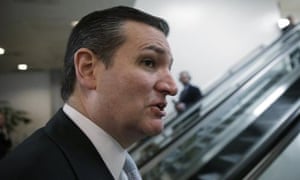
Ted Cruz at the Senate
Candidate Ted Cruz’s comment likening climate change activists to ‘flat-Earthers’ begins election in which scientists suggest issue may receive much higher billing than before Republican presidential candidate US senator Ted Cruz answers questions from reporters as he walks to the Senate floor on Thursday. Photograph: Win McNamee/Getty Images

Leading scientists are preparing for an American election in which global warming may receive much higher billing than before – and Republicans’ statements will be exposed to a level of scrutiny they have not formally had to deal with.


Cruz, the red-meat Texas senator with an army of conservative followers, raised eyebrows on Tuesday when he told the Texas Tribune that people who believe global warming is real are “the equivalent of the flat-Earthers.”
“It used to be it is accepted scientific wisdom the Earth is flat, and this heretic named Galileo was branded a denier,” Cruz said.
The comments were emblematic of the environmental threat that has plagued the Republican party for years. Buoyed by the oil and gas companies and fossil-fuel-funder mega-donors that increasingly bankroll their campaigns, most prominent Republican politicians have either denied that climate change exists or refused to stake out a clear position, citing their personal lack of scientific knowledge.
But as the subject’s specter looms larger by the day, and as presumed Democratic candidate Hillary Clinton has stepped up her calls on the need to battle climate change as a potential signature issue, the “I’m not a scientist” line is infuriating scientists.
“I think frankly the Republican party is going to have to make a decision,” Michael Mann, director of the Penn State Earth System Science Center, who contributed to the Nobel Prize-winning landmark report on global warming, told the Guardian. “Are they going to move in the direction of logic and rationality, or are they going to continue to pursue this anti-scientific fringe movement within their party that is personified by people liked Ted Cruz?
“As long as the Koch brothers are pouring tens of millions of dollars into their campaigns,” Mann said, referring to the top conservative donors, “there’s going to be enough oxygen to keep these folks going.”
The real test, Mann said, lies with establishment-backed candidates like former Florida governor Jeb Bush, who recently declared himself a climate skeptic despite his previous assertion that the climate may be warming.
As the governor of a state regarded as the hotbed for hurricanes and coastal erosion, Bush fought against drilling off the Florida coast and launched a massive Everglades restoration project.


Among the candidates expected to announce their candidates beginning in an April wave, only Kentucky senator Rand Paul and South Carolina senator Lindsey Graham have bucked their party by acknowledging that climate change is real.
The conservative field for the 2016 election is otherwise made up of proud deniers, such as Cruz, and those who would rather plead ignorance, along with Florida senator Marco Rubio and Texas governor Rick Perry.
“I’m not a doctor, but I know not to drink arsenic,” Mann said.
“Each of these candidates is going to have to decide how they’re going to contend with this.”This ambiguity falls short of the criteria by which scientists believe the media – and undecided young voters – should judge each candidate’s response.
Recent polls that show support among the majority of Americans, including half of Republicans, for government action to curtail greenhouse gas emissions may make uncomfortable reading for GOP candidates. Two-thirds of Americans said they would be more likely to vote for candidates who campaigned on fighting climate change. Among Republican voters, 48% said they preferred candidates who would take on climate change.
Growing concern among the American electorate suggests climate change may emerge as a major issue in 2016, something that would mark a change from prior elections in which it was scarcely discussed in debates or on the campaign trail, failing to make it into the topics that mattered most to voters.
In 2012, Republican nominee Mitt Romney was not alone in ignoring climate change. Even Barack Obama, who has taken a more aggressive approach in cutting carbon emissions during his second term, took heat from environmental activists in his base for being elusive over global warming during his presidential campaign.
More recently, the president has made the fight against climate change one of the top priorities of his administration. The Pentagon’s declaration that global warming is a national security threat has also raised the debate’s national political profile.
Even so, scientists are not holding their breath for any outright climate change endorsements by Republican candidates.
“It would be suicide in their primaries,” John Abraham, a professor of thermal sciences at the University of St Thomas School of Engineering in Minnesota told the Guardian.
The fate of the political discourse over climate change, he argued, in many ways lies in the hands of voters in town halls as well as reporters and debate moderators – and whether they accept outright denialism from Cruz and vague obfuscation from other candidates at face value.
“If this were a political issue, the media would be entirely within its rights to provide equal voice to both sides,” Abraham said. “However, this is a story that is grounded in science – it’s a lot like what causes Ebola, what causes flu, or how do we treat cancer.
“Global warming is not a political problem – it’s a scientific problem.”

http://www.theguardian.com/us-news/2015/mar/27/ted-cruz-climate-change-republicans-2016

Ted Cruz: "global warming alarmists are the equivalent of the flat-Earthers"

UPDATE:  Readers, please check out the comments.  Then tell me which one is legit -- LOL.

by Philip Bump, The Washington Post, March 25, 2015

OK, so Ted Cruz said something, and we went back and forth about whether or not we should address it because it's just baffling. But then we figured, yes, even the baffling things deserve some sort of response.
In an interview with The Texas Tribune, Cruz talked about climate change. Specifically, he said this, as transcribed by the Huffington Post's Kate Sheppard:
On the global warming alarmists, anyone who actually points to the evidence that disproves their apocalyptical claims, they don't engage in reasoned debate. What do they do? They scream, 'You're a denier.' They brand you a heretic. Today, the global warming alarmists are the equivalent of the flat-Earthers. It used to be [that] it is accepted scientific wisdom the Earth is flat, and this heretic named Galileo was branded a denier.
And then he said:
If you look at global warming alarmists, they don't like to look at the actual facts and the data. The satellite data demonstrate that there has been no significant warming whatsoever for 17 years. Now that's a real problem for the global warming alarmists. Because all those computer models on which this whole issue is based predicted significant warming, and yet the satellite data show it ain't happening.
And then he said:
I read this morning a Newsweek article from the 1970s talking about global cooling. And it said the science is clear, it is overwhelming, we are in a major cooling period, and it's going to cause enormous problems worldwide. ... Now, the data proved to be not backing up that theory. So then all the advocates of global cooling suddenly shifted to global warming, and they advocated it's warming, and the solution interestingly enough was the exact same solution -- government control of the energy sector and every aspect of our lives.
There's not much Cruz got right here.
First, Cruz conflates the science of climate change with the politics of climate change. Scientists don't scream, "You're a denier." They point to the scientific evidence that human activity is leading to climate warming -- the evidence of which is overwhelming. (Here's the international version and the U.S. version.) There is no "evidence that disproves their apocalyptical claims," because if there were, scientists would abandon the theory. That's how science works.
Second, science works that way because scientists developed a system in which they created hypotheses and tested them. So it's silly to say that "accepted scientific wisdom" said the world was flat, because the assumption that the world was flat didn't derive from science. Instead, science challenged the conventional thinking, using a superior system for uncovering the truth.
Third, Galileo came along well after people knew the Earth was round. People had sailed around the world before he was born! His conflict with the church was that he said the Earth revolved around the Sun, instead of the opposite. (Actually, his conflict with the church was probably more about his views on transubstantiation, but that's a different topic.) Galileo challenged the orthodoxy based on evidence collected through science.
Fourth, the "warming hiatus" is not "a real problem" for climate scientists, except in the sense that it poses another question to be answered. In fact, scientists have a theory on why temperatures haven't increased as quickly as projected in recent years. (In short: They suspect that it has warmed -- but deep in the ocean.) What's more, scientists that studied the satellite data to which Cruz refers reject the idea that it somehow disproves the idea that human activity is making the world warmer.
Fifth. That Newsweek article. Oh man.
In 1975, Peter Gwynne wrote a brief for the magazine that suggested that some scientists believed the world was cooling. It was nine paragraphs long, quoting scientists who admitted that their projections were preliminary. To DailyClimate, Gwynne explained, "It was just an intriguing piece about what a certain group in a certain niche of climatology was thinking." He added, "Newsweek being Newsweek, we might have pushed the envelope a little bit more than I would have wanted."
But that article has fueled a cottage industry in science rejection. What Cruz is doing is treating as valid one magazine article from 40 years ago but rejecting as hopelessly flawed study after study showing that the world is warming.
The Galileos on climate change are, like Galileo, the scientists. The people pushing back on the science are, like Cruz, those who favor the status quo. Cruz's comments, from start to finish, are simply not correct.

Saturday, March 7, 2015

Willie Soon Be Gone?

by Donald Prothero, Insight, Skeptic.com, March 6, 2015

Screen-Shot-2015-02-21-at-2.21.21-PM-590x237
In the past few weeks, there has been a tremendous furor over the disclosure of the ethics of a noted climate denier, Wei-Hock “Willie” Soon. He has been one of the “stars” of the climate denial lobby, spending most of his time speaking to right-wing media and denialist groups, and being promoted by prominent denialist politicians like Sen. James Inhofe (R-OK). Even though the problems with his research, and with his funding, were public knowledge for many years, it made news because of recent discoveries revealed by the New York Times of just how much money he was paid for his work. His situation is even more problematic because he failed to report this funding in his publications and signed “conflict of interest” statements that he then violated. Naturally, the denialist institutes and right-wing media have fought back and defended their man, and Soon himself made a statement (brilliantly dissected by Greg Laden) to the press in his own defense. But the facts of the case seems incontrovertible, no matter what you might think of the climate change debate, and it appears that serious consequences will be forthcoming.

First, some background. Soon is often hyped as a “noted climate change scientist.” He is nothing of the sort. His doctorate was in aerospace engineering, with a thesis on plasma physics, so he has no research experience or specialized training in the fields of climate science on which he so often writes, such as ice cores, tree rings, atmospheric chemistry, and even polar bears. As I have written many times, beware of people working outside their own field of training! A Ph.D. does not make you a universal expert, and if your doctorate is not in the appropriate field and you have no peer-reviewed publications in the relevant fields, your are no more qualified to write about climate science or evolutionary biology or any other specialized field than you are qualified to write a symphony or fix a car. Climate science, in particular, is plagued by the intrusion of people from other unrelated fields of science (especially unrelated areas of physics). They seem to think that they can do this research and know what it’s about when they’ve never studied an ice core, spent hours looking down the microscope at planktonic microfossils (as I have), run isotopes on a mass spectrometer (as I have), analyzed atmospheric gases or satellite images. These are the specialized research skills you must have to know enough about the primary data and its limitations to do this sort of work competently. If you don’t have this first-hand research experience, you’re just an outsider, an amateur dabbling in a field you don’t really understand. Yet Soon has written attacks on climate science in these very fields (but these papers are never published in respected peer-reviewed journals), even though his only relevant training is understanding the physics of the solar wind and solar radiation.

Second, supporters of Soon often tout his affiliation with the Harvard-Smithsonian Astrophysics Observatory (SAO) in Cambridge, as proof he is legitimate because he works for respected institutions. In truth, Soon is not an employee of the SAO, nor an employee of Harvard, but merely an adjunct scientist, allowed to use the facilities and the institutional name, but not paid to work there; nor does the SAO endorse his research. This is a classic case of institutional credential-mongmering, where someone like Soon got his connection through noted climate denier and astrophysicist Robert Jastrow (who hired him right out of grad school to work at Mt. Wilson, where Jastrow was director) before moving on to SAO. When Soon started at SAO, his relevant research was about solar plasmas, which is a legitimate topic to study there. But since then, his work has stretched far beyond his training, and it shows. This is comparable to the famous case of Richard Sternberg, the creationist who held unpaid temporary associate position at the Smithsonian, which meant he had a small office and could use their affiliation for three years. But then he began using his affiliation to push his creationist agenda, and the Smithsonian disavowed Sternberg for his dishonest use of his temporary affiliation. His affiliation had expired anyway; they did not “fire him”, as creationists claim.

This is not the place to list all of Soon’s discredited science, but a few examples are illustrative. In 2003, he and Sallie Baliunas published a review paper (an invited paper to give an overview on a topic, which are normally not carefully reviewed nor rejected) in the journal Climate Research, where he falsely claimed that the twentieth century was not the warmest of the past millennium (based on data from tree rings, ice cores, and other data he is not trained to understand). The problems with the paper and its conclusions were many. Soon and Baliunas used data from changes in moisture, rather than temperature; they did not distinguish between regional and hemispheric mean temperature anomalies; and they reconstructed past temperatures from proxy evidence that does not have the resolution to distinguish decadal trends. This paper was torn to pieces by the scientific community for its slipshod methodology, misuse of statistics, and cherry-picking and deliberate misrepresentations, and 40% of the editorial board of the journal resigned from the board over the journal’s failure to conduct proper peer review.

In 2007, Soon published an unreviewed editorial letter in the journal Ecological Complexity, claiming that there was no decline in polar bear populations, a claim that is patently false. Most readers will not see the “Viewpoints” heading and realize that this claim is just an editorial, not a reviewed scientific paper, so it gets cited again and again by climate deniers despite the overwhelming evidence of the damage to the Arctic ecosystem.

In 2003, in anticipation of the 2004 IPCC report on climate change, Soon and his denialist buddies plotted an attack paper on a report that wasn’t even finished! Infiles released from Soon’s work, he wrote:
“Clearly they [the AR4 chapters] may be too much for any one of us to tackle them all … But, as A-team, we may for once give it our best shot to try to anticipate and counter some of the chapters, especially WG1—judging from our true expertise in the basic climate sciences … Even if we can tackle ONE single chapter down the road but forcefully and effectively … we will really accomplish A LOT! In all cases, I hope we can start discussing among ourselves to see what we can do to weaken the fourth assessment report or to re-direct attention back to science …”
This is not the writing of an objective scientist, waiting for results to be properly reviewed and published before critiquing them, but a “merchant of doubt” playing a PR game to create controversy and confusion about a scientific topic for ideological and political, not scientific reasons.

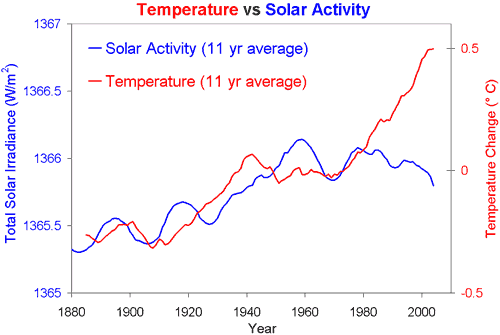
Despite Soon's claim that global warming is due to increased solar radiation, the actual data show that the radiation has been decreasing as the planet has warmed. (From http://skepticalscience.com/solar-activity-sunspots-global-warming.htm)
Despite Soon’s claim that global warming is due to increased solar radiation, the actual data show that the radiation has been decreasing as the planet has warmed. (From http://skepticalscience.com/solar-activity-sunspots-global-warming.htm)

Soon’s main claim to fame, however, is his interpretation of the historical data of solar radiation on the earth, and his argument that increased solar input explains global warming. This research has been thoroughly debunked many times, mostly because Soon has misinterpreted the data source, misused statistics, and cherry-picks the results that support his predetermined conclusions. More importantly, even if it were true that the solar input were increasing (when it has actually been decreasing for the past 45 years), the difference in the amount of solar radiation is minuscule. It would not make nearly enough difference in the global temperature compared to the effect of greenhouse gases on global warming. Yet Soon has testified many times that the warming of the earth is due to the sun, not man-made causes, and makes his living now claiming that anthropogenic climate change is not real.

All of these examples of incompetent and politicized science should have led to Soon’s dismissal long ago, but somehow the SAO is either very tolerant of his freedom of speech and freedom to do bad science, or else reluctant to deal with him for fear of the controversy over “censorship.” 

But this time Soon has done something worse that conducting bad science: he committed ethics violations. It has been well known for years that all of Soon’s funding comes from energy companies like ExxonMobil, the Koch brothers, and from the denialist fronts that they fund. This is itself is serious problem, because it clearly presents “conflict of interest” problems if Soon is cranking out research that is biased to please his funders. But even more shocking is what the New York Times reported:
He has accepted more than $1.2 million in money from the fossil-fuel industry over the last decade while failing to disclose that conflict of interest in most of his scientific papers. At least 11 papers he has published since 2008 omitted such a disclosure, and in at least eight of those cases, he appears to have violated ethical guidelines of the journals that published his work. The documents show that Dr. Soon, in correspondence with his corporate funders, described many of his scientific papers as “deliverables” that he completed in exchange for their money. He used the same term to describe testimony he prepared for Congress.
This is very serious. Nearly every scientific journal requires that you clearly disclose any sources of funding, and most also require that you sign a statement about “conflict of interest” to prove that you have not biased your results to please the funder. This is not a simple slip-up by Soon, but a deliberate effort to not reveal the obscene amounts of money he was getting paid, and where it came from. Such an ethics violation, if proven, would typically lead to a strong action (such as dismissal) by any university or research institute in the country, no matter how famous you were, and how good your previous reputation might have been. In particular his description of his work as “deliverables,” something bought and paid for by his funders, clearly shows his intent to act as a “hired gun” and give his funding sources what they paid for—not following the data wherever they may lead, and interpreting them honestly and in an unbiased fashion, as a real scientist must do.

I’m not saying that taking money from energy companies automatically taints your research or disqualifies you from being relevant to climate change science. A great counter-example is UC Berkeley physicist Richard Muller, who was initially a climate doubter. As I blogged about previously, he accepted funding from ExxonMobil, the Koch brothers, and other denialist sources to re-examine the global temperature data compiled by NOAA, the Goddard Institute of Space Science, and the Hadley Climate Research Unit at the University of East Anglia. He did so, and then in March 2011 shocked the GOP members of the House Science and Technology Committee, who called him as a sympathetic expert witness to debunk the temperature data. Instead, Muller behaved like a real scientist: he realized that the data from the other three institutes were indeed valid, and told the hearing so. It says a lot about Muller that he kept his scientific integrity and followed the data wherever they might lead, rather than bias his results to please those who paid him.

The Soon affair has actually blown up in the climate denialists’ faces. Sen. Edward Markey (D-MA) has just announced a congressional investigation of science funding by the denialist lobby:
“For years, fossil fuel interests and front groups have attacked climate scientists and legislation to cut carbon pollution using junk science and debunked arguments,” Markey said in a statement. “The American public deserve an honest debate that isn’t polluted by the best junk science fossil fuel interests can buy. That’s why I will be launching this investigation to see how widespread this denial-for-hire scheme stretches within the anti-climate action cabal.”
So what will happen to Willie Soon? Now that the Soon affair has exploded in controversy over his ethics violations, expect the bosses at the SAO to terminate his connection to them. According to the New York Times:
Charles R. Alcock, director of the Harvard-Smithsonian Center, acknowledged on Friday that Dr. Soon had violated the disclosure standards of some journals. “I think that’s inappropriate behavior,” Dr. Alcock said. “This frankly becomes a personnel matter, which we have to handle with Dr. Soon internally.” “I am aware of the situation with Willie Soon, and I’m very concerned about it,” W. John Kress, interim under secretary for science at the Smithsonian in Washington, said on Friday. “We are checking into this ourselves.”
The Smithsonian just released the following statement:
The Smithsonian is greatly concerned about the allegations surrounding Dr. Willie Soon’s failure to disclose funding sources for his climate change research. 
The Smithsonian is taking immediate action to address the issue: Acting Secretary Albert Horvath has asked the Smithsonian Inspector General to review the matter. Horvath will also lead a full review of Smithsonian ethics and disclosure policies governing the conduct of sponsored research to ensure they meet the highest standards. Wei-Hock (Willie) Soon is a part-time researcher at the Smithsonian Astrophysical Observatory in Cambridge, Mass. He was hired to conduct research on long-term stellar and solar variability. The Smithsonian does not fund Dr. Soon; he pursues external grants to fund his research. 
The Smithsonian does not support Dr. Soon’s conclusions on climate change. The Smithsonian’s official statement on climate change, based upon many decades of scientific research, points to human activities as a cause of global warming.
Bye, bye, Willie. We in the scientific community are not sorry to see you go.

http://www.skeptic.com/insight/willie-soon-be-gone/