Blog Archive

Showing posts with label James Lovelock. Show all posts

Friday, April 2, 2010

Lovelock irresponsibly promotes the Eat, Drink, and Be Merry Scenario

Dear Readers,

Lovelock says it is time to eat, drink and be merry because there is nothing we can do to save the planet.

He's 90.  He's had his day.  We get that.

But I have a 24-year-old daughter. 

Maybe there is much that cannot be saved. 

But we do not need to go down the path of extinguishing all life on this planet, including the human species.

That's just crazy.

We have to do what we can to save something.  We don't need to turn this place into a hell hole of toxic fumes. 

Civilization and most human knowledge may be lost, but to turn the entire planet into a wasteland where nothing lives is, well, a sin, in my opinion.

OK, so below is some of what he had to say and a link to the rest on the BBC.

Tenney

Lovelock: 'We can't save the planet' 
 
Professor James Lovelock, the scientist who developed Gaia theory, has said it is too late to try and save the planet.

The man who achieved global fame for his theory that the whole earth is a single organism now believes that we can only hope that the earth will take care of itself in the face of completely unpredictable climate change.
Interviewed by Today presenter John Humphrys, videos of which you can see below, he said that while the earth's future was utterly uncertain, mankind was not aware it had "pulled the trigger" on global warming as it built its civilizations.


Link:  http://news.bbc.co.uk/today/hi/today/newsid_8594000/8594561.stm

Thursday, April 1, 2010

Are we fated to become regarded as the "Eat, Drink, and Be Merry" Generation?

This is one of those articles that bears reposting:

'Enjoy life while you can'

Climate science maverick James Lovelock believes catastrophe is inevitable, carbon offsetting is a joke and ethical living a scam. So what would he do? 

by Decca Aitkenhead, The Guardian, March 1, 2008

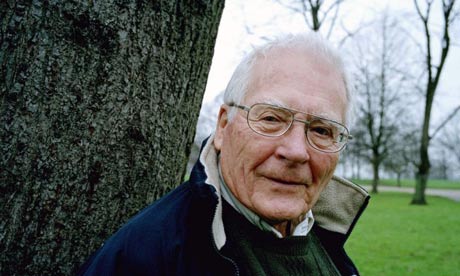
James Lovelock
James Lovelock. Photograph: Eamonn McCabe

In 1965 executives at Shell wanted to know what the world would look like in the year 2000. They consulted a range of experts, who speculated about fusion-powered hovercrafts and "all sorts of fanciful technological stuff". When the oil company asked the scientist James Lovelock, he predicted that the main problem in 2000 would be the environment. "It will be worsening then to such an extent that it will seriously affect their business," he said.

"And of course," Lovelock says, with a smile 43 years later, "that's almost exactly what's happened."

Lovelock has been dispensing predictions from his one-man laboratory in an old mill in Cornwall since the mid-1960s, the consistent accuracy of which have earned him a reputation as one of Britain's most respected -- if maverick -- independent scientists. Working alone since the age of 40, he invented a device that detected CFCs, which helped detect the growing hole in the ozone layer, and introduced the Gaia hypothesis, a revolutionary theory that the Earth is a self-regulating super-organism. Initially ridiculed by many scientists as new age nonsense, today that theory forms the basis of almost all climate science.

For decades, his advocacy of nuclear power appalled fellow environmentalists -- but recently increasing numbers of them have come around to his way of thinking. His latest book, The Revenge of Gaia, predicts that by 2020 extreme weather will be the norm, causing global devastation; that by 2040 much of Europe will be Saharan; and parts of London will be underwater. The most recent Intergovernmental Panel on Climate Change (IPCC) report deploys less dramatic language -- but its calculations aren't a million miles away from his.

As with most people, my panic about climate change is equalled only by my confusion over what I ought to do about it. A meeting with Lovelock therefore feels a little like an audience with a prophet. Buried down a winding track through wild woodland, in an office full of books and papers and contraptions involving dials and wires, the 88-year-old presents his thoughts with a quiet, unshakable conviction that can be unnerving. More alarming even than his apocalyptic climate predictions is his utter certainty that almost everything we're trying to do about it is wrong.

On the day we meet, the Daily Mail has launched a campaign to rid Britain of plastic shopping bags. The initiative sits comfortably within the current canon of eco ideas, next to ethical consumption, carbon offsetting, recycling and so on -- all of which are premised on the calculation that individual lifestyle adjustments can still save the planet. This is, Lovelock says, a deluded fantasy. Most of the things we have been told to do might make us feel better, but they won't make any difference. Global warming has passed the tipping point, and catastrophe is unstoppable.

"It's just too late for it," he says. "Perhaps if we'd gone along routes like that in 1967, it might have helped. But we don't have time. All these standard green things, like sustainable development, I think these are just words that mean nothing. I get an awful lot of people coming to me saying you can't say that, because it gives us nothing to do. I say on the contrary, it gives us an immense amount to do. Just not the kinds of things you want to do."

He dismisses eco ideas briskly, one by one. "Carbon offsetting? I wouldn't dream of it. It's just a joke. To pay money to plant trees, to think you're offsetting the carbon? You're probably making matters worse. You're far better off giving to the charity Cool Earth, which gives the money to the native peoples to not take down their forests."

Do he and his wife try to limit the number of flights they take? "No we don't. Because we can't." And recycling, he adds, is "almost certainly a waste of time and energy", while having a "green lifestyle" amounts to little more than "ostentatious grand gestures." He distrusts the notion of ethical consumption. "Because always, in the end, it turns out to be a scam ... or if it wasn't one in the beginning, it becomes one."

Somewhat unexpectedly, Lovelock concedes that the Mail's plastic bag campaign seems, "on the face of it, a good thing." But it transpires that this is largely a tactical response; he regards it as merely more rearrangement of Titanic deckchairs, "but I've learnt there's no point in causing a quarrel over everything". He saves his thunder for what he considers the emptiest false promise of all -- renewable energy.

"You're never going to get enough energy from wind to run a society such as ours," he says. "Windmills! Oh no. No way of doing it. You can cover the whole country with the blasted things, millions of them. Waste of time."

This is all delivered with an air of benign wonder at the intractable stupidity of people. "I see it with everybody. People just want to go on doing what they're doing. They want business as usual. They say, 'Oh yes, there's going to be a problem up ahead,' but they don't want to change anything."

Lovelock believes global warming is now irreversible, and that nothing can prevent large parts of the planet becoming too hot to inhabit, or sinking underwater, resulting in mass migration, famine and epidemics. Britain is going to become a lifeboat for refugees from mainland Europe, so instead of wasting our time on wind turbines we need to start planning how to survive. To Lovelock, the logic is clear. The sustainability brigade are insane to think we can save ourselves by going back to nature; our only chance of survival will come not from less technology, but more.

Nuclear power, he argues, can solve our energy problem -- the bigger challenge will be food. "Maybe they'll synthesise food. I don't know. Synthesising food is not some mad visionary idea; you can buy it in Tesco's, in the form of Quorn. It's not that good, but people buy it. You can live on it." But he fears we won't invent the necessary technologies in time, and expects "about 80%" of the world's population to be wiped out by 2100. Prophets have been foretelling Armageddon since time began, he says. "But this is the real thing."

Faced with two versions of the future - Kyoto's preventative action and Lovelock's apocalypse -- who are we to believe? Some critics have suggested Lovelock's readiness to concede the fight against climate change owes more to old age than science: "People who say that about me haven't reached my age," he says laughing.

But when I ask if he attributes the conflicting predictions to differences in scientific understanding or personality, he says: "Personality."

There's more than a hint of the controversialist in his work, and it seems an unlikely coincidence that Lovelock became convinced of the irreversibility of climate change in 2004, at the very point when the international consensus was coming round to the need for urgent action. Aren't his theories at least partly driven by a fondness for heresy?

"Not a bit! Not a bit! All I want is a quiet life! But I can't help noticing when things happen, when you go out and find something. People don't like it because it upsets their ideas."

But the suspicion seems confirmed when I ask if he's found it rewarding to see many of his climate change warnings endorsed by the IPCC. "Oh no! In fact, I'm writing another book now, I'm about a third of the way into it, to try and take the next steps ahead."

Interviewers often remark upon the discrepancy between Lovelock's predictions of doom, and his good humour. "Well I'm cheerful!" he says, smiling. "I'm an optimist. It's going to happen."

Humanity is in a period exactly like 1938-9, he explains, when "we all knew something terrible was going to happen, but didn't know what to do about it." But once the second world war was under way, "everyone got excited, they loved the things they could do, it was one long holiday ... so when I think of the impending crisis now, I think in those terms. A sense of purpose -- that's what people want."

At moments I wonder about Lovelock's credentials as a prophet. Sometimes he seems less clear-eyed with scientific vision than disposed to see the version of the future his prejudices are looking for. A socialist as a young man, he now favours market forces, and it's not clear whether his politics are the child or the father of his science. His hostility to renewable energy, for example, gets expressed in strikingly Eurosceptic terms of irritation with subsidies and bureaucrats. But then, when he talks about the Earth -- or Gaia -- it is in the purest scientific terms all.

 "There have been seven disasters since humans came on the earth, very similar to the one that's just about to happen. I think these events keep separating the wheat from the chaff. And eventually we'll have a human on the planet that really does understand it and can live with it properly. That's the source of my optimism."

What would Lovelock do now, I ask, if he were me? He smiles and says: "Enjoy life while you can. Because if you're lucky it's going to be 20 years before it hits the fan."

Link:  http://www.guardian.co.uk/theguardian/2008/mar/01/scienceofclimatechange.climatechange

Sunday, August 30, 2009

James Lovelock on biochar -- Let the Earth remove CO2 for us

James Lovelock on biochar: Let the Earth remove CO2 for us

James Lovelock: George Monbiot is wrong to dismiss biochar out of hand – burying carbon is one way to tackle climate change

by James Lovelock, The Guardian, March 24, 2009

I usually agree with George Monbiot and love the way he says it, but this time – with his assertion that the latest miracle mass fuel cure, biochar, does not stand up – he has got it only half right.

Yes, it is silly to rename charcoal as biochar and yes, it would be wrong to plant anything specifically to make charcoal. So I agree, George, it would be wrong to have plantations in the tropics just to make charcoal.

I said in my recent book that perhaps the only tool we had to bring carbon dioxide back to pre-industrial levels was to let the biosphere pump it from the air for us. It currently removes 550 bn tons a year, about 18 times more than we emit, but 99.9% of the carbon captured this way goes back to the air as CO2 when things are eaten.

What we have to do is turn a portion of all the waste of agriculture into charcoal and bury it. Consider grain like wheat or rice; most of the plant mass is in the stems, stalks and roots and we only eat the seeds. So instead of just ploughing in the stalks or turning them into cardboard, make it into charcoal and bury it or sink it in the ocean. We don't need plantations or crops planted for biochar, what we need is a charcoal maker on every farm so the farmer can turn his waste into carbon. Charcoal making might even work instead of landfill for waste paper and plastic.

Incidentally, in making charcoal this way, there is a by-product of biofuel that the farmer can sell. If we are to make this idea work it is vital that it pays for itself and requires no subsidy. Subsidies almost always breed scams and this is true of most forms of renewable energy now proposed and used. No one would invest in plantations to make charcoal without a subsidy, but if we can show the farmers they can turn their waste to profit they will do it freely and help us and Gaia too.

There is no chance that carbon capture and storage from industry or power stations will make a dent in CO2 accumulation, even if we had the will and money to do it. But we have to grow food, so why not help Gaia do the job of CO2 removal for us?

James Lovelock is an independent scientist, author, researcher, environmentalist. He is known for proposing the Gaia hypothesis.

Link: http://www.guardian.co.uk/environment/2009/mar/24/biochar-earth-c02

Monday, June 22, 2009

Lovelock: Adapt, try to survive, CO2 drawdown via biochar may help

Climate change is inevitable, proceeding and even accelerating
by Tyler Hamilton, June 22, 2009

Climate change is inevitable, proceeding and even accelerating.

With those alarming words, author and theorist James Lovelock left the two dozen or so people within earshot – a mixed bag of politicians, activists, corporate types and media – feeling awkwardly helpless. They'd gathered May 26, 2009, in a small boardroom on Spadina Ave. to hear the British scientist talk about the coming impacts of climate change.

Lovelock kept his message simple: There's nothing we can do now but adapt and survive. He even confided that he wanted the subtitle of his latest book, The Vanishing Face of Gaia: A Final Warning, to read "Enjoy It While It Lasts."

His publisher, perhaps figuring that hopeful people are more likely to purchase books, objected.

All this defeatist talk didn't sit well with most in the room, including Ontario Green Party leader Frank DeJong, who directly challenged Lovelock on his assertion. Surely, said DeJong, there's something we can do. "I just can't accept what you're saying."

When pushed, Lovelock said the only way we could do something meaningful was to extract and permanently store greenhouse gases from the atmosphere, in addition to dramatically reducing our emissions. If we stopped burning fossil fuels tomorrow, he explained, it wouldn't do much. The damage is done. We've already released enough carbon over the past 100 years to push us past the point of no return.

But if we could also extract CO2 we "might" have a shot. And the approach with the most potential, said Lovelock, is to turn organic material into "biochar" and bury it. Lovelock endorsed the approach during his May 26 meeting in Toronto. "I've written before about biochar, or agrichar, or charcoal, or just plain char – it's all pretty much the same. Take biomass, such as wood or municipal organic waste, and bake it at over 300 degrees C in the absence of oxygen. The process is called pyrolysis, and what it does is lock in about 60 per cent of the carbon in the charred biomass."

The char, unlike the original biomass, can't rot and release methane into the atmosphere. It doesn't oxidize. It is chemically stable for hundreds of years, meaning the carbon is permanently sequestered. "This makes it safe to bury in the soil or in the ocean," wrote Lovelock.

It is considered a way to extract CO2 from the atmosphere because while the char doesn't release CO2, the new trees, crops and algae that grow to replace the charred biomass consume CO2. Repeat the char-and-grow process repeatedly and on a large enough scale and you've essentially created a global carbon vacuum.

Lovelock isn't alone in his enthusiasm for charcoal sequestration, to the dismay of hyper-skeptical Guardian News columnist George Monbiot, who trashed the idea in a March column. Australian biologist Tim Flannery, author of the bestselling climate-change book The Weather Makers, is an avid supporter of the approach. James Hansen, head of the NASA Goddard Institute for Space Studies and a professor of Earth sciences at Columbia University, also sees an important role for turning biomass into charcoal as long as it's done responsibly.

Of course, it's not a silver bullet – there are no silver bullets with climate change. But if we're serious about halting and eventually lowering CO2 concentration in the atmosphere, it could prove the best way of managing organic waste from municipalities, croplands, wastewater treatment plants, and a certain amount of residues from forests.

Potentially, though more controversial, fast-growing poplar and willow trees that are planted once and can be harvested for about 20 years could become a source of biomass for char. These trees can be genetically modified to withstand heat and drought, as well as grow on depleted lands that can't be used for much – certainly not for growing food.

The problem, as with all other climate-mitigation approaches, comes with reaching scale. Can this really be done on a large enough scale to make a measurable impact? Nobody can say for sure, but Subodh Gupta, a chemical engineer at natural-gas giant EnCana Corp., says a good place to start is to turn municipal solid waste into charcoal.

Gupta presented a paper on the idea last Tuesday at the Canadian International Petroleum Conference in Calgary, calling it a "powerful concept" with "very significant potential."

Municipal solid waste makes sense for a number of reasons, he said. Thousands of municipalities across the continent have existing collection systems in place. The waste is not just free, but you get paid to take it. Also, there's no risk of running out.

His idea is to use a pyrolysis process to turn the organics (and potentially even plastics) into charcoal. The biogases released from the pyrolysis can be captured and used as fuel to run the process, eliminating the need for an external energy source.

The resulting charcoal is quite brittle and can be crushed or steamrolled to reduce its volume. It can then be safely stored in a landfill or even in bodies of water, where it will sit stable for hundreds of years without risk of rotting. It can even be scattered on topsoil to enhance nutrients of depleted lands.

In Gupta's view, this kind of charcoal sequestration is more practical and less expensive than the approach most pursued by the petroleum industry, which is the capture and underground storage of CO2 emissions from coal plants and other industrial facilities. He estimates that charcoal sequestration of municipal solid waste costs about $42 for every tonne of avoided CO2, compared to estimates as high as $150 a tonne for carbon capture and storage.

Link to article: http://www.thestar.com/sciencetech/article/654444

Saturday, March 14, 2009

Chris Goodall, Johannes Lehmann, Tim Lenton, Chris Turney: 'Biochar' goes industrial with giant microwaves to lock carbon in charcoal

'Biochar' goes industrial with giant microwaves to lock carbon in charcoal

Climate expert claims to have developed cleanest way of fixing CO2 in 'biochar' for burial on an industrial scale

by Alok Jha, green technology correspondent, The Guardian, March 13, 2009

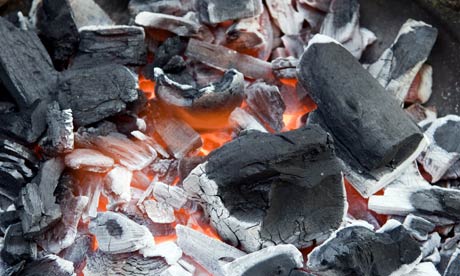
Burning Charcoal

Burying charcoal produced from microwaved wood could take billions of tonnes of CO2 from the atmosphere every year. Photograph: Rex Features

Giant microwave ovens that can "cook" wood into charcoal could become our best tool in the fight against global warming, according to a leading British climate scientist.

Chris Turney, a professor of geography at the University of Exeter, said that by burying the charcoal produced from microwaved wood, the carbon dioxide absorbed by a tree as it grows can remain safely locked away for thousands of years. The technique could take out billions of tonnes of CO2 from the atmosphere every year.

Fast-growing trees such as pine could be "farmed" to act specifically as carbon traps — microwaved, buried and replaced with a fresh crop to do the same thing again.

Turney has built a 5-m-long prototype of his microwave, which produces a tonne of CO2 for $65. He plans to launch his company, Carbonscape, in the UK this month to build the next generation of the machine, which he hopes will process more wood and cut costs further.

He is not alone in touting the benefits of this type of charcoal, known as biochar or biocharcoal. The Gaia theorist, James Lovelock, and Nasa's James Hansen have both been outspoken about the potential benefits of biochar, arguing that it is one of the most powerful potential solutions to climate change. In a recent paper, Hansen calculated that producing biocharcoal by current methods of burning waste organic materials could reduce global carbon dioxide levels in the atmosphere by 8 ppm (parts per million) over the next 50 years. That is the equivalent of three years of emissions at current levels.

Turney said biochar was the closest thing scientists had to a silver-bullet solution to climate change. Processing facilities could be built right next to forests grown specifically to soak up CO2. "You can cut trees down, carbonise them, then plant more trees. The forest could act on an industrial scale to suck carbon out of the atmosphere."

The biochar could be placed in disused coal mines or tilled into the ground to make soil more fertile. Its porous structure is ideal for trapping nutrients and beneficial micro-organisms that help plants grow. It also improves drainage and can prevent up to 80% of greenhouse gases such as nitrous oxides and methane from escaping from the soil.

In a recent analysis of geo-engineering techniques published in the journal Atmospheric Chemistry, Tim Lenton, a climate scientist at the University of East Anglia, rated producing charcoal as the best technological solution to reducing CO2 levels. He compared it to other geo-engineering techniques such as dumping iron in oceans or seeding clouds to reflect the sun's radiation and calculated that by 2100 a quarter of the effect of human-induced emissions of CO2 could be sequestered with biochar production from waste organic matter, giving a net reduction of 40 ppm in CO2 concentration.

Johannes Lehmann of Cornell University has calculated that it is realistically possible to fix 9.5 billion tonnes of carbon per year using biochar. The global production of carbon from fossil fuels stands at 8.5 billion tonnes.

Charcoal is usually produced by burning wood in high-temperature ovens but this process is dirty and only locks around 20-30% of the mass of the wood into charcoal. Turney's idea to use a microwave, which he found could lock away up to 50% of the wood's mass, came from a cooking accident when he was a teenager, in which he mistakenly microwaved a potato for 40 minutes and found that the vegetable had turned into charcoal. "Years later when we were talking about carbon sequestration I thought maybe charcoal was the way to go," he said.

A number of governments are investing their hopes for sequestering CO2 from the atmosphere in large-scale carbon capture and storage projects. But Turney said this would not provide a full solution. "It's only for large single sources of emissions like large power stations and that accounts for about 60% of emissions. It doesn't deal with anything up in the atmosphere already which is driving the changes we see today."

Chris Goodall, writer of the Carbon Commentary blog, proposed biochar as a solution to climate change in his recent book, Ten Technologies to Save the Planet. "The only big problem is organising it on a large enough scale," he said. "Organising it so that farmers get paid and put the charcoal in the ground rather than burning it for their own food is a big problem to organise on a global scale."

This could be done if biochar were incorporated into the carbon markets making it more profitable to bury rather than burn. There is an emerging campaign, he said, to get governments to recognise biochar in the post-Kyoto agreement on climate change that will be negotiated in Copenhagen later this year.

Link to this article: http://www.guardian.co.uk/environment/2009/mar/13/charcoal-carbon

Friday, January 23, 2009

James Lovelock says 'biochar' is the solution: One last chance to save mankind

One last chance to save mankind

by Gaia Vince, New Scientist, Issue 2692, 22 January 2009

With his 90th birthday in July, a trip into space scheduled for later in the year and a new book out next month, 2009 promises to be an exciting time for James Lovelock. But the originator of the Gaia theory, which describes Earth as a self-regulating planet, has a stark view of the future of humanity. He tells Gaia Vince we have one last chance to save ourselves -- and it has nothing to do with nuclear power

Your work on atmospheric chlorofluorocarbons led eventually to a global CFC ban that saved us from ozone-layer depletion. Do we have time to do a similar thing with carbon emissions to save ourselves from climate change?

Not a hope in hell. Most of the "green" stuff is verging on a gigantic scam. Carbon trading, with its huge government subsidies, is just what finance and industry wanted. It's not going to do a damn thing about climate change, but it'll make a lot of money for a lot of people and postpone the moment of reckoning. I am not against renewable energy, but to spoil all the decent countryside in the UK with wind farms is driving me mad. It's absolutely unnecessary, and it takes 2500 square kilometres to produce a gigawatt -- that's an awful lot of countryside.

What about work to sequester carbon dioxide?

That is a waste of time. It's a crazy idea -- and dangerous. It would take so long and use so much energy that it will not be done.

Do you still advocate nuclear power as a solution to climate change?

It is a way for the UK to solve its energy problems, but it is not a global cure for climate change. It is too late for emissions reduction measures.

So are we doomed?

There is one way we could save ourselves and that is through the massive burial of charcoal. It would mean farmers turning all their agricultural waste -- which contains carbon that the plants have spent the summer sequestering -- into non-biodegradable charcoal, and burying it in the soil. Then you can start shifting really hefty quantities of carbon out of the system and pull the CO2 down quite fast.

Would it make enough of a difference?

Yes. The biosphere pumps out 550 gigatonnes of carbon yearly; we put in only 30 gigatonnes. Ninety-nine per cent of the carbon that is fixed by plants is released back into the atmosphere within a year or so by consumers like bacteria, nematodes and worms. What we can do is cheat those consumers by getting farmers to burn their crop waste at very low oxygen levels to turn it into charcoal, which the farmer then ploughs into the field. A little CO2 is released but the bulk of it gets converted to carbon. You get a few per cent of biofuel as a by-product of the combustion process, which the farmer can sell. This scheme would need no subsidy: the farmer would make a profit. This is the one thing we can do that will make a difference, but I bet they won't do it.

Do you think we will survive?

I'm an optimistic pessimist. I think it's wrong to assume we'll survive 2 °C of warming: there are already too many people on Earth. At 4 °C we could not survive with even one-tenth of our current population. The reason is we would not find enough food, unless we synthesised it. Because of this, the cull during this century is going to be huge, up to 90%. The number of people remaining at the end of the century will probably be a billion or less. It has happened before: between the ice ages there were bottlenecks when there were only 2000 people left. It's happening again.

I don't think humans react fast enough or are clever enough to handle what's coming up. Kyoto was 11 years ago. Virtually nothing's been done except endless talk and meetings.

I don't think we can react fast enough or are clever enough to handle what's coming up

It's a depressing outlook.

Not necessarily. I don't think 9 billion is better than 1 billion. I see humans as rather like the first photosynthesisers, which when they first appeared on the planet caused enormous damage by releasing oxygen -- a nasty, poisonous gas. It took a long time, but it turned out in the end to be of enormous benefit. I look on humans in much the same light. For the first time in its 3.5 billion years of existence, the planet has an intelligent, communicating species that can consider the whole system and even do things about it. They are not yet bright enough, they have still to evolve quite a way, but they could become a very positive contributor to planetary welfare.

How much biodiversity will be left after this climatic apocalypse?

We have the example of the Palaeocene-Eocene Thermal Maximum event 55 million years ago. About the same amount of CO2 was put into the atmosphere as we are putting in and temperatures rocketed by about 5 °C over about 20,000 years. The world became largely desert. The polar regions were tropical and most life on the planet had the time to move north and survive. When the planet cooled they moved back again. So there doesn't have to be a massive extinction. It's already moving: if you live in the countryside as I do you can see the changes, even in the UK.

If you were younger, would you be fearful?

No, I have been through this kind of emotional thing before. It reminds me of when I was 19 and the second world war broke out. We were very frightened, but almost everyone was so much happier. We're much better equipped to deal with that kind of thing than long periods of peace. It's not all bad when things get rough. I'll be 90 in July, I'm a lot closer to death than you, but I'm not worried. I'm looking forward to being 100.

Are you looking forward to your trip into space this year?

Very much. I've got my camera ready!

Do you have to do any special training?

I have to go in the centrifuge to see if I can stand the g-forces. I don't anticipate a problem because I spent a lot of my scientific life on ships out on rough oceans, and I have never been even slightly seasick, so I don't think I'm likely to be space sick. They gave me an expensive thorium-201 heart test and then put me on a bicycle. My heart was performing like an average 20 year old, they said.

I bet your wife is nervous.

No, she's cheering me on. And it's not because I'm heavily insured, because I'm not.

Profile

James Lovelock is a British chemist, inventor and environmentalist. He is best known for formulating the controversial Gaia hypothesis in the 1970s, which states that organisms interact with and regulate Earth's surface and atmosphere. Later this year he will travel to space as Richard Branson's guest aboard Virgin Galactic's SpaceShipTwo. His latest book, The Vanishing Face of Gaia, is published by Basic Books in February.

Link to article: http://www.newscientist.com/article/mg20126921.500-one-last-chance-to-save-mankind.html

Sunday, March 2, 2008

James Lovelock: Enjoy Life While You Can

James Lovelock. Photograph by Eamonn McCabe.

Climate science maverick James Lovelock believes catastrophe is inevitable, carbon offsetting is a joke and ethical living a scam. So what would he do?

by Decca Aitkenhead, The Guardian, Saturday, March 1, 2008

In 1965 executives at Shell wanted to know what the world would look like in the year 2000. They consulted a range of experts, who speculated about fusion-powered hovercrafts and "all sorts of fanciful technological stuff". When the oil company asked the scientist James Lovelock, he predicted that the main problem in 2000 would be the environment. "It will be worsening then to such an extent that it will seriously affect their business," he said.

"And of course," Lovelock says, with a smile 43 years later, "that's almost exactly what's happened."

Lovelock has been dispensing predictions from his one-man laboratory in an old mill in Cornwall since the mid-1960s, the consistent accuracy of which have earned him a reputation as one of Britain's most respected - if maverick - independent scientists. Working alone since the age of 40, he invented a device that detected CFCs, which helped detect the growing hole in the ozone layer, and introduced the Gaia hypothesis, a revolutionary theory that the Earth is a self-regulating super-organism. Initially ridiculed by many scientists as new age nonsense, today that theory forms the basis of almost all climate science.

For decades, his advocacy of nuclear power appalled fellow environmentalists - but recently increasing numbers of them have come around to his way of thinking. His latest book, The Revenge of Gaia, predicts that by 2020 extreme weather will be the norm, causing global devastation; that by 2040 much of Europe will be Saharan; and parts of London will be underwater. The most recent Intergovernmental Panel on Climate Change (IPCC) report deploys less dramatic language - but its calculations aren't a million miles away from his.

As with most people, my panic about climate change is equalled only by my confusion over what I ought to do about it. A meeting with Lovelock therefore feels a little like an audience with a prophet. Buried down a winding track through wild woodland, in an office full of books and papers and contraptions involving dials and wires, the 88-year-old presents his thoughts with a quiet, unshakable conviction that can be unnerving. More alarming even than his apocalyptic climate predictions is his utter certainty that almost everything we're trying to do about it is wrong.

On the day we meet, the Daily Mail has launched a campaign to rid Britain of plastic shopping bags. The initiative sits comfortably within the current canon of eco ideas, next to ethical consumption, carbon offsetting, recycling and so on - all of which are premised on the calculation that individual lifestyle adjustments can still save the planet. This is, Lovelock says, a deluded fantasy. Most of the things we have been told to do might make us feel better, but they won't make any difference. Global warming has passed the tipping point, and catastrophe is unstoppable.

"It's just too late for it," he says. "Perhaps if we'd gone along routes like that in 1967, it might have helped. But we don't have time. All these standard green things, like sustainable development, I think these are just words that mean nothing. I get an awful lot of people coming to me saying you can't say that, because it gives us nothing to do. I say on the contrary, it gives us an immense amount to do. Just not the kinds of things you want to do."

He dismisses eco ideas briskly, one by one. "Carbon offsetting? I wouldn't dream of it. It's just a joke. To pay money to plant trees, to think you're offsetting the carbon? You're probably making matters worse. You're far better off giving to the charity Cool Earth, which gives the money to the native peoples to not take down their forests."

Do he and his wife try to limit the number of flights they take? "No we don't. Because we can't." And recycling, he adds, is "almost certainly a waste of time and energy", while having a "green lifestyle" amounts to little more than "ostentatious grand gestures". He distrusts the notion of ethical consumption. "Because always, in the end, it turns out to be a scam ... or if it wasn't one in the beginning, it becomes one."

Somewhat unexpectedly, Lovelock concedes that the Mail's plastic bag campaign seems, "on the face of it, a good thing". But it transpires that this is largely a tactical response; he regards it as merely more rearrangement of Titanic deckchairs, "but I've learnt there's no point in causing a quarrel over everything". He saves his thunder for what he considers the emptiest false promise of all - renewable energy.

"You're never going to get enough energy from wind to run a society such as ours," he says. "Windmills! Oh no. No way of doing it. You can cover the whole country with the blasted things, millions of them. Waste of time."

This is all delivered with an air of benign wonder at the intractable stupidity of people. "I see it with everybody. People just want to go on doing what they're doing. They want business as usual. They say, 'Oh yes, there's going to be a problem up ahead,' but they don't want to change anything."

Lovelock believes global warming is now irreversible, and that nothing can prevent large parts of the planet becoming too hot to inhabit, or sinking underwater, resulting in mass migration, famine and epidemics. Britain is going to become a lifeboat for refugees from mainland Europe, so instead of wasting our time on wind turbines we need to start planning how to survive. To Lovelock, the logic is clear. The sustainability brigade are insane to think we can save ourselves by going back to nature; our only chance of survival will come not from less technology, but more.

Nuclear power, he argues, can solve our energy problem - the bigger challenge will be food. "Maybe they'll synthesise food. I don't know. Synthesising food is not some mad visionary idea; you can buy it in Tesco's, in the form of Quorn. It's not that good, but people buy it. You can live on it." But he fears we won't invent the necessary technologies in time, and expects "about 80%" of the world's population to be wiped out by 2100. Prophets have been foretelling Armageddon since time began, he says. "But this is the real thing."

Faced with two versions of the future - Kyoto's preventative action and Lovelock's apocalypse - who are we to believe? Some critics have suggested Lovelock's readiness to concede the fight against climate change owes more to old age than science: "People who say that about me haven't reached my age," he says laughing.

But when I ask if he attributes the conflicting predictions to differences in scientific understanding or personality, he says: "Personality."

There's more than a hint of the controversialist in his work, and it seems an unlikely coincidence that Lovelock became convinced of the irreversibility of climate change in 2004, at the very point when the international consensus was coming round to the need for urgent action. Aren't his theories at least partly driven by a fondness for heresy?

"Not a bit! Not a bit! All I want is a quiet life! But I can't help noticing when things happen, when you go out and find something. People don't like it because it upsets their ideas."

But the suspicion seems confirmed when I ask if he's found it rewarding to see many of his climate change warnings endorsed by the IPCC. "Oh no! In fact, I'm writing another book now, I'm about a third of the way into it, to try and take the next steps ahead."

Interviewers often remark upon the discrepancy between Lovelock's predictions of doom, and his good humour. "Well I'm cheerful!" he says, smiling. "I'm an optimist. It's going to happen."

Humanity is in a period exactly like 1938-9, he explains, when "we all knew something terrible was going to happen, but didn't know what to do about it". But once the second world war was under way, "everyone got excited, they loved the things they could do, it was one long holiday ... so when I think of the impending crisis now, I think in those terms. A sense of purpose - that's what people want."

At moments I wonder about Lovelock's credentials as a prophet. Sometimes he seems less clear-eyed with scientific vision than disposed to see the version of the future his prejudices are looking for. A socialist as a young man, he now favours market forces, and it's not clear whether his politics are the child or the father of his science. His hostility to renewable energy, for example, gets expressed in strikingly Eurosceptic terms of irritation with subsidies and bureaucrats. But then, when he talks about the Earth - or Gaia - it is in the purest scientific terms all.

"There have been seven disasters since humans came on the earth, very similar to the one that's just about to happen. I think these events keep separating the wheat from the chaff. And eventually we'll have a human on the planet that really does understand it and can live with it properly. That's the source of my optimism."

What would Lovelock do now, I ask, if he were me? He smiles and says: "Enjoy life while you can. Because if you're lucky it's going to be 20 years before it hits the fan."

Link to original article at The Guardian: http://www.guardian.co.uk/theguardian/2008/mar/01/scienceofclimatechange.climatechange