Blog Archive

Showing posts with label Michael Oppenheimer. Show all posts

Thursday, May 15, 2014

Elizabeth Kolbert: THE WEST ANTARCTIC ICE SHEET MELT: DEFENDING THE DRAMA

by Elizabeth Kolbert, The New Yorker, May 13, 2014

West-Antarctic-Ice-Sheet-580.jpg.jpeg
Photograph: Jefferson Beck/GSFC/NASA
If you hang around climate scientists, you often hear the saying “Uncertainty is not our friend.” It came to mind yesterday, when two teams of scientists released papers that reached the same terrifying conclusion. A significant chunk of the West Antarctic Ice Sheet has begun to disintegrate and, owing to the ice sheet’s peculiar topography (much of it lies below sea level), this process, having begun, has now also become unstoppable. “Today we present observational evidence that a large section of the West Antarctic Ice Sheet has gone into irreversible retreat,” the lead author of one of the papers, Eric Rignot, a glaciologist at NASA’s Jet Propulsion Laboratory, said at a news conference. “It has passed the point of no return.” Rignot said that melting in the section of West Antarctica that his team had studied could cause global sea levels to rise by four feet over the course of a couple of centuries. Since the disappearance of some of its major glaciers could quite possibly destabilize the entire ice sheet, the ultimate sea level rise from West Antarctica, he said, could be triple that.
“Scary,” Stefan Rahmstorf, a professor of physics of the oceans at Potsdam University, who was not involved in either paper, tweeted. “One of the feared tipping points of the climate system appears to have been crossed.”
“This Is What a Holy Shit Moment for Global Warming Looks Like,” read a headline on the Web site of Mother Jones.
The vulnerability of the West Antarctic Ice Sheet, or WAIS, has been appreciated for a long time; all the way back in 1968, an eccentric Ohio State glaciologist named John Mercer observed that the WAIS was peculiarly unstable, and that it may have melted away in the geologically recent past. But Mercer (who, interestingly enough for a glaciologist, liked to do field work in the nude) published his observations in an obscure journal, and, according to the historian of science Spencer Weart, “did not push his views on colleagues.”
In more recent years, even as forecasts of global sea-level rise have been notched up, most projections have not taken into account the possibility of a significant, near-term ice loss from the West Antarctic. The most recent analysis by the U.N.’s Intergovernmental Panel on Climate Change forecasts a global sea-level rise for this century of somewhere between one and three feet; the new findings, according to Rignot, will require these figures to be revised upward.
Of the many inane arguments that are made against taking action on climate change, perhaps the most fatuous is that the projections climate models offer about the future are too uncertain to justify taking steps that might inconvenience us in the present. The implicit assumption here is that the problem will turn out to be less serious than the models predict; thus, any carbon we have chosen to leave in the ground out of fear for the consequences of global warming will have gone uncombusted for nothing.
But the unfortunate fact about uncertainty is that the error bars always go in both directions. While it is possible that the problem could turn out to be less serious than the consensus forecast, it is equally likely to turn out to be more serious. In fact, it increasingly appears that, if there is any systemic bias in the climate models, it’s that they understate the gravity of the situation. In an interesting paper that appeared in the journal Global Environmental Change, a group of scholars, including Naomi Oreskes, a historian of science at Harvard, and Michael Oppenheimer, a geoscientist at Princeton, note that so-called climate skeptics frequently accuse climate scientists of “alarmism” and “overreacting to evidence of human impacts on the climate system.” But, when you actually measure the predictions that climate scientists have made against observations of how the climate has already changed, you find the exact opposite: a pattern “of under- rather than over-prediction” emerges. The scholars attribute this bias to the norms of scientific discourse: “The scientific values of rationality, dispassion, and self-restraint tend to lead scientists to demand greater levels of evidence in support of surprising, dramatic, or alarming conclusions.” They call this tendency “erring on the side of least drama,” or E.S.L.D. for short.
Unfortunately, we live in dramatic times. Yesterday’s news about the West Antarctic Ice Sheet is just the latest reminder of this; there will, almost certainly, be much more “surprising” and “alarming” news to follow. Which is why counting on uncertainty is such a dangerous idea.

Wednesday, April 9, 2014

John Abraham: Years of Living Dangerously – a global warming blockbuster

This new Showtime climate change documentary is a nonfiction thriller you won't want to miss

by John Abraham, "Climate Consensus – The 97%," The Guardian, April 9, 2014


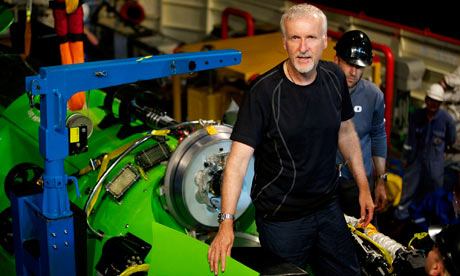
James Cameron with Deepsea Challenger submarine
James Cameron is one of the executive producers of "Years of Living Dangerously." Photograph: Handout/REUTERS
In full disclosure, I am jealous that I did not get a chance to work on this – perhaps the most important climate change multimedia communication endeavor in history.
Climate change really is a made-for-TV story. It has all the drama of Hollywood, with real-life villains and heroes thrown in. We scientists struggle everyday to communicate the importance of climate change to the world. It is great to see communication experts come in and accomplish what scientists alone cannot.
That's why I'm excited about the biggest climate science communication endeavor in history. Airing this spring in the US (Showtime), a cast of the world's best climate scientists team up with the world's best politicians and actors to tell the stories of real people from across the planet affected by climate change in "Years of Living Dangerously." The first episode is available here.
The brainchild of veterans from "60 Minutes" (Joel Bach and David Gelber), the series has very high standards of accuracy. Along with the blockbuster style of James Cameron, Jerry Weintraub, and Arnold Schwarzenegger, this endeavor is committed to combining great science with compelling story telling. Behind the scenes is best science team you could imagine, including Drs. Heidi Cullen, Joe Romm, Jim Hansen, Katharine Hayhoe, Michael Mann, Michael Oppenheimer… the list goes on and on.
The project consists of a series of separate stories on climate change, which unfold over nine episodes – often focusing on how a changing climate is affecting peoples' lives. One segment is entitled "Christie and the Storm" with correspondent Mark Bittman. This segment focuses on the impact of Superstorm Sandy, the rebuilding effort in New Jersey, and the intersection of politics and weather.
Don Cheadle takes the lead in the segment "Pray for Rain." He and Texan scientist Dr. Katharine Hayhoe look at the impacts of drought and heat in the United States in an episode that touches on everything from economics to climate to religion.
  Don Cheadle, Dr. Katharine Hayhoe, and Dr. Andrew Farley in Pray For Rain, courtesy of The Years Project/SHOWTIMEDon Cheadle, Dr. Katharine Hayhoe, and Dr. Andrew Farley in "Pray For Rain," courtesy of The Years Project/ SHOWTIME.
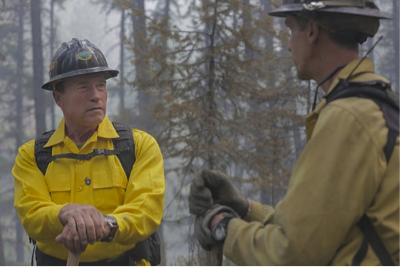
Arnold Schwarzenegger, one of my personal heroes on climate change for showing that the subject should not be a liberal or conservative issue, leads the "Fire Line" segment. He joins an elite team of wild-land firefighters as they battle infernos. He discovers a hidden secret that may be a bigger danger to national forests than fires.
Arnold Schwarzenegger and Randy Anderson in Fire-line, courtesy of The Years Project/SHOWTIMEArnold Schwarzenegger and Randy Anderson in Fire-line, courtesy of The Years Project/SHOWTIME
There are many more segments covering extreme heat waves and human health, methane and future energy supplies, ice in the arctic, coming political instability with climate change, future energy choices and others. Correspondents include Matt Damon, Harrison Ford, Thomas Friedman, Lesley Stahl, and a very long list of other concerned public figures. In total, 16 segments were produced with locations in the United States, Europe, Southeast Asia, South America, and the Middle East.
How was this effort pulled together? The producers wanted to ensure this series had a long reach. They decided to find well-known figures who were passionate about environmental issues, but were not necessarily experts. Rather, they wanted the correspondents to ask questions on behalf of the audience, questions that the viewers themselves might ask.
The production team was very selective about the composition of the team. The many famous correspondents did not just give cameos; they are truly committed to the project. The production team gave the space for the Hollywood stars to do something most of them had never done before – go into the field as correspondents and work directly with experts. This plan worked; the correspondents were enthusiastic about the chance to work on this series – many of them were already involved in their own efforts to deal with climate change and other environmental issues.
For instance, Matt Damon is Co-Founder of water.org, Harrison Ford is a Conservation International Board Member, Don Cheadle is a UN Environmental Program Global Ambassador, and Ian Somerhalder is the Founder of his namesake organization to educate and engage youth on environmental issues. With commitment and talent like this, how can you go wrong?
David Gelber perhaps sums it up best,
"The goal of this YEARS OF LIVING DANGEROUSLY is to galvanize a national conversation on the realities of climate change and inspire people to share their own stories and empower them to get involved in solutions. We're also implementing an engagement campaign that will extend this effort beyond the broadcast to encourage our global leaders in politics, business and religion, as well as concerned citizens, to state where they stand on key climate issues and take action."
The show premiers Sunday, April 13th, at 10 p.m., on SHOWTIME, I think I'm going to get cable TV just for this.

Monday, March 31, 2014

Justin Gillis, NYT: The Worst Is Yet To Come [IPCC's most sobering report yet]

by Justin Gillis, The New York Times, March 30, 2014

Greenland'­s immense ice sheet is melting as a result of climate change. Credit Kadir van Lohuizen from The New York Times.

YOKOHAMA, Japan — Climate change is already having sweeping effects on every continent and throughout the world’s oceans, scientists reported Monday, and they warned that the problem is likely to grow substantially worse unless greenhouse emissions are brought under control.

The report by the Intergovernmental Panel on Climate Change, a United Nations group that periodically summarizes climate science, concluded that ice caps are melting, sea ice in the Arctic is collapsing, water supplies are coming under stress, heat waves and heavy rains are intensifying, coral reefs are dying, and fish and many other creatures are migrating toward the poles or in some cases going extinct.

The oceans are rising at a pace that threatens coastal communities and are becoming more acidic as they absorb some of the carbon dioxide given off by cars and power plants, which is killing some creatures or stunting their growth, the report found.

Organic matter frozen in Arctic soils since before civilization began is now melting, allowing it to decay into greenhouse gases that will cause further warming, the scientists said.
Rajendra K. Pachauri, center, chairman of the Intergovernmental Panel on Climate Change, speaks during a press conference in Tokyo on Monday. Credit Shizuo Kambayashi/Associated Press
And the worst is yet to come, the scientists said in the second of three reports that are expected to carry considerable weight next year as nations try to agree on a new global climate treaty. In particular, the report emphasized that the world’s food supply is at considerable risk — a threat that could have serious consequences for the poorest nations.

“Nobody on this planet is going to be untouched by the impacts of climate change,” Rajendra K. Pachauri, chairman of the intergovernmental panel, said at a news conference here on Monday.

The report was among the most sobering yet issued by the intergovernmental panel. The group, along with Al Gore, won the Nobel Peace Prize in 2007 for its efforts to clarify the risks of climate change. 

The report released on Monday in Yokohama is the final work of several hundred authors; details from the drafts of this and of the last report in the series, which will be released next month, leaked in the last few months.

The report attempts to project how the effects will alter human society in coming decades. While the impact of global warming may actually be outweighed by factors like economic or technological change, the report found, the disruptions are nonetheless likely to be profound.

It cited the risk of death or injury on a widespread scale, probable damage to public health, displacement of people and potential mass migrations.

“Throughout the 21st century, climate-change impacts are projected to slow down economic growth, make poverty reduction more difficult, further erode food security, and prolong existing and create new poverty traps, the latter particularly in urban areas and emerging hotspots of hunger,” the report declared.

The report also cites the possibility of violent conflict over land or other resources, to which climate change might contribute indirectly “by exacerbating well-established drivers of these conflicts such as poverty and economic shocks.”

The scientists emphasized that climate change is not just some problem of the distant future, but is happening now. For instance, in much of the American West, mountain snowpack is declining, threatening water supplies for the region, the scientists reported. And the snow that does fall is melting earlier in the year, which means there is less meltwater to ease the parched summers.

In Alaska, the collapse of sea ice is allowing huge waves to strike the coast, causing erosion so rapid that it is already forcing entire communities to relocate.

“Now we are at the point where there is so much information, so much evidence, that we can no longer plead ignorance,” said Michel Jarraud, secretary general of the World Meteorological Organization.

The experts did find a bright spot, however. Since the group issued its report in 2007, it has found growing evidence that governments and businesses around the world are starting extensive plans to adapt to climate disruptions, even as some conservatives in the United States and a small number of scientists continue to deny that a problem exists.

“I think that dealing effectively with climate change is just going to be something that great nations do,” said Christopher B. Field, co-chairman of the working group that wrote the report, and an earth scientist at the Carnegie Institution for Science in Stanford, Calif.

Talk of adaptation to global warming was once avoided in some quarters, on the grounds that it would distract from the need to cut emissions. But the past few years have seen a shift in thinking, including research from scientists and economists who argue that both strategies must be pursued at once.
Tracks were flooded at Grand Central Station in October 2012, after Hurricane Sandy hit New York. Credit Hiroko Masuike/The New York Times
A striking example of the change occurred recently in the state of New York, where the Public Service Commission ordered Consolidated Edison, the electric utility serving New York City and some suburbs, to spend about $1 billion upgrading its system to prevent future damage from flooding and other weather disruptions.

The plan is a reaction to the blackouts caused by Hurricane Sandy. Con Ed will raise flood walls, bury some vital equipment and launch a study of whether emerging climate risks require even more changes. Other utilities in the state face similar requirements, and utility regulators across the United States are discussing whether to follow New York’s lead.

But with a global failure to limit greenhouse gases, the risk is rising that climatic changes in coming decades could overwhelm such efforts to adapt, the panel found. It cited a particular risk that in a hotter climate, farmers will not be able to keep up with the fast-rising demand for food.

The poorest people in the world, who have had virtually nothing to do with causing global warming, will be high on the list of victims as climatic disruptions intensify, the report said. It cited a World Bank estimate that poor countries need as much as $100 billion a year to try to offset the effects of climate change; they are now getting, at best, a few billion dollars a year in such aid from rich countries.

The $100 billion figure, though included in the 2,500-page main report, was removed from a 48-page executive summary to be read by the world’s top political leaders. It was among the most significant changes made as the summary underwent final review during a days-long editing session in Yokohama.

The edit came after several rich countries, including the United States, raised questions about the language, according to several people who were in the room at the time but did not wish to be identified because the negotiations are private.

The language is contentious because poor countries are expected to renew their demand for aid this September in New York at a summit meeting of world leaders, who will attempt to make headway on a new treaty to limit greenhouse gases.

Many rich countries argue that $100 billion a year is an unrealistic demand; it would essentially require them to double their budgets for foreign aid, at a time of economic distress at home. That argument has fed a rising sense of outrage among the leaders of poor countries, who feel their people are paying the price for decades of profligate Western consumption.

Two decades of international efforts to limit emissions have yielded little result, and it is not clear whether the negotiations in New York this fall will be any different. While greenhouse gas emissions have begun to decline slightly in many wealthy countries, including the United States, those gains are being swamped by emissions from rising economic powers like China and India.

For the world’s poorer countries, food is not the only issue, but it may be the most acute. Several times in recent years, climatic disruptions in major growing regions have helped to throw supply and demand out of balance, contributing to price increases that have reversed decades of gains against global hunger, at least temporarily.

The warning about the food supply in the new report is much sharper in tone than any previously issued by the panel. That reflects a growing body of research about how sensitive many crops are to heat waves and water stress.

David B. Lobell, a Stanford University scientist who has published much of that research and helped write the new report, said in an interview that as yet, too little work was being done to understand the risk, much less counter it with improved crop varieties and farming techniques. “It is a surprisingly small amount of effort for the stakes,” he said.


Timothy Gore, an analyst for Oxfam, the anti-hunger charity that sent observers to the proceedings, praised the new report for painting a clear picture. But he warned that without greater efforts to limit global warming and to adapt to the changes that have become inevitable, “the goal we have in Oxfam of ensuring that every person has enough food to eat could be lost forever.”

http://www.nytimes.com/2014/03/31/science/earth/panels-warning-on-climate-risk-worst-is-yet-to-come.html

Friday, November 1, 2013

The subterranean war on science, by Stephan Lewandowsky, Michael E. Mann, Linda Bauld, Gerard Hastings & Elizabeth F. Loftus

by Stephan Lewandowsky, Michael E. Mann, Linda Bauld, Gerard Hastings, and Elizabeth F. Loftus, Association for Psychological Science, Observer, Vol. 26, No. 9, November 2013.
Science denial kills. More than 300,000 South Africans died needlessly in the early 2000s because the government of President Mbeki preferred to treat AIDS with garlic and beetroot rather than antiretroviral drugs (Chigwedere, Seage, Gruskin, Lee & Essex, 2008). The premature death toll from tobacco is staggering, and historians have shown how it was needlessly inflated by industry-sponsored denial of robust medical evidence (Proctor, 2011). The US now faces the largest outbreak of whooping cough in decades, in part because of widespread denial of the benefits of vaccinations (Rosenau, 2012). According to the World Health Organization, climate change is already claiming more than 150,000 [more recent research estimates 300,000 per year] lives annually (Patz, Campbell-Lendrum, Holloway & Foley, 2005), and estimates of future migrations triggered by unmitigated global warming run as high as 187 million refugees (Nicholls et al., 2011). A common current attribute of denial is that it side-steps the peer-reviewed literature and relies on platforms such as internet blogs or tabloid newspapers to disseminate its dissent from the scientific mainstream. In contrast, the publication of dissenting views in the peer-reviewed literature does not constitute denial.
The tragic track record of denial has stimulated research into its political, sociological, and psychological underpinnings (Dunlap, 2013; Jacobson, Targonski & Poland, 2007; Kalichman, 2009; Lewandowsky, Oberauer & Gignac, 2013; Lewandowsky, Gignac & Oberauer, 2013; Oreskes & Conway, 2010). Although research has focused on diverse issues — from HIV/AIDS to vaccinations to climate change — several common variables have been isolated that determine whether people are likely to reject well-established scientific facts. Foremost among them is the threat to people’s worldviews. For example, mitigation of climate change or public-health legislation threatens people who cherish unregulated free markets because it might entail regulations of businesses (Heath & Gifford, 2006; Kahan, 2010; Lewandowsky, Gignac & Oberauer, 2013; Rosenau, 2012); vaccinations threaten Libertarians’ conceptions of parental autonomy (Kahan, Braman, Cohen, Gastil & Slovic, 2010; Lewandowsky, Gignac & Oberauer, 2013); and evolution challenges people’s religious faiths (Rosenau, 2012). Another variable that appears to be involved in science denial is conspiracist ideation (Kalichman, 2009; Lewandowsky, Gignac & Oberauer, 2013; Lewandowsky, Oberauer & Gignac, 2013; Lewandowsky, Cook, Oberauer & Marriott, 2013; Smith & Leiserowitz, 2012). Thus, AIDS is thought to be a creation of the US Government (Kalichman, 2009), climate change is a “hoax” perpetrated by corrupt scientists (Inhofe, 2012), and research into the health effects of tobacco is conducted by a “cartel” that “manufactures alleged evidence” (Abt, 1983, p. 127).
The conspiratorial element of denial explains why contrarians often perceive themselves as heroic dissenters who — in their imagination — are following Galileo’s footsteps by opposing a mainstream scientific “elite” that imposes its views not on the basis of overwhelming evidence but for political reasons. Mainstream climate scientists are therefore frequently accused of “Lysenkoism,” after the Soviet scientist whose Lamarckian views of evolution were state dogma in the Soviet Union. Other contrarians appeal to Albert Einstein’s injunction “. . . to not stop questioning” to support their dissent from the fact that HIV causes AIDS (Duesberg, 1989).
This conspiratorial element provides a breeding ground for the personal and professional attacks on scientists that seemingly inevitably accompany science denial. The present authors have all been subject to such attacks, whose similarity is notable because the authors’ research spans a broad range of topics and disciplines: The first author has investigated the psychological variables underlying the acceptance or rejection of scientific findings; the second author is a paleoclimatologist who has shown that current global temperatures are likely unprecedented during the last 1,000 years or more; the third and fourth authors are public-health researchers who have investigated the attitudes of teenagers and young adults towards smoking and evaluated a range of tobacco control interventions; and the fifth author has established that human memory is not only fallible but subject to very large and systematic distortions.
This article surveys some of the principal techniques by which the authors have been harassed; namely, cyber-bullying and public abuse; harassment by vexatious freedom-of-information (FOI) requests, complaints, and legal threats or actions; and perhaps most troubling, by the intimidation of journal editors who are acting on manuscripts that are considered inconvenient by deniers. The uniformity with which these attacks are pursued across several disciplines suggests that their motivation is not scientific in nature.
In light of the lethal track record of denial, one might expect opprobrium to be reserved for those who deny the public’s right to be adequately informed about risks such as AIDS or climate change. Paradoxically, however, it is scientists whose research aims to inform the public of such risks who have been at the receiving end of hate mail and threats. Thus, the first author has been labeled a “Nazi zionist kike” and has been accused of “mass murder and treason.” The second author has been attacked on a neo-Nazi website and has received envelopes with a powdery white substance resembling Anthrax (Mann, 2012). The third author has received anonymous abusive emails and nighttime phone calls in her home. This abuse is at least in part orchestrated because the frequency of such emails tends to increase when scientists’ e-addresses are posted on contrarian websites.
Other attempts of intimidation have involved the solicitation of potentially compromising information from the first author by a non-existent internet “sock puppet” whose unknown creators pretended to be victimized by climate deniers — and who then splattered the private correspondence on the internet (Lewandowsky, 2011). At a public level, an American lobbying outfit has recently likened climate scientists to the Unabomber in a billboard campaign, and a British tabloid journalist entertained the execution of the second author by hanging in what passes for a “mainstream” newspaper in the UK (Delingpole, 2013).
Another common tool of harassment involves FOI requests. Under many legislations around the world, email correspondence by an academic is subject to almost unconditional release. During the last 9 months, the first author has been subject to numerous requests for correspondence and other documents, including trivial pedantry such as the precise time and date stamps of blog posts. In a paradoxical twist, accusations of impropriety were launched against the first author when an FOI-release confirmed that inconvenient research (Lewandowsky, Oberauer & Gignac, 2013) was conducted with ethics approval. The allegations — by bloggers unaccountable to any form of review or ethical scrutiny — cited the fact that ethics approval was granted expeditiously (for details, see Lewandowsky, Cook et al., 2013). The second author and his former university endured vexatious demands for the release of personal email correspondence by Virginia’s Attorney General. Those actions attracted national and international attention and were labeled a “witch hunt” by Nature (2010). The demands were ultimately rejected with prejudice by the Virginia Supreme Court. Other attacks on the second author involved front groups like the “American Tradition Institute” and the “Competitive Enterprise Institute” which sought access to his personal emails, professional notes, and virtually every imaginable document from his entire career. The third and fourth authors’ research center on tobacco control has been subject to a number of extensive FOI requests from a tobacco giant, Philip Morris International, for confidential interview records involving teenaged participants. Notably, the identity of Philip Morris was disguised during the first FOI request, which was launched with a law firm serving as a front group (Hastings, MacKintosh & Bauld, 2011). The information requested included “all primary data,” “all questionnaires,” “all interviewers’ handbooks and/or instructions,” “all data files,” “all record descriptions,” and so on.
The use of FOI to obtain correspondence or research data mirrors legislative attempts by the tobacco industry to gain unhindered access to epidemiological data (Baba, Cook, McGarity & Bero, 2005). At first glance, it might appear paradoxical that the tobacco industry would sponsor laws ostensibly designed to ensure transparency of research, such as the Data Access Act of 1998. However, the reanalysis of inconvenient results by obtaining the raw data is a known tool in the arsenal of vested interests: Michaels (2008) shows how epidemiological data have been subjected to industry-sponsored re-analysis because of their regulatory implications, such as the link between tobacco and lung cancer or the link between bladder cancer and chemicals used in dye production. Re-analyses by industry bodies often fail to detect such well-established links (e.g., Cataldo, Bero & Malone, 2010; Proctor, 2011). Similarly, results by the first (see Lewandowsky, Cook, et al., 2013), second (see Mann, 2012), and third (Sims, Maxwell, Bauld & Gilmore, 2010) author have been reanalyzed on internet blogs (sometimes by the same individuals). Those reanalyses used various tricks, such as the violation of strong statistical conventions relating to the inclusion of principal components, to attenuate the inconvenient implications of the research—specifically, that the warming from greenhouse gas emissions is historically unprecedented (Mann, Bradley, & Hughes, 1998) and that those who oppose this scientific fact tend to engage in conspiracist ideation (Lewandowsky, Oberauer, & Gignac, 2013; Lewandowsky, Gignac, & Oberauer, 2013). Another tactic to discredit “inconvenient” peer-reviewed results involves publishing alternative versions of “the evidence” using different sources that proport to be equally legitimate. For example, the third author’s review of the impact of smoke-free legislation in England, published by the UK government (Bauld, 2011) was the subject of a report by Imperial Tobacco, the world’s fourth-largest tobacco company. Entitled “The Bauld Truth” as a play on the third author’s name (Imperial Tobacco, 2011), it presented alternative, non peer-reviewed evidence as more viable and opened with the statement that the third author’s review was “lazy and deliberately selective”. Anyone familiar with climate disinformation on the internet will recognize those rhetorical tools as the standard fare of dismissal of inconvenient science.
A further line of attack involves complaints by members of the public to scientists’ host institutions with allegations of research misconduct. The format of those complaints ranges from brief enraged emails to the submission of detailed, elaborately-formatted multi-page dossiers. The scientific literature on querulous complainants (e.g., Lester, Wilson, Griffin, & Mullen, 2004; Mullen & Lester, 2006) explicates the nature of the majority of such complaints. However, not all complaints to universities are from querulous individuals: The tobacco industry, specifically Philip Morris, used complaints to scientists’ deans or department heads as part of their action plan to discredit researchers who investigated the health risks of smoking (Landman & Glantz, 2009).
The fifth author has experienced a particularly chilling legal attack based on an article that disputed the legitimacy of the claim by an individual (whose name was not released) that she had with the help of a psychiatrist recovered a “repressed childhood memory” of sexual abuse by her mother (for a review of the case, see Geis & Loftus, 2009). Although the suit was ultimately settled, the complaints to the university delayed publication—or indeed any public mention—of the research by several years (Loftus, 2003).
Those attacks on scientists by personal abuse, vexatious use of FOI and the complaints process, and legal proceedings, have not only consumed valuable time, thereby delaying research, but have also taken an emotional toll. Those attacks have caused considerable trauma among some junior scientists known to us. However, the problem does not end there. Even more concerning is another line of attack that directly targets the integrity of the scientific process: We are concerned about the activities of individuals outside the scientific community and of little scientific standing, who systematically insert themselves into the peer-review and publication process to prevent the publication of findings they deem inconvenient. Those insertions typically involve emails to editors which have been described as “bullying” by some parties involved. Far from being isolated incidents, at last count we have identified 7 editors of several journals who have been subject to such bullying tactics across two disciplines; viz. climate science and psychology.
Once again, precedents for those attempts to subvert the scientific process involve the tobacco industry. A 1995 Philip Morris action plan explicitly devised strategies to interfere with funding of health research. Those strategies included approaches to the appropriations committee of Congress (albeit without raising the profile of the tobacco industry), and the writing of letters critical of public-health research to the editors of scientific journals by associates of the industry’s Tobacco Institute (without necessarily revealing their associations). Landman and Glantz (2009) show how this plan was translated into action.
What are the consequences of such insertions by external parties into the scientific process? There is little doubt that pressure from the tobacco industry affected the course of medical research, if only by consuming massive amounts of scientists’ time that could otherwise have been devoted to research (Landman & Glantz, 2009; Proctor, 2011). It also delayed the translation of that research into interventions and policies that could have saved lives by reducing smoking rates. There is also a growing body of literature which suggests that the aggressive efforts by climate deniers have adversely affected the communication and direction of climate research (Brysse, Oreskes, O’Reilly, & Oppenheimer, 2013; Freudenburg & Muselli, 2010; Lewandowsky, Oreskes, Risbey, Newell, & Smithson, 2013), and allegations of defamation have led to the re-examination of one of the first author’s papers to eliminate legal risks that is ongoing at the time of this writing (Lewandowsky, Cook, et al., 2013).
How should the scientific community respond to the events just reviewed? As in most cases of intimidation and bullying, we believe that daylight is the best disinfectant. This article is a first step in this effort towards transparency. Knowledge of the common techniques by which scientists are attacked, irrespective of their discipline and research area, is essential so that institutions can support their academics against attempts to thwart their academic freedom. This information is also essential to enable lawmakers to improve the balance between academic freedom and confidentiality of peer review on the one hand, and the public’s right to access information on the other. Finally, this knowledge is particularly important for journal editors and professional organizations to muster the required resilience against illegitimate insertions into the scientific process.

Tuesday, August 6, 2013

AGU Revised Statement on Climate Change: "Human induced climate change requires urgent action:

from Eli Rabett, Rabett Run, August 5, 2013

The AGU has issued its revised statement on climate change, approved by the fifteen member committee chaired by Gerald North with one (predictable) dissent. 

Human induced climate change requires urgent action.

Humanity is the major influence on the global climate change observed over the past 50 years.
Rapid societal responses can significantly lessen negative outcomes.

Human activities are changing Earth’s climate. At the global level, atmospheric concentrations of carbon dioxide and other heat trapping greenhouse gases have increased sharply since the Industrial Revolution. Fossil fuel burning dominates this increase.  Human caused increases in greenhouse gases are responsible for most of the observed global average surface warming of roughly 0.8 °C (1.5 °F) over the past 140 years. Because natural processes cannot quickly remove some of these gases (notably carbon dioxide) from the atmosphere, our past, present, and future emissions will influence the climate
system for millennia. 

Extensive, independent observations confirm the reality of global warming. These observations show large scale increases in air and sea temperatures, sea level, and atmospheric water vapor; they document decreases in the extent of mountain glaciers, snow cover, permafrost, and Arctic sea ice. These changes are broadly consistent with long understood physics and predictions of how the climate system is expected to respond to human caused increases in greenhouse gases. The changes are inconsistent with explanations of climate change that rely on known natural influences.

Climate models predict that global temperatures will continue to rise, with the amount of warming primarily determined by the level of emissions. Higher emissions of greenhouse gases will lead to larger warming, and greater risks to society and ecosystems. Some additional warming is unavoidable due to past emissions.

Climate change is not expected to be uniform over space or time. Deforestation, urbanization, and particulate pollution can have complex geographical, seasonal, and longer term effects on temperature, precipitation, and cloud properties. In addition, human induced climate change may alter atmospheric circulation, dislocating historical patterns of natural variability and storminess.

In the current climate, weather experienced at a given location or region varies from year to year; in a changing climate, both the nature of that variability and the basic patterns of weather experienced can change, sometimes in counterintuitive ways -- some areas may experience cooling, for instance. This raises no challenge to the reality of human induced climate change.

Impacts harmful to society, including increased extremes of heat, precipitation, and coastal high water are currently being experienced, and are projected to increase. Other projected outcomes involve threats to public health, water availability, agricultural productivity (particularly in low latitude developing countries), and coastal infrastructure, though some benefits may be seen at some times and places. Biodiversity loss is expected to accelerate due to both climate change and acidification of the oceans, which is a direct result of increasing carbon dioxide levels.

While important scientific uncertainties remain as to which particular impacts will be experienced where, no uncertainties are known that could make the impacts of climate change inconsequential. Furthermore, surprise outcomes, such as the unexpectedly rapid loss of Arctic summer sea ice, may entail even more dramatic changes than anticipated.

Actions that could diminish the threats posed by climate change to society and ecosystems include substantial emissions cuts to reduce the magnitude of climate change, as well as preparing for changes that are now unavoidable. The community of scientists has responsibilities to improve overall understanding of climate change and its impacts. Improvements will come from pursuing the research needed to understand climate change, working with stakeholders to identify relevant information, and conveying understanding clearly and accurately, both to decision makers and to the general public.

Adopted by the American Geophysical Union
December 2003; Revised and Reaffirmed December 2007, February 2012, August 2013.

The 15-person panel that reviewed and updated the position statement included the following:
  • Amy Clement, Rosenstiel School of Marine and Atmospheric Science, University of Miami (approve)
  • John Farrington, Woods Hole Oceanographic Institute (approve)
  • Susan Joy Hassol, Climate Communication (approve)
  • Robert Hirsch, U.S. Geological Survey (approve)
  • Peter Huybers, Harvard University (approve)
  • Peter Lemke, Alfred Wegener Institute (approve)
  • Gerald North, Texas A&M University (approve, panel chair)
  • Michael Oppenheimer, Princeton University (approve)
  • Roger Pielke Sr., University of Colorado Boulder (dissent)
  • Ben Santer, Lawrence Livermore National Laboratory (approve)
  • Gavin Schmidt, Goddard Institute for Space Studies, NASA (approve)
  • Leonard A. Smith, London School of Economics (approve)
  • Eric Sundquist, U.S. Geological Survey (approve)
  • Pieter Tans, National Oceanic and Atmospheric Administration (approve)
It is notable here that the committee was quite willing to vote the statement out based on a strong consensus but not unanimity. As Eli noted in December last after attending the Fall AGU meeting, climate scientists are not only 97% for the proposition that the climate is changing driven by human influences but that it is also dangerous.  Action to stop carbon emissions is needed immediately.

The mood of the attendees had shifted.  It was much sourer about the few in the atmospheric science community still running interference for inactivism.  People were being called out in private, but also in public and not just in sessions dealing with education and communication and blogging.

It is now clear to the climate science community that keeping your head down has not been an effective option for climate scientists for quite a while (see Kathryn Hayhoe).  The denialists and their funders are  coming for you in the Niemoeller sense, sooner or later.  This means that many in the community have woken up.  Those who do not, or believe they cannot, are feeling guilty about not supporting the science they are part of.  Those folks need to be encouraged and supported and come out.

http://rabett.blogspot.com/2013/08/revised-agu-statement-on-climate-change.html

Friday, June 7, 2013

Climate science tells us the alarm bells are ringing

Michael Oppenheimer is a professor of geosciences and international affairs at Princeton University. Kevin Trenberth is a distinguished senior scientist at the National Center for Atmospheric Research.
In a recent op-ed for The Post, Rep. Lamar Smith (R-Tex.) offered up a reheated stew of isolated factoids and sweeping generalizations about climate science to defend the destructive status quo. We agree with the chairman of the House Committee on Science, Space and Technology that policy should be based on sound science. But Smith presented political talking points, and none of his implied conclusions is accurate.
The two of us have spent, in total, more than seven decades studying Earth’s climate, and we have joined hundreds of top climate scientists to summarize the state of knowledge for the Intergovernmental Panel on Climate Change (IPCC), the World Climate Research Program and other science-based bodies. We believe that our views are representative of the97 percent of climate scientists who agree that global warming is caused by humans. Legions of studies support the view that, left unabated, this warming will produce dangerous effects. (This commentary, like so much of our work, was a collaborative process, with input from leading climate scientists Julia Cole, Robert W. Corell, Jennifer Francis, Michael E. Mann, Jonathan Overpeck, Alan Robock, Richard C.J. Somerville and Ben Santer.)
Man-made heat-trapping gases are warming our planet and leading to increases in extreme weather events. Droughts are becoming longer and deeper in many areas. The risk of wildfires is increasing. The year 2012, the hottest on record for the United States, illustrated this risk with severe, widespread drought accompanied byextensive wildfires.
Last month, levels of carbon dioxide in the atmosphere exceeded 400 parts per million, approaching the halfway mark between preindustrial amounts and a doubling of those levels. This doubling is expected to cause a warming this century of four to seven degrees Fahrenheit. The last time atmospheric carbon dioxide reached this level was more than 3 million years ago, when Arctic lands were covered with forests. The unprecedented rate of increase has been driven entirely by human-produced emissions.
Projections from an array of scientific analyses summarized by the National Academy of Sciences and most of the world’s major scientific organizations indicate that by the end of this century, people will be experiencing higher temperatures than any known during human civilization — temperatures that our societies, crops and ecosystems are not adapted to.
Computer model projections from at least 27 groups at universities and other research institutes in nine countries have proved solid. In many cases, they have been too conservative, underestimating over the past 20 years the amounts of recent sea-level rise and Arctic sea ice melt.
Much has been made of a short-term reduction in the rate of atmospheric warming. But “global” warming requires looking at the entire planet. While the increase in atmospheric temperature has slowed, ocean warming rose dramatically after 2000. Excess heat is being trapped in Earth’s climate system, and observations of the Global Climate Observing System and others are increasingly able to locate it. Simplistic interpretations of cherry-picked data hide the realities.
In recent years, our understanding of the relationship between climate and extreme weather has sharpened, along with our appreciation of the vast damages such events cause.
Contrary to Smith’s assertions, there is conclusive evidence that climate change worsened the damage caused by Superstorm Sandy. Sea levels in New York City harbors have risen by more than a foot since the beginning of the 20th century. Had the storm surge not been riding on higher seas, there would have been less flooding and less damage. Warmer air also allows storms such as Sandy to hold more moisture and dump more rainfall, exacerbating flooding.
Smith referred to the IPCC’s special report on extremes but did not mention that the report connects several types of extreme weather to climate change, including heat waves, extreme precipitation and, in some regions, drought. Furthermore, the last major IPCC report, in 2007, stated unequivocally that Earth is warming.
While we are addressing science here, one broad policy implication is clear: Humans must reduce their greenhouse gas emissions. Since John Tyndall discovered in 1859 that carbon dioxide and other greenhouse gases cause warming, science has made great strides toward establishing the scope of that warming and its impact.
The combined impetus of observed trends in climate and weather extremes, and continuing discoveries in climate science, lay bare how ludicrous Smith’s suggestion is that since we know nothing, we should do nothing.
We know a lot, more than enough to recognize that the alarm bells are ringing.
Increases in heat waves and record high temperatures; record lows in Arctic sea ice; more severe rainstorms, droughts and wildfires; and coastal communities threatened by rising seas all offer a preview of the new normal in a warmer world. Smith’s policy plan amounts to “wait and see.” But the longer we wait — effectively, like him, closing our eyes to science — the more difficult and expensive the solutions become, and the more irreversible the damage will be.

Tuesday, January 15, 2013

Nation’s Top Climate Scientists Urge President Obama to Reject Keystone XL Pipeline


For immediate release, January 15, 2013, 350.org
OAKLAND CA -- Eighteen of the nation’s top climate scientists released a letter to President Obama today urging him to say no to the Keystone XL tar sands pipeline. 
“Eighteen months ago some of us wrote you about the proposed Keystone XL tar sands pipeline, explaining why in our opinion its construction ran counter to both national and planetary interests,"  wrote the scientists. "Nothing that has happened since has changed that evaluation; indeed, the year of review that you asked for on the project made it clear exactly how pressing the climate issue really is."
Indeed the past year has shown that climate change is here. A few months after Superstorm Sandy flooded parts of the Northeast, NOAA announced last week that the average temperature for 2012 was 55.3 degrees Fahrenheit, 3.2 degrees above normal and a full degree higher than the previous warmest year recorded -- 1988. 
The State Department is expected to soon release its supplemental environmental impact statement (SEIS) required for the northern leg of the Keystone XL pipeline. The department’s previous pipeline EIS downplayed climate risks by arguing that the tar sands would be developed with or without Keystone XL and therefore the project had no responsibility for the additional greenhouse gas emissions that come from burning tar sands oil. 
But two of Canada's largest banks, TD Economics and CIBC, have recently said that without added capacity, "Canada's oil industry is facing a serious challenge to its long-term growth" and that “Canada needs pipe — and lots of it — to avoid the opportunity cost of stranding over a million barrels a day of potential crude oil growth.”
The Obama Administrations has promised action on climate change but if KXL is approved, the Administration would be actively supporting and encouraging the growth of an industry which has demonstrably serious effects on climate.
Thousands of concerned citizens will come to Washington, DC on February 17th, President's Day weekend, to oppose the Keystone XL pipeline. Rally information is at www.350.org/presidentsday.
### 
1. Full text of the letter: 
Dear Mr. President,
You take office for the second time at a critical moment. As you may know, the U.S. has just recorded the hottest year in its history, beating the old mark by a full degree; the same year that saw the deep Midwest drought, and the fury of Hurricane Sandy, also witnessed the rapid and unprecedented melt of the Arctic ice pack. 
If we are to restrain the rise in the planet's temperature, it will require strong action from, among others, the planet's sole superpower. Some of that work will be difficult, requiring the cooperation of Congress. But other steps are relatively easy.
Eighteen months ago some of us wrote you about the proposed Keystone XL tar sands pipeline, explaining why in our opinion its construction ran counter to both national and planetary interests. Nothing that has happened since has changed that evaluation; indeed, the year of review that you asked for on the project made it clear exactly how pressing the climate issue really is. 
We hope, as scientists, that you will demonstrate the seriousness of your climate convictions by refusing to permit Keystone XL; to do otherwise would be to undermine your legacy.
Thank you,
James Hansen, Research Scientist, The International Research Institute for Climate and Society, The Earth Institute, Columbia University
Ralph Keeling, Director, Scripps CO2 Program Scripps Institution of Oceanography
John Harte, Professor of Ecosystem Sciences, University of California
Jason E. Box, Professor, Byrd Polar Research Center
John Abraham, Associate Professor, School of Engineering, University of St. Thomas
Ken Caldeira, Senior Scientist. Department of Global Ecology, Carnegie Institution
Michael MacCracken, Chief Scientist for Climate Change Programs, Climate Institute
Michael E. Mann, Professor of Meteorology, Director, Earth System Science Center, The Pennsylvania State University
James McCarthy, Alexander Agassiz Professor of Biological Oceanography, Harvard University
Michael Oppenheimer, Albert G. Milbank Professor of Geosciences and International Affairs, Woodrow Wilson School and Department of Geosciences, Princeton University
Raymond T. Pierrehumbert, Louis Block Professor in the Geophysical Sciences, The University of Chicago
Richard Somerville, Distinguished Professor Emeritus and Research Professor, Scripps Institution of Oceanography
George M. Woodwell, Founder, Director Emeritus, and Senior Scientist, Woods Hole Research Center
Mauri Pelto, Department of Environmental Science, Nichols College
David Archer, Professor, Department of Geophysical Sciences, The University of Chicago
Dr. Ted Scambos, Lead Scientist, National Snow and Ice Data Center, University of Colorado at Boulder
Terry L. Root, Senior Fellow, Stanford University
Alan Robock, Professor II, Distinguished Professor, Department of Environmental Sciences, Rutgers University
Affiliations are listed for identification purposes only.