Blog Archive

Thursday, May 12, 2016

Results of Glyphosate Pee Test Are in ‘And It’s Not Good News’

by Lorraine Chow, EcoWatch, May 12, 2016
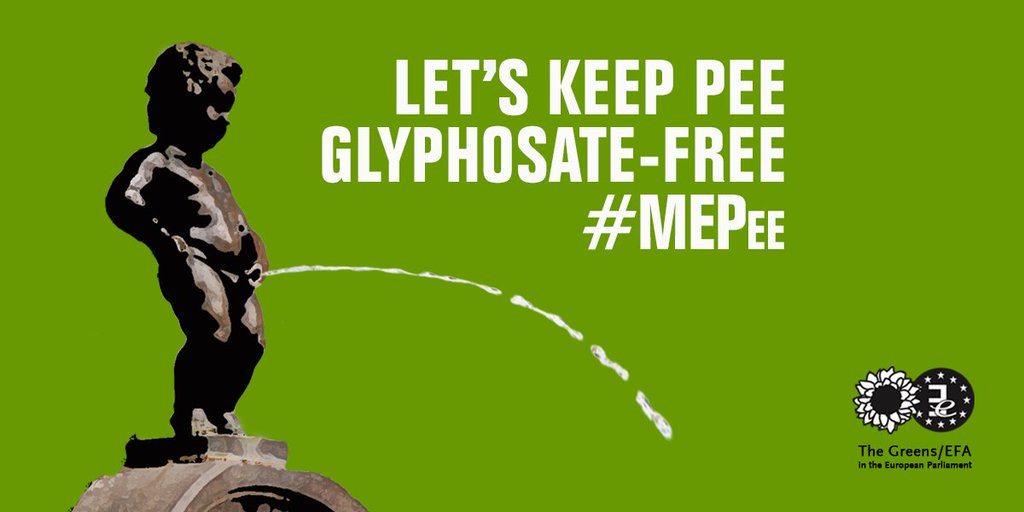
Last month, Members of the European Parliament (MEPs) volunteered to take a urine test to see if glyphosate—the cancer-linked weedkiller—is in their system. Forty-eight MEPs from 13 different European Union countries participated in the test, and now the results are in.
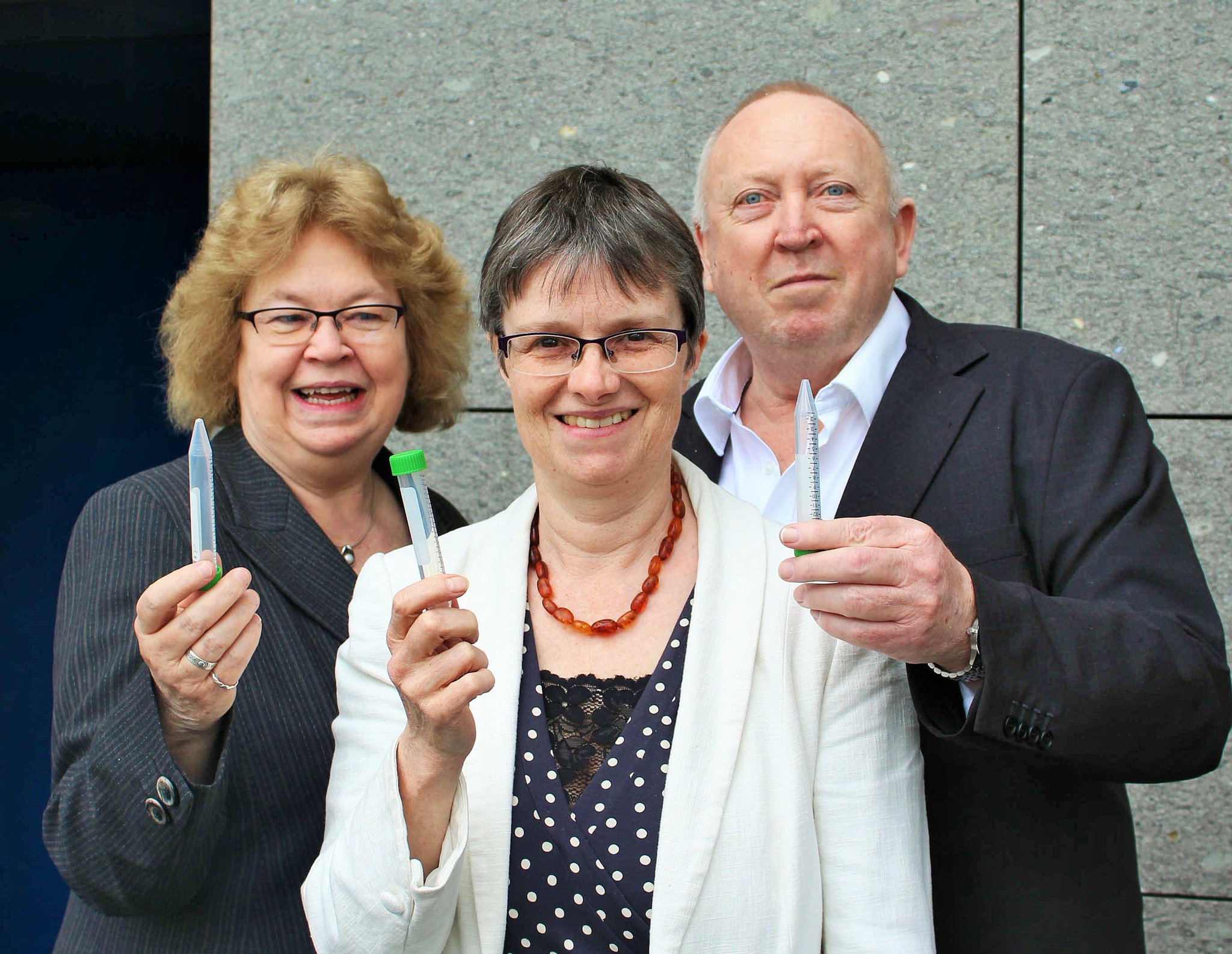
According to ELISA test results from the accredited Biocheck Laboratory in Germany: “All participants excreted glyphosate by urine.”
The experiment was spearheaded by the Green Party in the European Parliament, which wants a ban on the controversial herbicide in the European Union.
The group noted in a press release of their so-called “#MEPee” test:
On average, the MEPs had 1.7 micrograms/liter of glyphosate in their urine, 17 times higher than the European drinking water norm (0.1 microgram/litre). This means that everyone we tested was way above the limit for residues of pesticides in drinking water.
Of the 48 participants, EU-parliament members from Belgium, France and Germany made up more than 80 percent of the whole investigated participants. The test showed that EU-parliament members from Lithuania, Spain and Croatia had the highest concentrations of glyphosate. The lowest concentrations were in the urines of participants of from Italy, Finland and Ireland.
“Nevertheless all investigated EU-parliament members were glyphosate contaminated. This will show glyphosate is also in the food chain of members of the EU-parliament,” the report states.
Glyphosate, which the World Health Organization’s International Agency for Research on Cancer (IARC) declared a possible carcinogen last March, is the main ingredient in Monsanto’s widely used weedkiller, Roundup. It is also found in herbicides manufactured by Syngenta and Dow.
The Greens conducted the test ahead of European Parliament’s April 13 resolution that opposed the European Union’s relicensing of glyphosate.
Despite fierce opposition from European Parliament, countries such as France, Sweden, Italy and the Netherlands, and the 1.4 million people who have signed a petition calling on an EU ban, the European Commission—the executive body of the European Union—reportedly plans to relicense glyphosate for nine years.
According to the Green Party, the European Commission’s latest proposal, which will be voted on May 19, will “plough ahead with a full-fledged approval of glyphosate’s license for nine years.”
“It considers only symbolically if at all the European Parliament’s resolution calling for a very limited scope of approval. Responsibility for the protection of operators and for multiple risks is discharged onto Member States in a non-legally binding manner,” the party said. “We are pissed off that our governments want to allow this poison for another nine years! No politician should have this in his or her body, and not a single citizen either!”
Glyphosate approval in the EU expires at the end of June. The chemical has been the subject of incredible controversy in Europe especially after the European Food Safety Authority famously rejected the IARC’s classification of glyphosate as a possible carcinogen in November.
Agri-business giant Monsanto has also vehemently denied glyphosate’s health and cancer risks and demanded a retraction of the IARC report.
EN Glyphosate
The Green Party’s MEPee test was inspired by a German study “Urinale 2015,” which sampled glyphosate concentrations in urine from more than 2,000 participants.
“The study found that the scale of the glyphosate problem is enormous, with detected concentrations in urine between five and 42 times over the maximum value of residues for drinking water in Europe,” the Green Party pointed out. “No less than 99.6 percent of all citizens who took part in this survey had higher residue levels. This means that virtually all citizens are contaminated with glyphosate.”
A number of other studies have detected glyphosate—the “most widely applied pesticide worldwide”—in feminine hygiene products, everyday food items and, yes, human bodies. A 2013 Friends of the Earth Europe study reported people in 18 European countries have traces of glyphosate in their urine.

Saturday, May 7, 2016

Expanding tropics pushing high altitude clouds towards poles, NASA study finds


Expanding tropics pushing high altitude clouds towards poles, NASA study finds
The Hadley cells describe how air moves through the tropics on either side of the equator. They are two of six major air circulation cells on Earth. Credit: NASA

from phys.org, May 5, 2016

A new NASA analysis of 30 years of satellite data suggests that a previously observed trend of high altitude clouds in the mid-latitudes shifting toward the poles is caused primarily by the expansion of the tropics.

Clouds are among the most important mediators of heat reaching Earth's surface. Where clouds are absent, darker surfaces like the ocean or vegetated land absorb heat, but where clouds occur their white tops reflect incoming sunlight away, which can cause a cooling effect on Earth's surface. Where and how the distribution of cloud patterns change strongly affects Earth's climate. Understanding the underlying causes of cloud migration will allow researchers to better predict how they may affect Earth's climate in the future.
George Tselioudis, a climate scientist at NASA's Goddard Institute for Space Studies and Columbia University in New York City, was interested in which air currents were shifting clouds at high altitude - between about three and a half and six miles high - toward the poles.
The previous suggested reason was that  was shifting storms and the powerful air currents known as the jet streams - including the one that traverses the United States - toward the poles, which in turn were driving the movement of the clouds.
To see if that was the case, Tselioudis and his colleagues analyzed the International Satellite Cloud Climatology Project data set, which combines  from operational weather satellites, including those run by the National Oceanic and Atmospheric Administration, to provide a 30-year record of detailed cloud observations. They combined the cloud data with a computer re-creation of Earth's air currents for the same period driven by multiple surface observations and  sets.
What they discovered was that the poleward shift of the clouds, which occurs in both the Northern and Southern Hemispheres, connected more strongly with the expansion of the tropics, defined by the general circulation Hadley cell, than with the movement of the jets.
The Hadley cell is one of the major ways air is moved around the planet. Existing in both hemispheres, it starts when air in the tropics, which is heated at the surface by intense sunlight, warms and rises. At high altitudes it is pushed away from the equator towards the mid-latitudes to the north and south, then it begins to sink back to Earth's surface, closing the loop.
"What we find, and other people have found it as well, is that the sinking branch of the Hadley cell, as the climate warms, tends to be moving poleward," said Tselioudis. "It's like you're making the tropical region bigger." And that expansion causes the tropical air currents to blow into the high altitude clouds, pushing them toward the poles, he said. The results were published in Geophysical Research Letters, a journal of the American Geophysical Union.
Scientists are working to understand exactly why the tropics are expanding, which they believe is related to a warming climate.
The poleward shift of high altitude clouds affects how much sunlight reaches Earth's surface because when they move, they reveal what's below.
"It's like pulling a curtain," said Tselioudis. And what tends to be revealed depends on location - which in turn affects whether the surface below warms or not.
"Sometimes when that curtain is pulled, as in the case over the North Atlantic ocean in the winter months, this reduces the overall cloud cover" in the lower mid-latitudes, the temperate regions outside of the tropics, Tselioudis said. The high altitude clouds clear to reveal dark ocean below - which absorbs incoming sunlight and causes a warming effect.
However, in the Southern Ocean around Antarctica, the  clouds usually clear out of the way to reveal lower altitude clouds below - which continue to reflect sunlight from their white tops, causing little effect on the solar radiation reaching the surface.
When the results are taken together, the bottom line is that the cloud interactions with atmospheric circulation and solar radiation are complicated, and the tropical circulation appears to play a dominant role, said Tselioudis.
That information is a new insight that will likely be used by the climate modeling community, including the scientists who contribute modeling expertise to the Intergovernmental Panel on Climate Change, said Lazaros Oreopoulos, a cloud and radiation budget researcher at NASA's Goddard Space Flight Center in Greenbelt, Maryland, who was not involved in the study. Climate modelers aim for their computer simulations to correspond as closely to reality as possible in order to reliably predict Earth's future climate.
"If current behavior is not well simulated, then confidence in predicted future behavior will be lower," Oreopoulos said. "I anticipate this study to be looked at carefully and affect thinking on these matters."
Read more at: http://phys.org/news/2016-05-tropics-high-altitude-clouds-poles.html

Robert Schribbler: Shift in the Wind May Push Gargantuan Fort McMurray Fire Toward Tar Sands Facilities on Saturday

by Robert Schribbler, robertschribbler blog, May 6, 2016


The Fort McMurray Fire is now so vast that it has both burned through and completely surrounded the city, its airport, and the neighboring community of Anzac 31 miles to the south. Spinning out blazes in a long tail across the green forested land of Canada, the fire now appears to cover about 40 miles of distance and 10 miles of width at its longest and widest points. A secondary fire to the northeast of the main blaze also appears to have lit off. And by the end of Saturday officials now believe the fire could cover an area the size of Rhode Island.
Fort McMurray Fire May 6 v2 NASA
Fort McMurray Fire as seen from above in the May 6, 2016, NASA/LANCE MODIS satellite shot. This huge fire now covers an approximate 10×40 mile swath of land, is throwing off numerous pyrocumulous clouds, and has spawned a secondary large fire to the northeast. In the upper left hand corner of the image above we see the bald landscapes of tar sands facilities. Smoke plume analysis indicates that the northern extent of this monstrous fire is just 3 miles to the south of the nearest tar sands facility in this shot. For purposes of scale, bottom edge of frame is 60 miles. Image source: LANCE-MODIS.
Viewing the massive scope and extent of the blaze, one can see why an evacuation convoy of 1,500 vehicles — composed of members of the fire response team and a number of stranded evacuees from the tar sands industrial zone — was unable to flee the region earlier on Friday. BBC News reports indicated that the convoy encountered walls of flames 200 feet high and was forced to turn back to a city that finds itself surrounded with walls of flame on every side. This was the second time in two days that the evacuation convoy attempted to leave the fire zone and the second time that all ways out were found to be blocked by the fires. Thousands of people remain stranded in the fire zone to the north of the blaze and officials say it will take four days to move them once a clear pathway out is found
RCMP reported that by late Friday a third attempt from the convoy, now swelling to 2,500 vehicles, finally made its way south away from the fire zone. This attempt succeeded after encountering very dense smoke and making multiple stops through the burn scar region. Emergency evacuation leaders were concerned about fires encircling the evacuation convoy as it progressed. But fortune prevailed and the train of cars, trucks, and emergency response vehicles made it through. About three more days will be required to move the rest of the evacuees if a clear path out can be found, according to RCMP statements. (For more information on how to help those displaced by the fire look here.).
Hot Winds to Drive Fire Toward Tar Sands Saturday
GFS model forecasts indicate that temperatures will rise into the mid 80s Saturday. Yet another day of record hot readings for a climate change baked Canada. Winds are shifting toward the south. And very dry conditions will continue to worsen the already extreme levels of fire danger. With the fire now burning very close to the Athabasca oil production facility — a section of the tar sands that was evacuated yesterday due to fire encroachment — it appears that these winds will likely drive the fire toward and, possibly, into that industrial section.
Fort McMurray Fire Expansion Map
Fort McMurray fire expansion map produced by the regional municipality of Wood Buffalo and the Natural Resources Center of Canada shows the freakish rapidity with which the Fort McMurray Fire has expanded. Today, a similar northward expansion toward the tar sands industrial zone is possible.
Over the past few days, this fire has shown an ability to move very rapidly — covering many miles of ground in just a short period. And officials estimate that the blaze could expand to an enormous 300,000 hectares (750,000 acres or nearly 1,200 square miles or an area roughly the size of Rhode Island) on Saturday. Trees surrounding the barren strip mines of the tar sands facilities provide abundant fuel for these fires and volatile chemicals produced in the facilities add an additional severe hazard. The tar sands soil is laced with bitumen — which is not typically concentrated enough to burn. However, the extreme heat of these fires may cause some of the more concentrated zones to smolder — adding to potential fuels and fire hotspots.
To this point, the biggest concern is over what may happen if the fires do get into the oil facilities. The chemical and gas facilities in the tar sands are among the largest and most volatile in the world. Many single storage units contain enough explosive compounds to generate multi-kiloton scale blasts if their container vessels are breached. And a few facilities are capable of generating enormous explosions. The Nexen Long Lake oil extraction site is one of these. And officials note that, if this particular site were to explode, it could produce a devastating blast capable of leveling trees and structures in a 14 kilometer radius. If this understanding of the officially stated estimate is correct, then it would roughly be equivalent to 30-40 million tons of TNT going off.
“We’re looking at a blast area of about 14 kilometres if that plant were to go,” said Sgt Jack Poitras in an interview with BBC at about 7:00 AM Saturday.
Fort McMurray Weather
Southwest winds and temperatures in the 80s will worsen fire conditions on Saturday — creating a risk that the Fort McMurray fire will sweep into the tar sands production facilities. By Sunday, another front brings with it the potential for rain — which may help firefighters contain the blaze. Image source: Earth Nullschool.
Given the predicted weather conditions, the available fuels, and the extraordinary scope and force of the ongoing conflagration around Fort McMurray there is risk that fires will invade the tar sands production zone on Saturday. It’s also worth noting that Arctic and Northern Latitude wildfires like the Fort McMurray Fire have had a tendency to burn for a long time during recent years — lasting for many days and sometimes weeks. Adding to the tree fuels, the ground provides its own set of ignitable materials in fires so large and so hot as this one. The top layer of soil contains old leaf litter, organic material and deadfall — a layer about three feet thick that will burn in the most extreme blazes. This region of Alberta also contains deposits of discontinuous permafrost. During recent years, these permafrost zones have thawed more and more with the advance of global warming. Permafrost is carbon rich and produces its own peat-like fuel which can burn and smolder over very long periods. And there is concern that the new fires produced by climate change over Canada may serve as a mechanism for permafrost carbon release.
Record heat and climate change, therefore, provide an explosive combination of new fuels and added ignition sources for fires like the one that is now engulfing so much of this tar sands production zone. And as bad as these fires have been over the past week, Saturday may see the situation again worsen.
After the heat and dangerous wind shift on Saturday, Sunday brings with it cooler conditions and a return of northwesterly winds. Earlier forecasts had indicated a possibility of rain as well. But very dry air in the region is suppressing cloud formation and chances of precipitation are now near zero for Sunday and on through at least the next week. With such a large and hot-burning fire — rain is really the best hope that firefighters have of getting this enormous blaze under control anytime soon.

As Climate Deception Investigations Gain Momentum, ExxonMobil Plays the Victim

2016-05-05-1462477765-8464431-ClimateFraudInvestigation.jpg
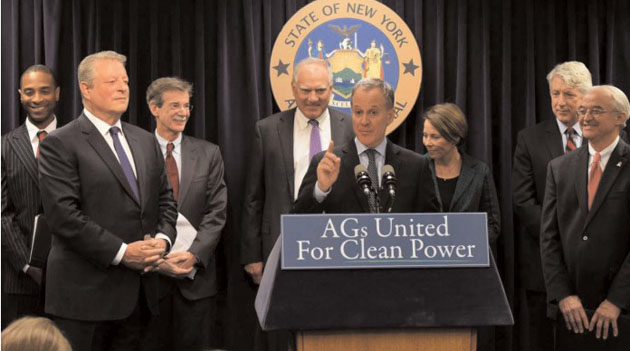
Al Gore joined New York Attorney General Eric Schneiderman (center) at a news conference announcing more AGs will investigate ExxonMobil for fraud.

by Elliot Negin, Senior Writer - Union of Concerned Scientists, Huffington Post, May 6, 2016

With several state attorneys general now investigating whether ExxonMobil misled its shareholders and the public about climate change risks, it was more than a little ironic when the company recently cried foul.
“Collaboration, collusion, conspiracy,” charged ExxonMobil Media Relations Manager Alan Jeffers, “pick a word.”
Pick a word? How about nonsense? If anyone could be accused of collusion and conspiracy, it’s ExxonMobil. But more on that later.
What prompted Jeffers’ ludicrous allegation was a meeting that took place on March 29, 2016. My colleague Peter Frumhoff (lead climate scientist at the Union of Concerned Scientists) and environmental attorney Matt Pawa briefed a handful of state attorneys general, including New York’s Eric Schneiderman, who launched an investigation of ExxonMobil last November. Later that day, Schneiderman and 16 other attorneys general joined former Vice President Al Gore at a press conference to declare their support for more aggressive government action on climate change. During the event, AGs from the U.S. Virgin Islands and Massachusetts announced that they, too, would initiate investigations of ExxonMobil.
On April 15, 2016, Reuters broke the story that Frumhoff and Pawa had met behind closed doors with the state prosecutors before the press conference. The news organization had obtained emails disclosing the meeting through an open records request filed by a group called the Energy & Environment Legal Institute (E&E Legal).
“The previously unknown level of coordination with outside advisers offered a glimpse behind the scenes in an increasingly pitched battle between Exxon and environmental groups,” Reuters reported. “Exxon has said it has been unfairly singled out and that climate activists are conspiring to rally public opinion against it.”
Unfortunately, not only did the Reuters story fail to adequately identify E&E Legal, it also mischaracterized what amounted to a routine meeting in an ongoing legal investigation.
Confidentiality is Standard Operating Procedure
Reuters described E&E Legal, a small, three-person nonprofit, as a “free-market think tank with ties to the Competitive Enterprise Institute [CEI], whose website says it opposes U.S. Environmental Protection Agency regulation of greenhouse gas emissions.” What it didn’t mention is that E&E Legal — which could hardly be called a think tank — is at least partly funded by the coal industry and has repeatedly harassed prominent climate scientists, including Katharine Hayhoe and Michael Mann, by filing intrusive open records requests that have tied them up for weeks and wasted hundreds of thousands of public university dollars.
What’s more, the story didn’t explain that the group’s connection with CEI is through CEI staff attorney Chris Horner, who handles E&E Legal’s open records filings. CEI has been peddling lies about climate science on behalf of fossil fuel interests for decades, and Horner is associated with other climate science denier groups as well as the coal industry, a relationship that was recently revealed by coal company bankruptcy filings.
More important, Reuters failed to clarify that the attorneys general were merely doing their jobs. By their very nature, legal investigations can entail gathering information privately from a wide variety of sources.
This is a key point. State attorneys general have the authority to meet with anyone they choose — be it a scientist, an environmental lawyer or a corporate official — in the course of an investigation on a confidential basis. In other words, there was no hint of collusion or conspiracy. Meeting privately with experts is part of the legal discovery process. Moreover, in New York — under the state’s Martin Act — the attorney general can initiate a completely confidential investigation of potentially fraudulent practices.
But that didn’t stop FoxNews.com, the Daily Caller, theWashington Examiner and the Washington Times — the climate science denial echo chamber — from providing ExxonMobil and E&E Legal a platform to make bogus charges about “collusion” and “conspiracy” in subsequent stories.
ExxonMobil’s Disinformation Network
Schneiderman’s investigation — and one launched in January by California’s attorney general — followed the release of documents by the Union of Concerned Scientists (UCS) and reporters at InsideClimate News and Columbia Journalism School revealing that Exxon scientists conducted cutting-edge climate research decades ago and warned top management of the potentially catastrophic risks posed by global warming. Schneiderman’s staff is now reviewing the company’s statements to investors regarding those risks to see if they contradicted what it was hearing from its own scientists.
The New York AGs office also is taking a close look at ExxonMobil’s support for a network of think tanks and advocacy groups that has been spreading disinformation about climate science for nearly 20 years. Here is where questions about “collusion” and “conspiracy” come into play.
That network was exposed back in 2007 when UCS documentedthat ExxonMobil had spent at least $16 million between 1998 and 2005 on more than 40 climate science denier groups. The group that got the most money? CEI, which received more than $2 million. Despite the fact that it had no scientists on its staff, CEI established itself as the go-to group to provide “the other side” of a manufactured scientific debate. It is perhaps best remembered for reassuring Americans that global warming is nothing to worry about in a TV commercial extolling the virtues of carbon dioxide. The spot’s unforgettable tag line: “They call it pollution. We call it life.”
ExxonMobil publicly ended its direct support for CEI in 2005, but the company continues to spend millions of dollars annually on denier groups and congressional climate science denier political campaigns. CEI, meanwhile, may have lost ExxonMobil as a benefactor, but according to the most recent available tax records, it is still receiving money from billionaire industrialist Charles Koch, co-owner of the coal, oil and gas conglomerate Koch Industries.
In any case, it is difficult to determine just where CEI gets itsfunding these days. Much of it comes from a secretive, pass-through foundation called Donors Trust and its affiliate Donors Capital Fund. Since 2002, the intertwined funds have laundered more than $457 million from anonymous corporations, foundations and individuals and distributed that money to hundreds of anti-regulation groups, including the American Enterprise Institute, the Heartland Institute and, of course, CEI.
The First Amendment Doesn’t Protect Fraud
As one of ExxonMobil’s top climate science denier grantees, CEI now finds itself in the hot seat. U.S. Virgin Islands Attorney General Claude Walker not only launched an investigation of ExxonMobil for defrauding investors and the general public, he also subpoenaed communications between ExxonMobil and many of its denier network groups. He specifically asked CEI for all its climate change and energy policy materials, as well as its donor lists, over a 10-year period beginning in 1997.

CEI has filed to quash the subpoena and pushed back in an April 23 op-ed in the Washington Post. CEI President Kent Lassman and his general counsel, Sam Kazman, insisted that their organization and ExxonMobil are being unfairly harassed for exercising their First Amendment rights. A week later, the Wall Street Journal editorial board chimed in, calling Walker’s subpoena of CEI documents “a form of harassment” and “a dangerous turn for free speech.”
Of course, the real issue is not CEI’s or ExxonMobil’s First Amendment rights. CEI, which has been exercising its right to mislead the public about climate change for quite some time, is being investigated to determine the extent to which it functioned as ExxonMobil’s paid surrogate. ExxonMobil, meanwhile, is being investigated to ascertain if it is guilty of fraud. And, as Attorney General Schneiderman has noted, “The First Amendment, ladies and gentlemen, doesn’t give you the right to commit fraud.”
Elliott Negin is a senior writer with the Union of Concerned Scientists.

April 2016 posts