Blog Archive

Showing posts with label Eemian. Show all posts

Saturday, February 16, 2019

Chris Mooney, WaPo: Earth Is 'Missing' at Least 20 Ft of Sea Level Rise. Antarctica Could Be The Time Bomb

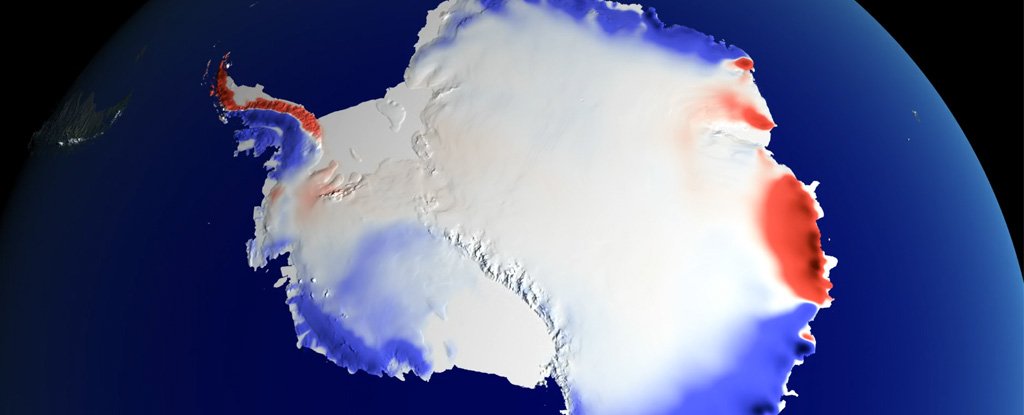
main article image

by Chris Mooney, The Washington Post, February 12, 2019

Some 115,000 years ago, Homo sapiens were still living in bands of hunter gatherers, largely confined to Africa. We still shared the globe with the Neanderthals, although it's not clear we had met them yet.

And though these various hominids didn't know it, the Earth was coming to the end of a major warm period. It was one that's quite close to our current climate, but with one major discrepancy - seas at the time were 20 to 30 feet (6 to 9 metres) higher.
During this ancient period, sometimes called the Eemian, the oceans were about as warm as they are today.
And last month, intriguing new research emerged suggesting that Northern Hemisphere glaciers have already retreated just as far as they did in the Eemian, driven by dramatic warming in Arctic regions.
The finding arose when a team of researchers working on Baffin Island, in northeastern Canada, sampled the remains of ancient plants that had emerged from beneath fast-retreating mountain glaciers.
And they found that the plants were very old indeed, and had probably last grown in these spots some 115,000 years ago.
That's the last time the areas were actually not covered by ice, the scientists believe.
"It's very hard to come up with any other explanation, except that at least in that one area where we're working ... the last century is as warm as any century in the last 115,000 years," said Gifford Miller, a geologist at the University of Colorado in Boulder who led the research on Baffin Island.
But if Miller is right, there's a big problem. We have geological records of sea levels from the Eemian. And the oceans, scientists believe, were 20 to 30 feet (6 to 9 metres) higher.
Some extra water likely came from Greenland, whose ice currently contains over 20 feet (6 metres) of potential sea level rise. But it couldn't have been just Greenland, because that entire ice sheet did not melt at the time.
That's why researchers also suspect a collapse of the most vulnerable part of Antarctica, the West Antarctic ice sheet. This region could easily supply another 10 feet (3 metres) of sea level rise, or more.
"There's no way to get tens of meters of sea level rise without getting tens of meters of sea level rise from Antarctica," said Rob DeConto, an Antarctic expert at the University of Massachusetts.
Trying to understand how Antarctica will fall
Scientists are now intensely debating precisely which processes could have played out then — and how soon they'll play out again. After all, West Antarctica has already been shown, once again, to be beginning a retreat.
Some researchers, including DeConto, think they have found a key process - called marine ice cliff collapse - that can release a lot of sea level rise from West Antarctica in a hurry.
But they're being challenged by another group, whose members suspect the changes in the past were slow - and will be again.
To understand the dispute, consider the vulnerable setting of West Antarctica itself.
Essentially, it's an enormous block of ice mostly submerged in very cold water. Its glaciers sit up against the ocean in all directions, and toward the center of the ice sheet, the seafloor slopes rapidly downward, even as the surface of the ice sheet itself grows much thicker, as much as two miles thick in total.
As much as a mile and a half of that ice rests below the sea level, but there is still plenty of ice above it, too.
So if the gateway glaciers start to move backward - particularly a glacier named Thwaites, by far the largest of them - the ocean would quickly have access to much thicker ice.
The idea is that during the Eemian, this whole area was not a block of ice at all, but an unnamed sea. Somehow, the ocean got in, toppling the outer glacial defenses, and gradually setting all of West Antarctica afloat and on course to melting.
DeConto, with his colleague David Pollard, built a model that looked to the Eemian, and another ancient warm period called the Pliocene, to try to understand how this could happen.
In particular, they included two processes that can remove glaciers. One, dubbed 'marine ice sheet instability,' describes a situation in which a partially submerged glacier gets deeper and thicker as you move toward its center.
In this configuration, warm water can cause a glacier to move backward and downhill, exposing ever thicker ice to the ocean - and thicker ice flows outward faster.
So the loss feeds upon itself.
Marine ice sheet instability is probably underway already in West Antarctica, but in the model, it wasn't enough. DeConto and Pollard also added another process that they say is currently playing out in Greenland, at a large glacier called Jakobshavn.
Jakobshavn is moving backward down an undersea hill slope, just in the way that it is feared the much larger Thwaites will drift. But Jakobshavn is also doing something else. It is constantly breaking off thick pieces at its front, almost like a loaf of bread, dropping slice after slice.
That's because Jakobshavn no longer has an ice shelf, a floating extension that used to grow out over the ocean at the front of the glacier and stabilize it. The shelf collapsed as Greenland warmed in the past two decades.
As a result, Jakobshavn now presents a steep vertical front to the sea. Most of the glacier's ice is under the water, but more than 100 meters (330 feet) extend above it - and for DeConto and Pollard, that's the problem. That's too much to be sustained.
Ice is not steel. It breaks. And breaks. And breaks.
This additional process, called 'marine ice cliff collapse,' causes an utter disaster if you apply it to Thwaites. If Thwaites someday loses its own ice shelf and exposes a vertical front to the ocean, you would have ice cliffs hundreds of meters above the surface of the water.
DeConto and Pollard say that such cliffs would continually fall into the sea. And when they added this computation, it not only recreated Eemian sea level rise, it greatly increased their projection of how much ice Antarctica could yield in this century - more than three feet.
Since there are other drivers of sea level rise, like Greenland, this meant that we could see as much as six feet in total in this century, roughly double prior projections. And in the next century, the ice loss would get even worse.
"What we pointed out was, if the kind of calving that we see in Greenland today were to start turning on in analogous settings in Antarctica, then Antarctica has way thicker ice, it's a way bigger ice sheet, the consequences would be potentially really monumental for sea level rise," DeConto said.
Moreover, the process, he argues, is essential to understanding the past - and thus how we could replicate it.
"We cannot recreate six meters of sea level rise early in the Eemian without accounting for some brittle fracture in the ice sheet model," said DeConto.
A massive debate over marine ice cliffs
Tamsin Edwards is not convinced. A glaciologist at Kings College London, she is lead author - with a number of other Antarctic experts - of a study published Wednesday in Nature (the same journal that published DeConto and Pollard in 2016) that disputes their model, in great detail.
Using a statistical technique to examine the results, Edwards and her collaborators find that the toppling of ice cliffs is not necessary to reproduce past warm periods after all.
They also present lower sea level rise possibilities from Antarctica in this century. If they're right, the worst case is back down to about 40 centimeters, or a little over a foot, rather than three to four feet.
"Things may not be as absolutely terrible as that last study predicted," Edwards said. "But they're still bad."
It is a new science, she said, and without more modeling it's unclear how ice cliffs will ultimately affect sea level rise.
But then what happened in the Eemian? Edwards thinks it just took a long time to lose West Antarctica. That it wasn't fast. After all, the entire geologic period was thousands of years long.
"We're an impatient lot, humans, and the ice sheets don't respond in a decade, they're slow beasts," she said.
DeConto says he's learned something from the critique.
"The Edwards study does illustrate the need for more in-depth statistics than we originally applied to our 2016 model output, but the models are evolving rapidly and they have already changed considerably since 2016," he said in a written statement.
But he's not backing down on marine ice cliffs. The new critique, DeConto said, implies that "these processes aren't important for future sea level rise. And I think to me, that's kind of a dangerous message."
He certainly has his allies. Richard Alley, a well known glaciologist at Penn State University who has published with DeConto and Pollard, wrote in an email that "cliff retreat is not some strange and unexpected physical process; it is happening now in some places, has happened in the past, and is expected wherever sufficiently high temperatures occur in ocean or air around ice flowing into the ocean."
The Eemian - but worse?
There's one important thing to consider - the Eemian occurred without humans emitting lots of greenhouse gases.
Atmospheric carbon dioxide was far lower than it is today. The event was instead driven by changes in the Earth's orbit around the sun, leading to more sunlight falling on the northern hemisphere.
The big difference, this time around, is that humans are heating things up far faster than what is believed to have happened in the geologic past.
And that makes a key difference, said Ted Scambos, an Antarctic researcher who is leading the US side of an international multimillion dollar mission to study Thwaites Glacier, and who is a senior researcher at the National Snow and Ice Data Center in Colorado.
"The current pace of climate change is very fast," Scambos said, and the rate of warming might cause glaciers to behave differently than they did in the past.
Accordingly, Scambos says he sees the current debate as fruitful - "it's the discussion that needs to happen" - but that it doesn't lessen his worry about the fate of Thwaites Glacier if it retreats far enough.
"There's no model that says the glacier won't accelerate if it gets into those conditions," said Scambos. "It just has to."
Humans were nowhere near the Antarctic in the Eemian - and we have never, in the modern period, seen a glacier as big as Thwaites retreat. It's possible something is going to happen that we don't have any precedent or predictions for.
Just last week, for instance, scientists reported a large cavity opening beneath one part of the glacier - something they said models could not have predicted.
There is a massive stake involved now in at least trying to figure out what could happen - before it actually does. It will help determine whether humans, now organized and industrialized and masters of fossil fuels, are poised to drive a repeat of our own geological history.
2019 © The Washington Post

Sunday, September 22, 2013

David Spratt: Is climate change already dangerous? Part III. Consequences from current greenhouse gas levels

by David Spratt, Climate Code Red, September 22, 2013

Third in a series

Danger from implied temperature increase


The current level of atmospheric CO2 only is sufficient to increase the global temperature at equilibrium by +1.5 °C, based on the standard assumption of near-term climate sensitivity of 3 °C for doubled CO2.

If all current greenhouse gases are taken into account, then: 
The observed increase in the concentration of greenhouse gases (GHGs) since the pre-industrial era has most likely committed the world to a warming of 2.4 °C (within a range of +1.4 °C to +4.3 °C) above the pre-industrial surface temperatures (Ramanthan and Feng).
And the 2007 IPCC Synthesis report (Table 5.1 on emission scenarios) also shows that for levels of greenhouse gases that have already been achieved (CO2 in the range of 350–400 ppm, CO2e in the range 445–490 ppm) and peaking by 2015, the likely temperature rise is in the range of 2–2.4 °C. 

These scenarios include short-lived gases such as methane, which degrades out of the atmosphere in a decade, and also nitrous oxide, which has an atmospheric lifetime of around a century. On the other hand, the fact that temperatures are not already much higher than they are today is due principally to the large-scale emission of very short-lived (10 days) aerosols, such as soot and exhaust from burning fossil fuels, industrial pollution, and dust storms, which are providing temporary cooling. The effect is known popularly as “global dimming,” because the overall aerosol impact is to reduce, or dim, the sun’s radiation, thus masking some of the heating effect of greenhouse gases. The aerosol impact is not precisely known, but Ramanthan and Feng estimate it as high as ~1 °C. As the world moves to low-emission technologies, most of the aerosols and their temporary cooling will be lost. Recent research finds that quickly eliminating all greenhouse gas emissions (and necessarily the associated aerosols) would produce warming of between 0.25 and 0.5 °C over the decade immediately following (Matthews and ZickfieldHansen, Sato et al.).

A practical consideration of “dangerous” can include the question as to whether there are tipping points or “concerns” activated for the elevated temperatures that we are generally considered to be already committed to: conservatively in the range say +1.5 to 2 °C and, more pragmatically, in the range of 2 to 2.4 °C if all current greenhouse gases are considered. A related question is whether the +1.5 °C goal advocated by the small island states and surveyed recently by Climate Action Network Europe and Climate Analytics would avoid “dangerous” climate change and significant tipping points.

This is a broad topic, but four recent important research findings on impacts for the current committed warming are arresting:

Greenland Ice Sheet tipping point

The tipping point for GIS has been revised down by Robinson, Calov et al. to +1.6 ºC (uncertainty range of +0.8 to +3.2 ºC) above pre-industrial, just as regional temperatures are increasing at three-to-four times faster than the global average, and the increased heat trapped in the Arctic due to the loss of reflective sea ice ensures an acceleration in the Greenland melt rate.  If the lower Greenland boundary in the uncertainty range turned out to be right, then with current warming of +0.8 ºC over pre-industrial we have already reached Greenland’s tipping point.  And, with temperature rises in the pipeline, the upward trajectory of annual greenhouse gas emissions, the projected future increases in fossil fuel use, and the continuing political impasse in international climate negotiations, we are very likely to hit the best estimate of +1.6 ºC within a decade or two at most.

Coral reefs

Frieler, Meinshausen et al. show that “preserving more than 10 per cent of coral reefs worldwide would require limiting warming to below +1.5 °C (atmosphere–ocean general circulation models (AOGCMs) range: 1.3–1.8 °C) relative to pre-industrial levels”.  Obviously at less than 10 per cent, the reefs would be remnant, and reef systems as we know them today would be a historical footnote.  Already, the data suggests that the global area of reef systems has already been reduced by half. A sober discussion of coral reef prospects can be found in Roger Bradbury’s “A World Without Coral Reefs” and Gary Pearce’s “Zombie reefs as a harbinger for catastrophic future.”  The opening of Bradbury’s article is to the point: 
It’s past time to tell the truth about the state of the world’s coral reefs, the nurseries of tropical coastal fish stocks.  They have become zombie ecosystems, neither dead nor truly alive in any functional sense, and on a trajectory to collapse within a human generation.  There will be remnants here and there, but the global coral reef ecosystem — with its storehouse of biodiversity and fisheries supporting millions of the world’s poor — will cease to be.
3c. Arctic carbon stores

As Climate Progress recently noted: “We’ve known for a while that ‘permafrost’ was a misnomer” because thawing permafrost feedback will turn the Arctic from a net carbon sink to a net source in the 2020s and defrosting permafrost will likely add up to 1 ºC to total global warming by 2100.   A 2012 UNEP report on policy implications of warming permafrost says the recent observations “indicate that large-scale thawing of permafrost may have already started.”  In February 2013, scientists using radiometric dating techniques on Russian cave formations to measure historic melting rates warned that a +1.5 ºC global rise in temperature compared to pre-industrial was enough to start a general permafrost melt.  Vaks, Gutareva et al. found that “global climates only slightly warmer than today are sufficient to thaw extensive regions of permafrost.” Vaks says that: “1.5 ºC appears to be something of a tipping point.”

Previously a study of East Siberian permafrost by Khvorostyanov, Ciais et al.  found that once mobilised, the process would be self-maintaining due to “deep respiration and methanogenesis” (formation of methane by microbes).  In other words, the microbial action that produces methane as the carbon stores melt would produce sufficient heat to maintain the process: “once active layer deepening in response to atmospheric warming is enough to trigger deep-soil respiration, and soil microorganisms are activated to produce enough heat, the mobilization of soil carbon can be very strong and self-sustainable.”

A sharp scientific debate has started on the stability of large methane clathrate stores just below the ocean floor on the shallow East Siberian Sea, following the publication in July 2013 of research by Whiteman, Hope and Wadhams which said that the release of a single giant “pulse” of methane from thawing Arctic permafrost beneath the East Siberian Sea could come with a $60 trillion global price tag. Wadhams says “the loss of sea ice leads to seabed warming, which leads to offshore permafrost melt, which leads to methane release, which leads to enhanced warming, which leads to even more rapid uncovering of seabed,” and this is not “a low probability event.”

Multiple targets reduce allowable warming

Steinacher, Joos et al. explore the interaction of targets in emissions reductions, focusing on the 2 ºC temperature goal. They find that when multiple climate targets are set (such as food production capacity, ocean acidity, atmospheric temperature), “allowable cumulative emissions are greatly reduced from those inferred from the temperature target alone.” In fact, “When we consider all targets jointly, CO2 emissions have to be cut twice as much as if we only want to meet the 2 ºC target.”

Lessons from climate history


Another fruitful line of inquiry on whether climate change is already “dangerous” is to look at the paleo-climate (climate history) record for circumstances analogous to present conditions to learn what planetary and climate conditions were like at that time.  With current CO2 levels at 400 ppm, a useful comparison is the Pliocene (3–5 million years ago).  The research body is large and growing in this area, but here are some examples:

Sea-levels

Rohling, Grant et al.  find that during the mid-Pliocene, when greenhouse gases were similar to today, sea levels were more than 20 metres higher than today “we estimate sea level for the Middle Pliocene epoch (3.0–3.5 Myr ago) – a period with near-modern CO2 levels – at 25 ±5 metres above present, which is validated by independent sea-level data.” Likewise Hansen, Sato et al. find that “during the middle-Pliocene… we find sea level fluctuations of 2040 metres associated with global temperature variations between today’s temperature and +3 °C.”

Speed of sea-level rise

The speed of sea-level rise may far exceed the current, rather reticent estimates that are used for policy purposes.  Blancon, Eisenhauer et al. examined the paleo-climate record and showed a sea-level rises of 3 metres in 50 years due to the rapid melting of ice sheets 123,000 years ago in the Eemian, when the energy imbalance in the climate system was less than at present. 

Polar feedbacks

Hansen, Sato et al. find that current temperatures are at least as high as the Holocene Maximum (i.e., as high as they have been over the last 10,000 years).  They sum up: 
Earth at peak Holocene temperature is poised such that additional warming instigates large amplifying high-latitude feedbacks.  Mechanisms on the verge of being instigated include loss of Arctic sea ice, shrinkage of the Greenland ice sheet, loss of Antarctic ice shelves, and shrinkage of the Antarctic ice sheets.  These are not runaway feedbacks, but together they strongly amplify the impacts in polar regions of a positive (warming) climate forcing…  Augmentation of peak Holocene temperature by even +1 ºC would be sufficient to trigger powerful amplifying polar feedbacks, leading to a planet at least as warm as in the Eemian and Holsteinian periods, making ice sheet disintegration and large sea level rise inevitable.
[It is relevant here to note that warming in the pipeline due to thermal inertia, plus warming associated with the loss of aerosols, is greater than +1ºC.]

And during the Pliocene, with atmospheric greenhouse levels similar to today, the northern hemisphere was free of glaciers and ice sheets and beech trees grew in the Transantarctic Mountains. There are also strong indications that permanent El Nino conditions prevailed.

4d. Arctic carbon stores

As discussed above, scientists using radiometric dating techniques on Russian cave formations to measure historic melting rates going back 500,000 years conclude that a +1.5 ºC global rise in temperature compared to pre-industrial is enough to initiate widespread permafrost melt.  

In May this year, Brigham-Grette, Melles et al. published evidence from Lake El’gygytgyn, in north-east Arctic Russia, showing that 3.6–3.4 million years ago, summer mid-Pliocene temperatures locally were ~8 °C warmer than today, when CO2 was ~400 ppm.  This is highly significant because researchers including Celia Bitz and Philippe Ciais have previously found that the tipping point for the large-scale loss of permafrost carbon is around +8 ºC  to 10 ºC regional temperature increase.  Caias told the March 2009 Copenhagen climate science conference that: “A global average increase in air temperatures of +2 ºC and a few unusually hot years could see permafrost soil temperatures reach the +8 ºC threshold for releasing billions of tonnes of carbon dioxide and methane.” So, if the current level of greenhouse gases is enough to produce Arctic regional warming of ~+8 °C and that is a likely tipping point for large-scale permafrost loss, we have reached a disturbing milestone.

Even more disturbing is new research from Ballantyne, Axford et al. which says that during the Pliocene epoch, when CO2 levels were ~400 ppm, Arctic surface temperatures were 1520 °C warmer than today’s surface temperatures. They suggest that much of the surface warming likely was due to ice-free conditions in the Arctic. Compared to the estimated tipping point for the large-scale loss of permafrost carbon of +8 ºC to 10 ºC regional warming, this research confirms both that the current level of greenhouse gases is sufficient to create both a sea-ice-free Arctic and Arctic warming more than sufficient to trigger large-scale loss of permafrost carbon.
Next post: Climate safety and the emissions reduction challenge 
http://www.climatecodered.org/2013/09/is-climate-change-already-dangerous-3.html 

Friday, September 6, 2013

Rebuttal to Michael Tobis' unsubstantiated attacks on the work of Shakhova

Why the jury's still out on the risk of Arctic methane catastrophe

Can scientists overcome huge uncertainties to pin down how close, or far, we might be to a tipping point?

arctic iceberg
Arctic iceberg. Photograph: Delphine Star/Getty Images
by Nafeez Ahmed, "Earth Insight," The Guardian, September 5, 2013

 About a week ago, climate scientist Michael Tobis wrote a critique of my 'Seven facts about the Arctic methane time bomb' following a twitter exchange with him and Chris Colose, author of an article at Skeptical Science arguing that the core scenario of a new Nature paper by Gail Whiteman et al. on the economic costs of Arctic climate change is extremely unlikely.

Much of this debate kicked off because the said Nature paper advances a hypothetical scenario for an abrupt Arctic methane release over either a decade or several decades of about 50 gigatonnes (Gt), and argues specifically that such a scenario is "likely." My own attempt to understand the literature convinced me that the scenario should be viewed as a serious possibility.

Tobis on the other hand is the latest amongst several scientists offering scathing criticisms of that scenario, which in his own words is "as close to impossible as anything in earth science; actual geophysics refutes it."

He begins with my first point, 1. The 50 Gigatonne decadal methane pulse scenario was posited by four Arctic specialists, and is considered plausible by Met Office scientists.


Tobis writes that the Review of Geophysics paper I cite says
"Arctic thawing may release in excess of 50 GT of C [Carbon], a very serious matter... But Ahmed refers to the paper in support of a very different assertion, that 50 GT of methane would be released... But the paper to which he points says nothing of the sort. I conclude that he doesn't really know what he is talking about. Specifically he has already shown that he is confused about the distinction between methane releases and CO2 releases."
However, the carbon release scenarios from permafrost explored by the paper include both methane and carbon. 

Here's what the paper says:
"The most important determinant of whether release of frozen carbon happens as CO2 or CH4 [methane] is whether decomposition proceeds aerobically or anaerobically... In anaerobic conditions, a greater proportion of soil organic carbon decomposition is released as CH4, although not all of it necessarily reaches the atmosphere."
Following this paragraph, the paper cites several scenarios for large-scale releases from permafrost carbon, including the 50-100 Gt carbon release I mentioned.

Further down, the paper continues:
"Thawing of the terrestrial permafrost will result in CO2 and CH4 emissions on time scales of a few decades to several centuries."
So Tobis is wrong in assuming that the carbon release scenarios the paper is discussing are only CO2 - that isn't specified, so I'd assumed the paper was open on whether the 50-100 Gt emissions were methane or carbon. 

This was a mistake, however. The paper makes clear that although the scenarios are not clear on the precise quantification of carbon dioxide compared to methane releases from permafrost thawing, methane releases would be only be a small percentage of the overall carbon release scenarios explored. So Tobis is ultimately correct - the paper does not back up the specific scenario endorsed as likely by the Nature paper. I stand corrected on that.

Therefore, the plausibility of the specific 50 Gt scenario rises and falls on the credibility of the four Arctic specialists, including Dr. Natalia Shakhova, who came up with the scenario in the first place. That leaves point 1 only half intact, so we're left with:

1. The 50 Gigatonne decadal methane pulse scenario was posited by four Arctic specialists
Tobis unfortunately addresses this with only an ad hominem attack on the expertise of these Arctic specialists:
"Whether we should be acknowledging the 'Arctic specialists' as actually expert is, frankly, the question at hand."
Tobis goes through my other citations of the literature arguing that I am confusing quantities and making unwarranted extrapolations. However, my citations of this literature is simply to clarify that the literature does not rule out potentially dangerous releases of Arctic methane. Does Tobis manage to refute point 2. Arctic methane hydrates are becoming increasingly unstable in the context of anthropogenic climate change and it's impact on diminishing sea ice? No. Arctic methane hydrates are becoming increasingly unstable. I said nothing more, or less, than exactly that.

What about fact 3. Multiple scientific reviews, including one by over 20 Arctic specialists, confirm decadal catastrophic Arctic methane release is plausible?

Tobis concedes "A couple of reviews do give some support to this, but are vague about time scales." He then links to what he describes as a "DOE report." Instead, the link goes through to a Geophysical Research Letters study, which, however, he completely ignores, instead quoting from the original Review of Geophysics paper as follows: 

"The risk of a rapid increase in [methane] emissions is real but remains largely unquantified..." 

And he calls me confused! 

He then argues that there is "plenty of room for acceleration without hitting the cataclysmic level. Further evidence doesn't support the immediacy of that scenario at all."

But the Review of Geophysics paper does NOT say that there is "plenty of room for acceleration without hitting the cataclysmic level" - it says that:
"... significant increases in methane emissions are likely, and catastrophic emissions cannot be ruled out."
The paper does NOT say available evidence "doesn't support the immediacy" of a catastrophic scenario, but rather that "uncertainties are large, and it is difficult to be conclusive about the time scales and magnitudes of methane feedbacks."

As for the Geophysical Research Letters study Tobis links to but ignores, it says:
"... while many deep hydrate deposits are indeed stable under the influence of rapid seafloor temperature variations, shallow deposits, such as those found in arctic regions or in the Gulf of Mexico, can undergo rapid dissociation and produce significant carbon fluxes over a period of decades."
I think my fundamental contention - that the scientific literature recognises the possibility of some sort of catastrophic methane scenario - remains valid. Tobis is right, however, to emphasise that there is very little evidence available on quantifying that possibility.

In response to fact 4. Current methane levels are unprecedented, Tobis says yes, but they are "not climbing rapidly", and therefore this is mere "hype." My intention here was not to suggest that current Arctic methane levels are definitive evidence of a catastrophe already underway, but simply to note that it is wrong to say methane levels are NOT rising. They are, and once again, Arctic specialists are concerned. 

According to Charles Miller of NASA's new research programme, Carbon in Arctic Reservoirs Vulnerability Experiment (CARVE):
"The CARVE science team is busy analyzing data from its first full year of science flights. What they're finding, Miller said, is both amazing and potentially troubling.
'Some of the methane and carbon dioxide concentrations we've measured have been large, and we're seeing very different patterns from what models suggest," Miller said. "We saw large, regional-scale episodic bursts of higher-than-normal carbon dioxide and methane in interior Alaska and across the North Slope during the spring thaw, and they lasted until after the fall refreeze. To cite another example, in July 2012 we saw methane levels over swamps in the Innoko Wilderness that were 650 parts per billion higher than normal background levels. That's similar to what you might find in a large city.'
"Ultimately, the scientists hope their observations will indicate whether an irreversible permafrost tipping point may be near at hand. While scientists don't yet believe the Arctic has reached that tipping point, no one knows for sure. 'We hope CARVE may be able to find that "smoking gun," if one exists,' Miller said."
So while NASA Arctic specialists say Arctic methane levels are "amazing" and "potentially troubling," outside the range of most model predictions, and possibly indicative that "an irreversible permafrost tipping point" is near - a matter which "no one knows for sure" - Tobis wants to interpret all the evidence as "refuting" any need for concern. 

The other problem is that Arctic monitoring is still poor, and might be missing significant methane emissions. As Shakhova and her co-author Igor Semiletov told the New York Times' Andy Revkin:
"It is no surprise to us that others monitoring global methane have not found a signal from the Siberian Arctic or increase in global emissions... The number of stations monitoring atmospheric methane concentrations worldwide is very few. In the Arctic there are only three such stations - Barrow, Alert, Zeppelin - and all are far away from the Siberian Arctic. We are doing our multi-year observations, including year-round monitoring, in proximity to the source. In addition to measuring the amount of methane emitted from the area, we are trying to find out whether there is anything specific about those emissions that could distinguish them from other sources. It is incorrect to say that anyone is able to trace that signal yet."
Most Arctic specialists recognise that there's simply not enough research to justify dismissing the possibility of a catastrophe. That sword cuts both ways, of course - equally, there's not enough research justifying conclusions that we are definitely on the brink of a catastrophe.

On 5. The tipping point for continuous Siberian permafrost thaw could be as low as 1.5 C, Tobis concedes this "is on the table," but that "it has nothing to do with undersea methane." Um, I never said it had anything to do with undersea methane.

On 6. Arctic conditions during the Eemian interglacial lasting from 130,000 to 115,000 years ago are a terrible analogy for today's Arctic, he writes: "as a response to Chris Colose" this is a "terrible" response, "because Colose is not relying on the Eemian but on the early Holocene as the analogous period." Yes, Colose does refer to the early Holocene, but he also repeatedly refers to the Eemian, the "Last Interglacial period between 130,000 to 120,000 years ago." In a previous article, I'd already mentioned that in the early Holocene, the East Siberia Arctic Shelf (ESAS) was "not an underwater shelf but a frozen landmass" as reason to be sceptical that paleoclimate data provide a ready analogue for the present.

Tobis then launches an ad hominem attack on climate scientist Paul Beckwith, whom I quoted for this article, and whom Tobis refers to as:
"'Prof' Paul Beckwith, the 'Professor Beckwith' who is a grad student at Ottawa U."
For the record, earlier this year, Beckwith formally passed his PhD examination on abrupt Arctic climate change at the Laboratory for Paleoclimatology and Climatology, University of Ottawa, where he is currently a part-time professor in climatology. Rather than addressing Prof Beckwith's argument, Tobis wants to demean his reputation and ignore his argument (which he fails to refute). Beckwith's full response to Colose is here. Among Beckwith's points, he argues that neither the early Holocene nor Eemian offer good analogues for the present Arctic:
"Earth tilt was larger, so Winter Northern Hemispheric solar radiation was about 40 W/m2 lower than today at 60 degrees North. Thus, the ice formed much more quickly and much thicker in the winter back then. Also, at night much more heat was radiated out to space in the lower GHG world then as compared to our 400 ppm levels today... the summertime Arctic is not believed to be seasonally ice free during these periods. The last time this happened was likely 2 or 3 million years ago... Colder winters in the early Holocene and Last Interglacial and much colder nights (in summers and winters then) meant much thicker and extensive ice formation in winters, and slower melting at night, respectively."
If I was to take Tobis' approach, I could have noted that Chris Colose is a "grad student" at the University of Albany. I didn't, because it's irrelevant.

Finally, Tobis takes on fact 7. Paleoclimate records will not necessarily capture a large, abrupt methane pulse with the following obfuscation: "Now, we swing back to saying that it HAS occurred in the recent geological past, indeed at the time which Colose says is the better analogy." 

This is incorrect. Here, I merely point to a paper in Science by Nisbet which argues specifically that the cold Younger Dryas was ended due to methane emissions which came mostly from wetlands, but for which the initial trigger could have been Arctic methane clathrates:

"A possible explanation for the sudden end of the Younger Dryas is that, at a time of high Arctic insolation, an initial outburst of methane - perhaps from a geological source such as methane clathrates - triggered global warming, initiating both strong wetland emission in the tropics and north (8), and further hydrate responses as the thermal shock penetrated the permafrost (9, 10), freeing methane from decomposing clathrate hydrates and releasing gas pools trapped beneath them."
The evidence for this, however, is inconclusive, so the paper concludes: "The jury thus remains out on the initial trigger..."

On the issue of whether paleoclimate records will actually capture a large, abrupt methane pulse such as the scenario proposed by Shakhova et al., as this paper in Earth and Planetary Science Letters observes, "rapid methane perturbations in the atmosphere are strongly smoothed in ice core records" due to "the relatively short atmospheric lifetime of methane." So it is quite possible that an abrupt, catastrophic methane release of the sort Shakhova proposes has happened, but is undetected in ice cores.

Tobis then declares a "scientific consensus has been reached" that Shakhova's scenario is "implausible in the extreme."

But the scientific consensus amongst ESAS experts is quite different, as I'd already noted. A peer-reviewed study by 20 Arctic specialists of ESAS data from 1995-2011, drawing of course also on Shakhova's work, specifically recognises:
"The emission of methane in several areas of the [ESAS] is massive to the extent that growth in the methane concentrations in the atmosphere to values capable of causing a considerable and even catastrophic warning on the Earth is possible."
It seems clear to me that the scientific literature on the danger of an Arctic methane catastrophe recognises the possibility unequivocally, but highlights huge uncertainty in our knowledge of the processes at work. Most of the literature I've been able to find on this subject shows great humility - and while acknowledging the possibility of worst-case scenarios, makes quite clear that the likelihood of those scenarios is very difficult to gauge.

The Nature paper by Whiteman et al. went too far in stating the Shakhova et al. scenario as "likely." But on the other end of the spectrum, in the comments to his own blog, Tobis hints that Shakhova et al. are involved in "junk science" - despite the fact that their papers have been published in peer-reviewed journals (their 50 Gt scenario is discussed in this paper originally published in the Proceedings of the Russian Academy of Sciences), and that their general thesis is taken seriously by the US National Science Foundation.

Tobis also refers to a response to the Whiteman paper submitted to Nature (though not yet published) by Nisbet et al., which argues that Shakhova's scenario is "improbably large" as there is no evidence for such events during past "glacial/postglacial transitions."

This is certainly a notable contribution to the debate, but if past paleoclimate conditions are not a good analogue for present Arctic conditions - a matter which remains a matter of scientific debate - and if ice cores would not record such a rapid scenario, then the central argument of this paper may be questionable.

Indeed, a 2007 Royal Society paper by NASA scientist Drew Shindell backs this up:
"... the rarity of palaeoclimate evidence for hydrate-induced climate changes argues that this is a fairly unlikely candidate for near-term sudden climate change. Unlike the others, however, anthropogenic climate change may alter the probability of hydrate release when compared with the past, making the overall probability of near-term release extremely difficult to estimate...
Massive methane release by hydrates or from peats also seems to have been extremely rare in the past, but could become more probable in the future world under the influence of anthropogenic forcing. However, at present, it is not possible to judge the probability for such changes reliably."
Shindell's argument offers a warning that lack of past evidence is not a reason for present complacency where anthropogenic forces are changing the climate in ways not necessarily captured by paleoclimate evidence. 

So where does this leave us with regard to the risk of abrupt, catastrophic methane releases? As far as I can discern, the literature is largely agnostic about it, emphasises that specific scenarios are difficult to quantify, and calls for further research. The Review of Geophysics paper, for instance, far from asserting that a catastrophic methane release is refuted by geophysical evidence - as Tobis says - concludes:

"A significant increase in CH4 emissions and atmospheric concentrations due to climate change is therefore a possible scenario for the next century. However, uncertainties are very large, and as discussed above, it is difficult to be very conclusive regarding the magnitude of CH4 feedbacks and their time scales."
What about Shakhova et al.'s specific scenario of a potential 50 Gt methane release at any time (the basic contours of her argument are outlined here, no paywall)? Shakhova et al. say simply that the scenario should be taken seriously as a possibility underscoring the importance of further ESAS research. The fact that Nature co-author Prof Peter Wadhams, who heads up polar ocean physics at Cambridge, also takes it seriously, is significant. Is Prof Wadhams' expertise also to be attacked? Ultimately, in my view, Tobis fails to show either that this scenario specifically, or abrupt methane catastrophe more generally, are unlikely. 

In particular, his claim that there is a scientific consensus demonstrating near impossibility of a risk of a catastrophic methane event strikes me as unsupportable. Disagreement among scientists over the Arctic methane question is real, and it seems clear that Arctic specialists - Shakhova included - largely agree that while catastrophe is possible, more research is needed to discern how likely or unlikely it might be.

While other scientists, many reputable, argue importantly that such scenarios are beyond the pale, to my mind Tobis' egregious ad hominems against Arctic scientists whom he disagrees with have no place in scientific debate.

Dr Nafeez Ahmed is executive director of the Institute for Policy Research & Development and author of A User's Guide to the Crisis of Civilisation: And How to Save It among other books. Follow him on Twitter @nafeezahmed

http://www.theguardian.com/environment/earth-insight/2013/sep/05/jury-out-arctic-methane-catastrophe-risk-real

In response to a comment, Dr. Ahmad wrote:

The simple purpose of my articles on the Arctic methane question have been to investigate whether the scientific literature bears out the possibility of a catastrophe. Apart from the fact this issue is obviously of interest to anyone, my own particular interest in the issue is related to how such an event would impact our societies, economies and geopolitics. 

Of course, I'm not an expert on this issue. Anyone can see that from my bio. Should that prevent me from trying to understand and engage with it?

It's mistaken to think that I am disrespecting the scientist bloggers who think Shakhova's scenario specifically and an abrupt methane catastrophe scenario generally have negligible probability. While these scientist bloggers have articulated their views very well, the reality is that there are lots of other scientists - their views being expressed in the literature - who argue that we cannot rule out such scenarios, and that we cannot even know for sure how likely or unlikely they are.

Now Semiletov and Shakova are clearly at the forefront of research on the East Siberian Arctic Shelf (ESAS), and are the main people arguing that the ESAS harbours a unique danger of abrupt climate change due to conditions not found anywhere else on the planet. 20 Arctic specialists agree with them.

Perhaps they are wrong, and the scientist bloggers critiquing them are right. But I don't know that, and looking at the peer-reviewed literature, I cannot see any arguments which support the idea that Shakhova is talking complete nonsense. Yes, there have been several of blog posts by scientists and science students suggesting this - but all the peer-reviewed analyses of the question of Arctic methane risks by leading scientists in the field show that there is a possible danger here which cannot be quantified.

Now Tobis is openly arguing, effectively, that Shakhova and her colleagues are non-experts, and that they offer no evidence for their claims. So who is disrespecting scientists, really? As a mere journo trying to get to the bottom of this, as a mere HUMAN trying to get to the bottom of this, I'm genuinely trying to understand how Tobis and others can insist Shakhova et al. offer ZERO evidence at all. How can they be permitted to deliver papers at scientific conferences, how can they be publishing in peer-reviewed journals (and I note that their 50 Gt abrupt methane release scenario was also peer-reviewed too) if all they are doing is junk science? Shakhova is repeatedly arguing that significant portions of the ESAS is underlain by methane gas hydrates which are relatively shallow and vulnerable to destabilisation, based on direct observation and sampling. Is she lying? Is she deluded? And are the Arctic specialists reviewing her and others' ESAS research who think there is something to their findings also deluded and/or liars?

I just find this really difficult to believe. It doesn't seem credible to me that Shakhova et al. and the Arctic scientists who support them/consider them credible - many of them leading experts in the field too - are just talking nonsense and junk science combined with unwarranted speculation. If that's the case, how the hell are they getting published in leading science journals? And why do so many Arctic specialists agree with them? Prof Peter Wadhams from Cambridge told me that there is a relative consensus on the possibility of danger amongst ESAS experts. Is he just lying too? Or deluded?

If that IS happening, then there is a fundamental problem with the scientific process here, Shakhova et al. need to be put in their place, and we should all be worried about how a large number of Arctic specialists can be taken in by complete speculative nonsense.

From my perspective, I see two sets of experts - most Arctic specialists themselves, who will not rule out the possibility that Shakhova might be right and who respect her work - and a lot of non-Arctic experts who, however, may well have expertise in methane hydrates generally or climate modelling, who find Shakhova's arguments far-fetched and evidence-thin. 

It's in this context of disagreement that I've tried to see what the peer-reviewed literature itself says, and I've tried to let the lit speak for itself as much as is possible here. I don't see any lit which proves any scientific consensus demolishing Shakhova et al. 

Readers are encouraged to do their own research and make up their own minds, and yes of course, to read up on my links (please don't tell me you like reading blogs hoping for gospel truth - the links are there to be read and checked as supporting evidence!) and if you disagree with my conclusions, the key thing that would help me is to see how and why Shakhova et. al are not actually providing compelling evidence for their arguments. 

I won't be able to respond further for a while as I'm away, but will read constructive comments with interest.
 

Saturday, July 27, 2013

Eemian interglacial period poor analog for current Arctic warming

Warm climate -- cold Arctic? The Eemian is a poor analogue for current climate change


by phys.org, June 14, 2012

The Eemian interglacial period that began some 125,000 years ago is often used as a model for contemporary climate change. In the international journal Geophysical Research Letters, scientists from Mainz, Kiel and Potsdam, Germany, now present evidence that the Eemian differed in essential details from modern climatic conditions.

To address the question about how climate may develop in the future, earth scientists direct their attention to the past. They look for epochs with similar conditions to today. The major identified climatic processes are then simulated with  to further test possible reactions of the Earths' system. An epoch which is often regarded suitable for such an undertaking is the Eemian , which began around 125,000 years ago following the Saalian ice age.
For about 10,000 years,  on Earth in the Eemian were rather enhanced – probably several degrees above today's level. This seems to be well documented in both ice cores as well as terrestrial records from land vegetation. Substantial parts of the Greenland ice had melted, and global sea level was higher than today. "Therefore, the Eemian time is suited apparently so well as a basis for the topical issue of ", says Dr Henning Bauch, who works for the Academy of the Sciences and the Literature Mainz (AdW Mainz) at GEOMAR | Helmholtz Centre for Ocean Research Kiel.
However, in a study which appears in the recent issue of the international journal  Dr Bauch, Dr Evgeniya Kandiano of GEOMAR as well as Dr Jan Helmke of the Institute for Advanced Sustainability Studies in Potsdam now show that the Eemian warm period differed from the present day situation in one critical aspect – the development in the Arctic Ocean.
In our current warm period, also called Holocene, oceanic and atmospheric circulation delivers large amounts of heat northward into the high latitudes. The most well known heat conveyer is the Gulf Stream and its northern prolongation called the North Atlantic Drift. The currents provide not only the pleasant temperatures in Northern Europe, they also reach as far as the Arctic. Studies in the last years have shown that the oceanic heat transport to the Arctic has even increased, while the summer sea ice cover in the Arctic Ocean seems to be decreasing continuously. It has long been assumed that such conditions also prevailed 125,000 years ago. Accordingly, the Arctic should have been by and large ice-free in the Eemian summers.
Dr Bauch's group examined sediment cores from the seabed in which information about the climate history of the past 500,000 years is stored. These come from the Atlantic to the west of Ireland and from the central Nordic Seas to the east of the island of Jan Mayen. The sediments contain minute calcite tests of dead microorganisms (foraminifers). "The type of species assemblage in the respective layers as well as the isotopic composition of the calcitic tests give us information about temperature and other properties of the water in which they lived at that time", explains Dr Bauch.
The samples from the Atlantic delivered the higher-than-Holocene temperature signals so typical for the Eemian. The tests from the Nordic Seas, however, tell quite another story. "The found foraminifers of Eemian time indicate comparatively cold conditions." The isotope investigations of the tests, in combination with previous studies of the group, "indicate major contrasts between the ocean surfaces of these two regions ", according to Dr Bauch. "Obviously, the warm Atlantic surface current was weaker in the high latitude during the Eemian than today." His explanation: "The Saalian glaciation which preceded the Eemian was of much bigger extent in Northern Europe than during the Weichselian, the ice age period before our present warm interval. Therefore, more fresh water from the melting Saalian ice sheets poured into the Nordic Seas, and for a longer period of time. This situation had three consequences: The oceanic circulation in the north was reduced, and winter sea ice was more likely to form because of lower salinity. At the same time, this situation led to a kind of 'overheating' in the North Atlantic due to a continuing transfer of ocean heat from the south."
On the one hand, the study introduces new views on the Eemian climate. On the other hand, the new results have consequences for climatology in general: "Obviously, some decisive processes in the Eemian ran off differently, like the transfer of ocean warmth towards the Arctic. Models should take this into consideration if they want to forecast the future climate development on the basis of past analogues like the Eemian ", says Dr. Bauch.
http://phys.org/news/2012-06-climate-cold-arctic-eemian.html

Saturday, April 20, 2013

Andrew Glikson: Another link between CO2 and mass extinctions of species

by Andrew Glikson, The Conversation, March 22, 2013

It’s long been known that massive increases in emission of CO2 from volcanoes, associated with the opening of the Atlantic Ocean in the end-Triassic Period, set off a shift in state of the climate which caused global mass extinction of species, eliminating about 34% of genera. The extinction created ecological niches which allowed the rise of dinosaurs during the Triassic, about 250200 million years ago.

New research released this morning in Science Express has refined the dating of this wave of volcanism. It shows marine and land species disappear from the fossil record within 20,000 to 30,000 years from the time evidence for the eruption of large magma flows appears, approximately 201 million years ago. These volcanic eruptions increased atmospheric CO2 and increased ocean acidity.

Mass extinctions due to rapidly escalating levels of CO2 are recorded since as long as 580 million years ago. As our anthropogenic global emissions of CO2 are rising, at a rate for which no precedence is known from the geological record with the exception of asteroid impacts, another wave of extinctions is unfolding.

Mass extinctions of species in the history of Earth include:
  • the ~580 million years-old (Ma) Acraman impact (South Australia) and Acrytarch (ancient palynomorphs) extinction and radiation
  • Late Devonian (~374 Ma) volcanism, peak global temperatures and mass extinctions
  • the end-Devonian impact cluster associated with mass extinction, which among others destroyed the Kimberley Fitzroy reefs (~360 Ma)
  • the upper Permian (~267 Ma) extinction associated with a warming trend
  • the Permian-Triassic boundary volcanic and asteroid impact events (~ 251 Ma) and peak warming
  • the End-Triassic (201 Ma) opening of the Atlantic Ocean, and massive volcanism
  • an End-Jurassic (~145 Ma) impact cluster and opening of the Indian Ocean
  • the CretaceousTertiary boundary (K-T) (~65 Ma) impact cluster, Deccan volcanic activity and mass extinction
  • the pre-EoceneOligocene boundary (~34 Ma) impact cluster and a cooling trend, followed by opening of the Drake Passage between Antarctica and South America, formation of the Antarctic ice sheet and minor extinction at ~34 Ma.
Throughout the Phanerozoic (from 542 million years ago), major mass extinctions of species closely coincided with abrupt rises of atmospheric carbon dioxide and ocean acidity. These increases took place at rates to which many species could not adapt. These events – triggered by asteroid impacts, massive volcanic activity, eruption of methane, ocean anoxia and extreme rates of glaciation (see Figures 1 and 2) – have direct implications for the effects of the current rise of CO2.


Click on graphs to enlarge.

Figure 1. Trends in atmospheric CO2 and related glacial and interglacial periods since the Cambrian (542 million years ago), showing peaks in CO2 levels (green diamonds) associated with asteroid impacts and/or massive volcanism. CO2 data from Royer (2004 and 2006).


Figure 2. Relations between CO2 rise rates and mean global temperature rise rates during warming periods, including the PaleoceneEocene Thermal Maximum, early Oligocene, mid-Miocene, late Pliocene, Eemian (glacial termination), DansgaardOeschger cycles, Medieval Warming Period, 17502012 and 19752012 periods.

In February 2013, CO2 levels had risen to near 396.80 ppm at Mauna Loa Atmospheric Observatory, compared to 393.54 ppm in February 2012. This rise (3.26 ppm per year) is at the highest rate yet recorded. Further measurements show CO2 is at near 400 ppm of the atmosphere over the Arctic. At this rate the upper stability threshold of the Antarctic ice sheet, defined at about 500–600 ppm CO2 would be reached later this century (although hysteresis of the ice sheets may slow down melting).

Our global carbon reserves (including coal, oil, oil shale, tar sands, gas and coal-seam gas) contain considerably more than 10,000 billion tonnes of carbon (see Figure 5). This amount of carbon, if released into the atmosphere, is capable of raising atmospheric CO2 levels to higher than 1,000 ppm. Such a rise in atmospheric radiative forcing will be similar to that of the PaleoceneEocene boundary thermal maximum (PETM), which happened about 55 million years ago (see Figures 1, 2 and 4). But the rate of rise surpasses those of this thermal maximum by about ten times.


Figure 3. Plot of percent mass extinction of genera versus peak atmospheric CO2 levels at several stages of Earth history.


Figure 4. The PaleoceneEocene Thermal Maximum (PETM) represented by sediments in the Southern Ocean, central Pacific and South Atlantic oceans. The data indicate: (a) deposition of an organic matter-rich layer consequent on extinction of marine organisms, (b) lowering of δ18O values representing an increase in temperature, and (c) a sharp decline in carbonate contents of sediments representing a decrease in pH and increase in acidity (Zachos et al. 2008).

The PaleoceneEocene boundary thermal maximum event about 55 million years ago saw the release of approximately 2,0003,000 billion tons of carbon to the atmosphere in the form of methane (CH4). It led to the extinction of about 3550% of benthic foraminifera (see Figures 3 and 4), representing a major decline in the state of the marine ecosystem. The temperature rise and ocean acidity during this event are shown in Figures 4 and 6.

Based on the amount of carbon already emitted and which could continue to be released to the atmosphere (see Figure 5), current climate trends could be tracking toward conditions like those of the PaleoceneEocene event. Many species may be unable to adapt to the extreme rate of current rise in greenhouse gases and temperatures. The rapid opening of the Arctic Sea ice, melting of Greenland and west Antarctic ice sheets, and rising spate of floods, heat waves, fires and other extreme weather events may signify a shift in the state of the climate, crossing tipping points.


Figure 5. CO2 emissions from fossil fuels (2.12 GtC ~ 1 ppm CO2). Estimated reserves and potentially recoverable resources.

By analogy to medical science analysing blood count as diagnosis for cancer, climate science uses the greenhouse gas levels of the atmosphere, pH levels of the ocean, variations in solar insolation, aerosol concentrations, clouding states at different levels of the atmosphere, state of the continental ice sheets and sea ice, position of high pressure ridges and climate zones and many other parameters to determine trends in the climate. The results of these tests, conducted by thousands of peer-reviewed scientists world-wide, have to date been ignored, at the greatest peril to humanity and nature.

Continuing emissions contravene international laws regarding crimes against humanity and related International and Australian covenants. In the absence of an effective global mitigation effort, governments world-wide are now presiding over the demise of future generations and of nature, tracking toward one of the greatest mass extinction events nature has seen. It is time we learned from the history of planet Earth.


Figure 6. The PaleoceneEocene boundary thermal maximum. http://www.uta.edu/faculty/awinguth/petm_research/petm_home.html

Andrew Glikson does not work for, consult to, own shares in or receive funding from any company or organisation that would benefit from this article, and has no relevant affiliations.

The Conversation
This article was originally published at The Conversation. Read the original article.